Summary: Researchers at the University of Geneva have developed ACE-ArithmEcole, an intervention program that helps primary-school children learn arithmetic by encouraging abstraction and the use of formal arithmetic principles. After one year, 50.5% of pupils who followed the ACE-ArithmEcole curriculum solved complex word problems correctly, compared with 29.8% of peers taught with the standard curriculum.
Source: University of Geneva (UNIGE)
How can mathematics learning in primary school be improved?
A recent study from the University of Geneva (UNIGE), conducted in collaboration with four research teams in France, examined how children’s everyday intuitions influence their problem solving in arithmetic. The research showed that young pupils often rely on mental simulations of real-life situations to answer addition and subtraction problems. While these intuitive strategies work for simple cases, they frequently fail or lead to errors on more complex tasks. To address this, the research teams designed a classroom intervention called ACE-ArithmEcole, which teaches students to move beyond intuitive representations and adopt arithmetic principles through semantic re-encoding.
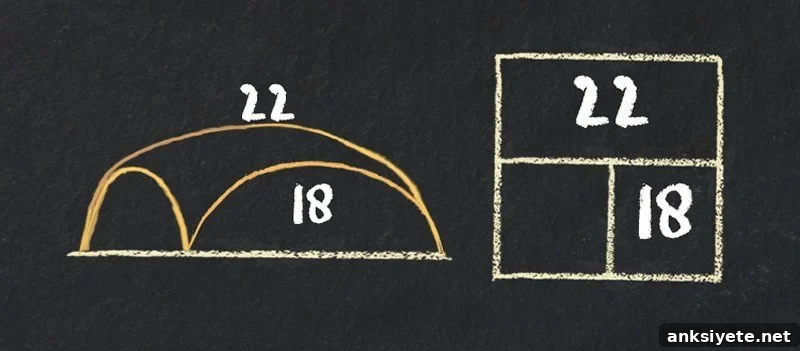
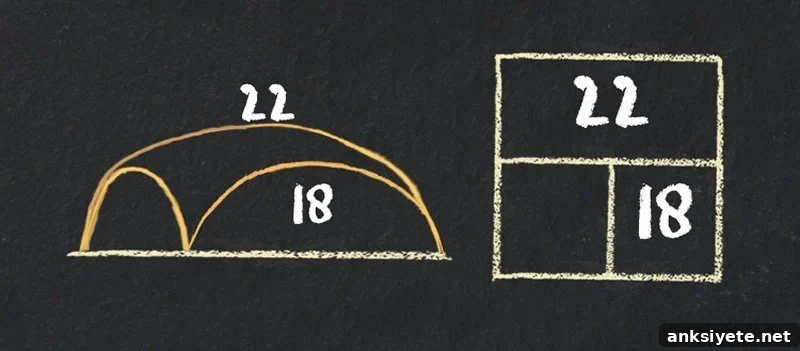
The ACE-ArithmEcole program focuses on helping children reinterpret word problems so they can choose the most effective solving approach. Instead of relying on imagery or scenario-driven intuition, pupils learn to recognize the underlying arithmetic structure—such as viewing subtraction as a difference to be measured rather than simply “what’s left after a loss.” Teachers introduced representational tools like line diagrams and box diagrams to help students re-encode situations into mathematical forms that support formal calculation.
Study design and classroom implementation
At the end of a school year, the UNIGE team assessed ten second-grade classes (children aged 6 to 7) in France. Five classes implemented the ACE-ArithmEcole curriculum, replacing the standard arithmetic lessons with activities emphasizing semantic analysis, recoding, and representational tools. Five control classes continued regular instruction. The assessment required students to solve word problems grouped into three categories: combine (e.g., combining two sets of objects), comparison (e.g., determining how many more of one item than another), and change (e.g., determining the amount added or removed to reach a total).
Within each category, some problems were easy to imagine and could be solved with informal strategies, while others were difficult to simulate mentally and demanded an abstract arithmetic approach. The evaluation measured both correctness and the strategies students used to arrive at answers.
Clear, measurable benefits
The results demonstrated a significant advantage for the ACE-ArithmEcole groups. Among pupils who followed the intervention, 63.4% correctly solved problems that were easy to simulate mentally, and 50.5% solved the more complex problems requiring abstraction. By contrast, pupils in the standard curriculum scored 42.2% on the easy problems and 29.8% on the complex ones. Importantly, both groups had comparable levels on other mathematics measures, indicating that the improved performance on word problems was tied to the intervention rather than to broader differences in mathematical ability.
Researchers attributed these gains to a shift in strategy: students in ACE-ArithmEcole classes used formal arithmetic strategies more often and relied less on informal mental simulations that can be misleading. The representational tools and classroom activities taught students how to re-encode situations semantically and to select the most appropriate arithmetic method.
Implications and next steps
The study supports the use of semantic re-encoding as a promising instructional approach for early arithmetic. The authors suggest that encouraging abstraction and providing visual representational tools can help children avoid common traps of intuitive reasoning and develop adaptive problem-solving skills. Plans are under way to adapt the approach for higher grades and to extend it to additional arithmetic topics such as multiplication and division. The researchers also propose exploring the method’s value in other subjects—like science or grammar—where intuitive conceptions may hinder learning.
Publication and credits
The study is published in ZDM Mathematics Education. Original research: “Learning to be an opportunistic word problem solver: going beyond informal solving strategies” by Katarina Gvozdic and Emmanuel Sander. DOI: 10.1007/s11858-019-01114-z.
About the research team
This project was led by researchers at the University of Geneva, Faculty of Psychology and Education (FPSE), including Katarina Gvozdic and Emmanuel Sander, in partnership with research teams in France. Media contact: Katarina Gvozdic – University of Geneva. Image credited to UNIGE.
Key terms for search and discovery: ACE-ArithmEcole, semantic re-encoding, arithmetic word problems, primary school math, UNIGE, mathematics education, representational tools, line diagrams, box diagrams, adaptive expertise.