
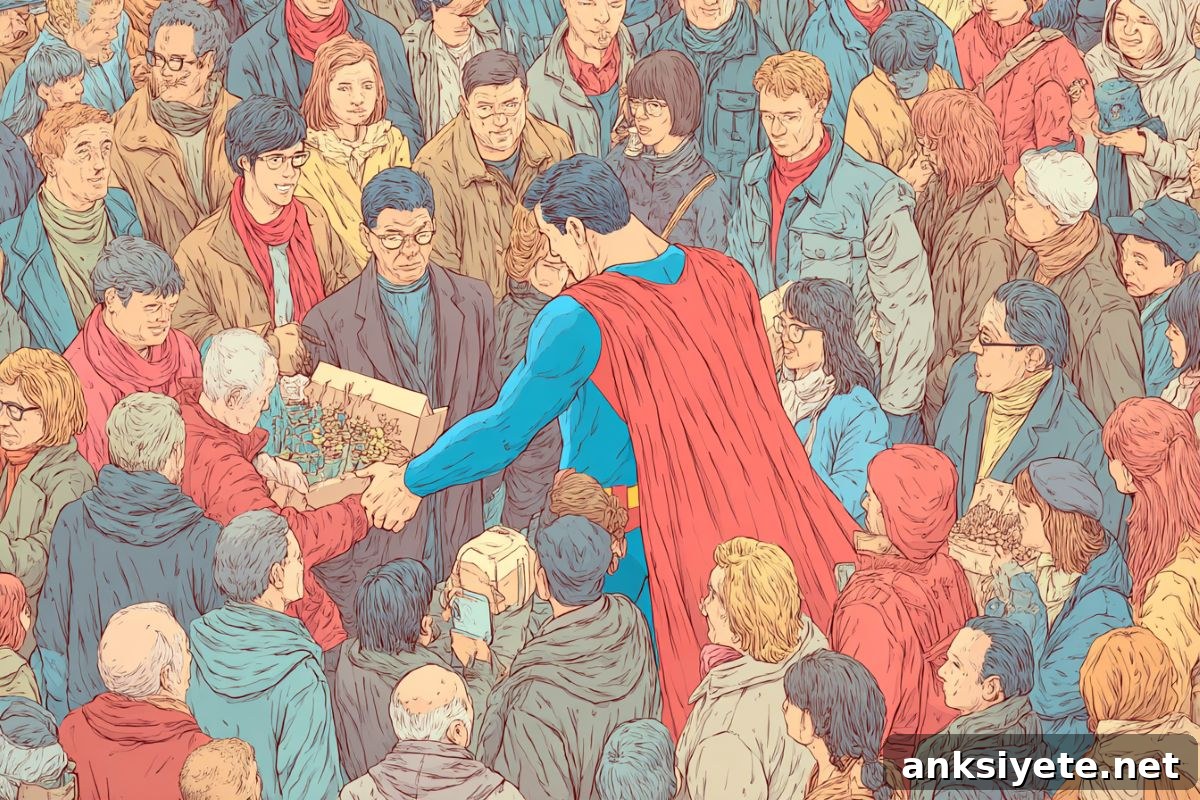
Summary: A field experiment on the Milan subway shows that sudden, unexpected events can substantially increase everyday altruism. When an actor dressed as Batman boarded a train, passengers were almost twice as likely to offer their seats to a woman who appeared pregnant compared with a normal control condition. The study suggests that novelty interrupts automatic behavior, increases present-moment attention, and activates prosocial responses—even when the unexpected stimulus is not consciously noticed.
Conducted by researchers at Università Cattolica del Sacro Cuore and published in the journal npj Mental Health Research, the study provides experimental evidence that unpredictability can boost helping behavior in public spaces. Lead author Francesco Pagnini and colleagues observed real-life interactions on the metro to test whether a surprising event—the presence of someone dressed as Batman—would increase the likelihood that passengers give up their seats for a pregnant woman.
Key Facts
- Unexpected boost: Seat-offering rates rose from 37.66% in the control condition to 67.21% when Batman was present.
- Unconscious influence: About 44% of passengers who offered their seat in the Batman condition later reported they had not noticed him.
- Proposed mechanism: Novelty and unpredictability appear to heighten attention to the present moment and increase responsiveness to social cues, producing more prosocial actions.
Study design and results
The researchers ran a quasi-experimental field study on the Milan metro, observing 138 rides. In the control condition, a female experimenter who appeared pregnant boarded the train accompanied by an observer; researchers recorded whether passengers offered their seats. In the experimental condition, an additional actor dressed as Batman entered the carriage from another door shortly after the pregnant experimenter boarded.
Results showed a clear and statistically significant increase in helping behavior when the unexpected character appeared. With Batman present, 67.21% of passengers offered their seats—more than two out of three—compared with 37.66% in the control condition. The odds ratio reported by the authors indicates a robust effect (OR = 3.393, p < 0.001).
A striking aspect of the findings is that many people who acted generously did not consciously register the interruption: 44% of those who gave up their seat in the Batman condition later said they had not seen him. This suggests that disruption of routine can operate below the level of conscious awareness, possibly by transiently increasing attention or priming relevant social norms.
Interpretation and implications
The authors interpret these results in light of theories linking present-moment attention and prosociality. Traditional mindfulness interventions deliberately cultivate awareness and have been associated with greater empathy and helping behaviors. This study suggests that situational interruptions—brief, novel events that break predictability—may produce similar effects without formal training or effortful practice.
Beyond attentional mechanisms, the choice of a superhero figure may have activated cultural values, gender roles, or chivalric norms that influence helping behavior. The authors note that superhero imagery can act as a social prime, potentially increasing the salience of prosocial conduct even when the figure itself is not consciously processed.
Key Questions Answered:
A: It disrupts routine, heightens present-moment attention, and increases the likelihood of helping actions in public settings.
A: No. Nearly half of those who offered their seats in the experimental condition later reported not noticing the unexpected character.
A: The authors propose that novelty and unpredictability heighten attention and activate social norms, which together raise social responsiveness and prosocial actions.
Editorial Notes:
- This article was edited by a Neuroscience News editor.
- The journal paper was reviewed in full by the editorial team.
- Additional contextual details were added by staff to clarify implications and methodology.
About this altruism and social neuroscience research news
Author: Nicola Cerbino
Source: Universita Cattolica del Sacro Cuore
Contact: Nicola Cerbino – Universita Cattolica del Sacro Cuore
Image: The image is credited to Neuroscience News
Original Research: Open access. “Unexpected events and prosocial behavior: the Batman effect” by Francesco Pagnini et al., published in npj Mental Health Research.
Abstract
Unexpected events and prosocial behavior: the Batman effect
Prosocial behavior—acts undertaken to benefit others—is central to social life, yet the spontaneous environmental triggers for such acts are not well understood. This quasi-experimental field study tested whether an unexpected event, specifically the presence of a person dressed as Batman, could increase prosocial behavior by disrupting routine and enhancing attention to the present moment.
Researchers observed 138 metro rides in Milan. In the control condition a woman appearing pregnant boarded with an observer; in the experimental condition an additional actor wearing a Batman costume entered from another door. Passengers were significantly more likely to offer their seat when the unexpected character was present (67.21% vs. 37.66%; OR = 3.393, p < 0.001). Notably, 44% of those who offered their seat in the experimental condition reported not having seen Batman.
These findings indicate that unexpected stimuli can promote prosociality even without conscious awareness, with practical implications for encouraging kindness and responsiveness in public settings. Trial registration: ClinicalTrials.gov n° NCT06481748; registered on July 1, 2024.