
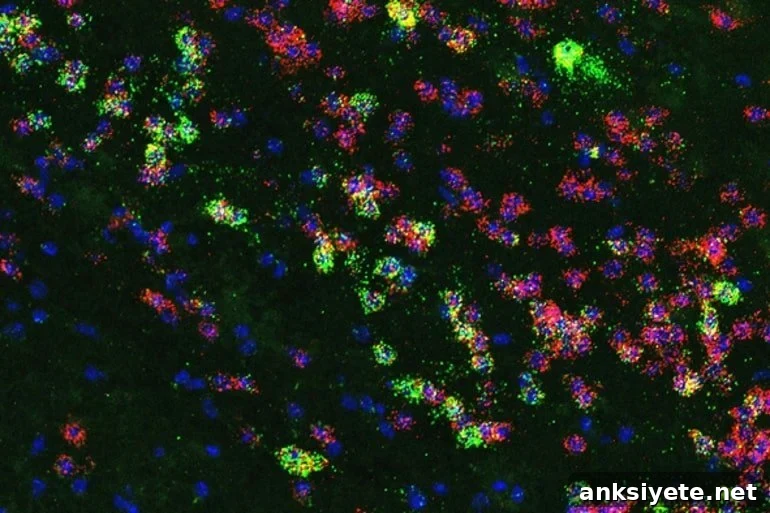
Summary: Researchers identified a specific population of neurons in the amygdala that drive hedonic eating and influence energy balance.
Source: CSHL
A region of the brain known as the amygdala, long recognized for its role in processing strong emotions such as fear, also contains neurons that can drive overeating. Cold Spring Harbor Laboratory (CSHL) Professor Bo Li and colleagues discovered a group of neurotensin-expressing neurons in the amygdala that promote consumption of high-fat and high-sugar foods even when an animal is not calorie-deprived. Targeting these neurons could offer a focused approach to treating obesity while minimizing systemic side effects.
Both humans and mice naturally prefer energy-dense foods rich in fat and sugar. When eating is motivated by pleasure rather than energy needs, it is referred to as hedonic eating. Li and his team pinpointed the neuronal population that triggers this behavior. As Li explains,
“Even if the animal is supposed to stop eating because it is already full, if those neurons are still active, they can compel the animal to continue eating.”
Long-term weight management remains a major challenge because the body’s metabolic systems often counteract dieting and weight loss. Available pharmacological options can help but frequently cause significant side effects. Li emphasizes the need for more precise treatments:
“Current medications that assist with weight control can produce unwanted effects. Identifying the exact brain circuits that control eating behavior is a critical step toward developing safer, more effective therapies for people struggling with weight management.”
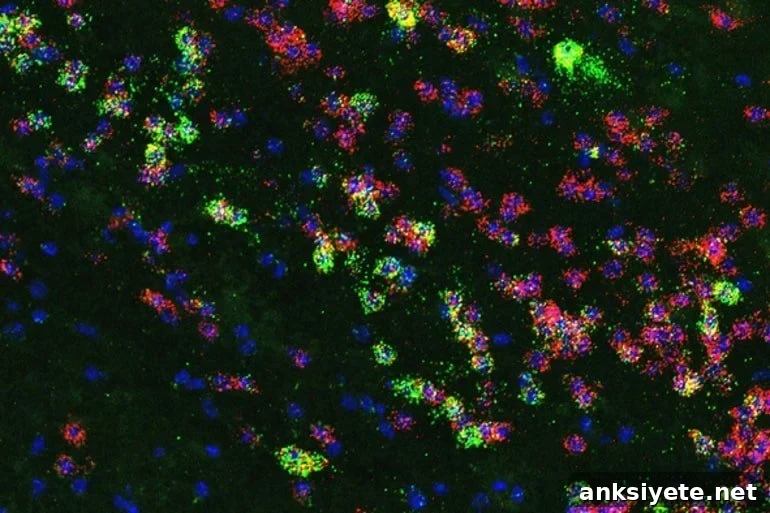
In laboratory experiments, when researchers switched off these specific neurotensin neurons in the extended amygdala, mice no longer displayed the strong preference for fatty, sugary foods that had previously led to overeating. According to Li, “They just ate normally and maintained better health.” Chronic inactivation of these neurons reduced excess food intake, protected animals from diet-induced weight gain, and improved overall metabolic markers. The intervention also increased spontaneous locomotor activity, which contributed to weight loss and improved energy expenditure.
The team is now focused on understanding how these neurons respond to different taste and nutrient cues and what molecular features make them highly sensitive to palatable foods. Mapping the inputs and downstream targets of these neurotensin-expressing neurons will help reveal how the brain integrates pleasure-driven food cues with physiological energy needs. Li anticipates that these mechanistic insights will inform the development of targeted anti-obesity strategies with fewer systemic side effects than current treatments.
This research reflects a multidisciplinary collaboration at CSHL. Li worked with Associate Professor Stephen Shea, who brings expertise in metabolism and endocrinology, and Assistant Professor Semir Beyaz, who studies gut biology and nutrition. Together they are part of an ongoing initiative to investigate how brain circuits interact with peripheral metabolic systems to regulate body weight and food choice.
About this neuroscience research news
Author: Samuel Diamond
Source: CSHL
Contact: Samuel Diamond – CSHL
Image: The image is credited to Bo Li Lab/CSHL/2022
Original Research: Closed access.
“Neurotensin neurons in the extended amygdala control dietary choice and energy homeostasis” by Bo Li et al. Nature Neuroscience
Abstract
Neurotensin neurons in the extended amygdala control dietary choice and energy homeostasis
Obesity is a widespread health crisis linked to many serious diseases. Beyond a few rare genetic causes, the biological drivers that promote overeating and reduced physical activity are not fully understood.
This study demonstrates that neurotensin-expressing neurons in the mouse interstitial nucleus of the posterior limb of the anterior commissure (IPAC), a component of the central extended amygdala, encode preference for unhealthy, energy-dense foods.
Using optogenetic activation, stimulation of IPACNts neurons induced obesogenic behaviors including hedonic eating and altered dietary choice. Conversely, acute inhibition of IPACNts neurons reduced food intake and decreased hedonic consumption. Chronic inactivation produced sustained reductions in preference for sweet, non-caloric tastants, increased locomotor activity and energy expenditure, and resulted in long-term weight loss with improved metabolic health. Mice with inactivated IPACNts neurons were protected from obesity.
These findings show that the activity of a single, anatomically defined neuronal population can bidirectionally regulate energy homeostasis and dietary choice, highlighting a potential target for developing more precise anti-obesity interventions.