Summary: A new neurolinguistics study finds that when listeners can identify a foreign accent, their brains process that accented speech more accurately in real time.
Source: Penn State.
Recognition of a foreign accent improves the brain’s real-time processing of accented speech, researchers report.
According to Janet van Hell, professor of psychology and linguistics and co-director of the Center for Language Science at Penn State, greater familiarity with an accent helps listeners parse sentences more effectively. “As you accumulate experience with a particular foreign accent, your auditory system learns to interpret its acoustic patterns more efficiently,” she said.
Van Hell’s interest in the topic arose after moving from the Netherlands to central Pennsylvania, where she noticed her own interaction patterns changed because others perceived her as having a foreign accent.
“My speaker identity changed,” she recalled. “People heard me differently, and their responses shifted. That experience raised scientific questions about how accent identity influences comprehension.”
Study design and methods
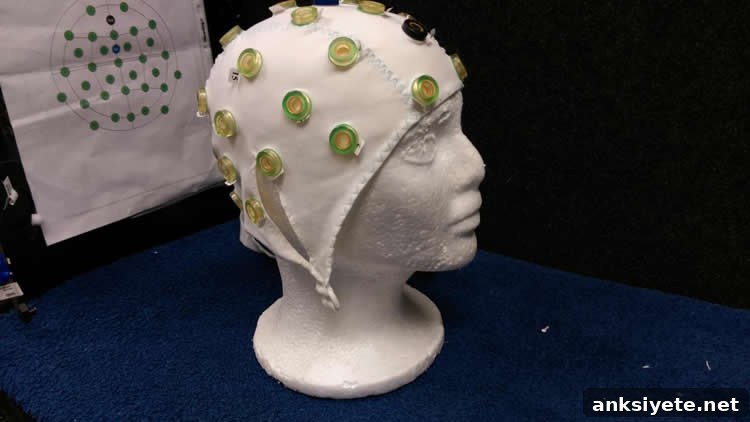
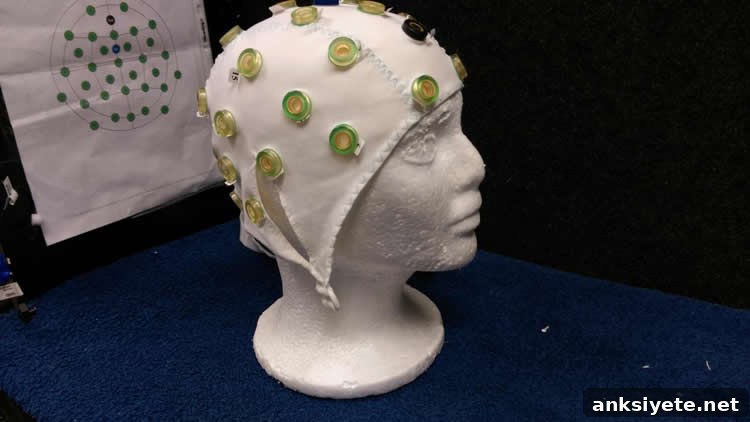
Van Hell and coauthor Sarah Grey, formerly a postdoctoral researcher at Penn State and now an assistant professor at Fordham University, conducted a neurocognitive experiment to compare how listeners process native and foreign-accented English. Participants heard spoken sentences while their brain activity was recorded using electroencephalography (EEG). After each sentence, listeners judged whether the sentence contained a grammatical or vocabulary error, providing behavioral measures of comprehension alongside neural data.
The stimuli included sentences produced in a neutral American English accent and sentences spoken with a Chinese-English accent. Thirty-nine monolingual, native English-speaking college students with limited prior exposure to foreign-accented English took part in the study.
To probe grammatical processing, the researchers used sentences that contained pronoun errors that reflect structural differences between English and Chinese—for example, sentences such as “Thomas was planning to attend the meeting but she missed the bus to school.” Semantic and lexical processing were tested by substituting words that are clearly out of context, for example using “cactus” instead of “airplane” in a sentence like “Kaitlyn traveled across the ocean in a cactus to attend the conference.”
Behavioral accuracy versus neural responses
On behavioral measures, listeners performed well with both accents, correctly identifying grammatical and vocabulary errors at approximately 90 percent accuracy for both native- and foreign-accented speech. Despite comparable behavioral performance, EEG responses revealed important differences in how the brain reacted to errors depending on whether the speaker sounded native or foreign.
Specifically, components of the EEG signal associated with language processing—including frontal negativity (often called Nref) and the N400, a marker of semantic processing—showed distinct patterns for native versus foreign-accented sentences when errors occurred.
Accent identification predicts neural processing
In follow-up analyses, the team linked EEG patterns to listeners’ ability to identify the speaker’s accent, using questionnaire data collected after the listening task. Listeners who correctly identified the Chinese-English accent showed neural responses to both grammar and vocabulary violations, and their brain responses resembled the patterns elicited by native-accented speech. In other words, recognizing the foreign accent brought neural processing of that speech closer to the native-accented baseline.
By contrast, listeners who could not identify the foreign accent exhibited neural responses only to semantic (vocabulary) violations in foreign-accented speech, while grammatical violations failed to elicit the expected EEG signatures. For native-accented speech, both groups produced neural responses to grammar and semantic errors.
The findings were published in the Journal of Neurolinguistics and demonstrate that a listener’s perception of speaker identity—specifically, whether they recognize a speech as foreign-accented—modulates the neural mechanisms engaged during sentence comprehension.
Implications and future directions
Van Hell notes that these results matter in multilingual societies where many people regularly encounter second-language speakers. Exposure to foreign-accented speech varies by region and community resources, so the degree to which listeners can identify and adapt to accents is not uniform.
She plans additional research to examine how regional and dialectal differences within a native language—such as dialects across Appalachia—affect neural processing, and to study how living immersed in a foreign-language environment influences the brain’s adaptation to accented speech.
“Initially, a foreign accent can be surprising,” van Hell said, “but the neurocognitive system adapts quickly with even modest exposure. Our brains are far more flexible at processing varied speech than we often assume.”
Funding: This research was supported by the National Science Foundation.
Source: A’ndrea Elyse Messer, Penn State.
Original research: Sarah Grey and Janet G. van Hell, “Foreign-accented speaker identity affects neural correlates of language comprehension,” Journal of Neurolinguistics. Published online April 2017. doi:10.1016/j.jneuroling.2016.12.001
Foreign-accented speaker identity affects neural correlates of language comprehension
This study compared semantic and grammatical processing of native and foreign-accented speech in monolingual listeners with limited prior experience hearing foreign accents. Participants listened to sentences produced by native and foreign-accented speakers while EEG/ERPs recorded neural activity. Behavioral data showed high comprehension accuracy for both accent types. ERP results revealed distinct neural responses: native-accented speech elicited a frontal negativity for grammatical violations and a robust N400 for semantic violations, whereas foreign-accented speech produced a late negativity for semantic violations but not the frontal negativity for grammatical violations. Importantly, listeners who correctly identified the foreign accent exhibited ERP responses to both grammatical and semantic errors in the foreign-accented condition, while those who did not identify the accent lacked ERP responses to grammatical violations. These results shed light on how listener experience and perceived speaker identity shape the neural mechanisms of language processing.