Oxytocin Improves Brain Function in Children with Autism
Preliminary results from a large-scale, ongoing study at Yale School of Medicine indicate that oxytocin — a naturally occurring hormone and neurotransmitter produced in the brain and throughout the body — can boost activity in brain regions involved in social processing in children and adolescents with autism spectrum disorder (ASD).
A research team from the Yale Child Study Center, led by postdoctoral fellow Ilanit Gordon and Kevin Pelphrey, Harris Associate Professor of Child Psychiatry and Psychology, presented these initial findings at the International Meeting for Autism Research. The study is among the first controlled investigations to examine oxytocin’s immediate effects on social-cognitive brain function in youth with ASD.
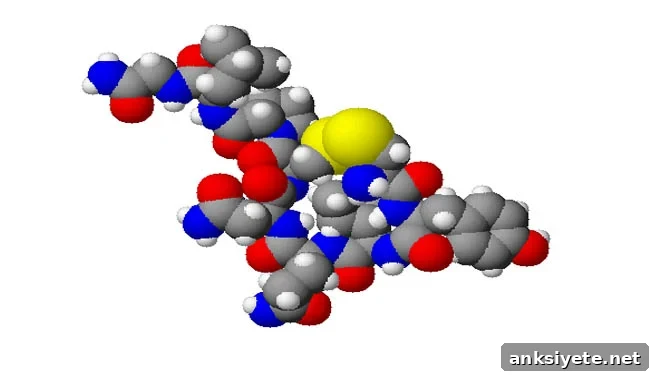
Autism spectrum disorder is characterized primarily by difficulties in social communication and interaction, which can significantly affect the lives of affected children and their families. While behavioral and educational interventions can provide meaningful support, there are currently few medical treatments that directly target the core social deficits of ASD. This gap has driven interest in biological pathways that regulate social behavior, and oxytocin has emerged as a promising candidate because of its documented role in social bonding, recognition, and emotional processing across species.
To explore oxytocin’s direct effects on the brain, Gordon and colleagues conducted a rigorous double-blind, placebo-controlled study in children and adolescents aged 7 to 18 diagnosed with ASD. In the study design, participants received a single dose of oxytocin delivered via nasal spray or a matching placebo, and researchers used functional magnetic resonance imaging (fMRI) to measure changes in neural activity shortly after administration.
The imaging results showed increased activation in brain regions known to process social information. These activations were observed during tasks that recruited multiple social information processing channels — for example, when participants evaluated facial expressions, interpreted vocal cues, or processed information relevant to understanding other people’s intentions and emotions. The researchers interpret these changes as an enhancement in the neural systems that support social perception and social cognition.
Although these findings are preliminary, they represent an important step toward identifying interventions that target the neural mechanisms of social dysfunction in ASD. Ilanit Gordon noted that combining clinical behavioral therapies with pharmacological modulation of social brain circuits — such as administering oxytocin under controlled conditions — could ultimately yield more effective, targeted treatments for social-communication deficits. The research team emphasizes, however, that further studies are required to determine long-term benefits, optimal dosing, safety, and how oxytocin might best be integrated with existing therapies.
The study team also includes coauthors Randi H. Bennett, Brent C. vander Wyk, James F. Leckman, and Ruth Feldman. Their work contributes to a growing body of research exploring neurobiological approaches to improve social functioning in autism while carefully weighing ethical and clinical considerations.
Key takeaways from this research:
- Oxytocin administration was associated with increased activation in social-cognitive brain areas in youth with ASD.
- The study used a double-blind, placebo-controlled design and functional MRI to assess brain responses after a single nasal dose.
- Findings are preliminary and point to the need for follow-up studies assessing long-term outcomes, safety, and clinical effectiveness when combined with behavioral interventions.
These results highlight oxytocin’s potential to modulate neural circuits that underlie social behavior, offering a promising avenue for future research and treatment development for autism spectrum disorder. Researchers caution that more extensive clinical trials are required before oxytocin could be recommended as a standard treatment option.
Notes about this autism research article
Other authors on the study include Randi H. Bennett, Brent C. vander Wyk, James F. Leckman, and Ruth Feldman. The research was presented at the 2012 International Meeting for Autism Research.
Contact: Karen N. Peart – Yale University
Source: Yale University press release
Image Source: Neuroscience image adapted from Wikimedia Commons image by Fvasconcellos. Public domain release.
Original Research: Summary for “Oxytocin’s Impact on Social Cognitive Brain Function in Youth with ASD” by I. Gordon, R. H. Bennett, B. C. vander Wyk, J. F. Leckman, R. Feldman and K. A. Pelphrey. This research was presented at the 2012 International Meeting for Autism Research.