Summary: New findings identify genes that influence nerve sensitivity and may point to future drug targets for pain management.
Source: Indiana University
Genes that influence nerve sensitivity in fruit flies may highlight potential drug targets for human pain management.
Researchers at Indiana University have identified a set of genes present in both fruit flies and humans that affect how nerves respond to harmful stimuli. Among these genes is one nicknamed “smoke alarm.” The work suggests new avenues for developing treatments that target the cellular mechanisms of pain.
The study, published in Cell Reports, was led by W. Daniel Tracey Jr., professor at the Linda and Jack Gill Center for Biomolecular Science and the Department of Biology at IU Bloomington.
“This is the first comprehensive assessment of a large group of genes expressed at high levels in nociceptive neurons — the cells responsible for detecting painful stimuli,” Tracey said. “The results mark an important advance in nociception and pain research.”
Ken Honjo of the University of Tsukuba is the paper’s first author; much of his work was carried out while he was a member of Tracey’s lab. Stephanie E. Mauthner, an assistant scientist at IU Bloomington, is also an author on the paper.
The team screened 275 genes that their lab had previously found to be enriched in nociceptors and identified 36 genes that alter thermal sensitivity. Of those 36, 20 have counterparts in both humans and fruit flies (Drosophila). Because fruit flies share a large proportion of their genes with humans, discoveries in flies can often point to conserved biological mechanisms.
In the experiments, 22 genes were linked to hypersensitivity to heat and 14 were associated with reduced sensitivity. The genes that produced hypersensitivity appear to suppress an inhibitory function in nociceptors, Tracey explained. “If a drug could mimic activation of an inhibitor, it might be possible to block pain,” he said.
While nociceptors are known for sensing external injury or harmful conditions, they are also implicated in other forms of pain that don’t stem from direct external stimuli, including chronic and neuropathic pain. These conditions affect large numbers of people worldwide; chronic pain is estimated to affect up to 1.5 billion people globally, and neuropathic pain is estimated to affect up to 4.5 percent of the global population, according to figures referenced by the American Academy of Pain Medicine.
Because this was the first study to assign functions to most of these genes, the researchers were able to give descriptive names to several of them. Genes that increased heat sensitivity were named after things associated with burning or ignition, including black match, eucalyptus, firelighter, primacord, jet fuel, detonator, gasoline, smoke alarm and jetboil. Genes that reduced sensitivity received names evoking heat protection or resistance, such as boilerman, bunker gear, fire dancer, oven mitt, trivet and thawb.
To identify genes that change thermal nociception, the team used RNA interference to selectively suppress each of the 275 candidate genes in nociceptors of fruit fly larvae. The larvae were then tested at two temperatures, 42°C and 46°C. Larvae normally respond to high temperatures by rolling slowly; faster rolling at 42°C indicated heightened sensitivity, and failure to roll at 46°C indicated reduced sensitivity.
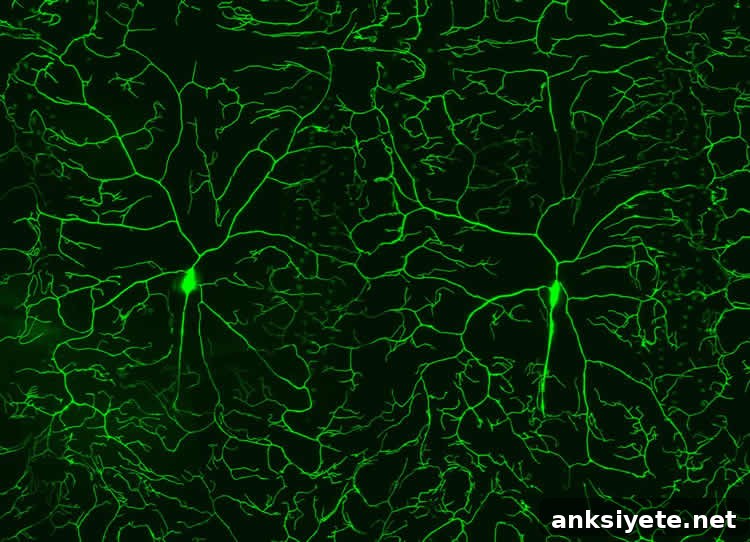
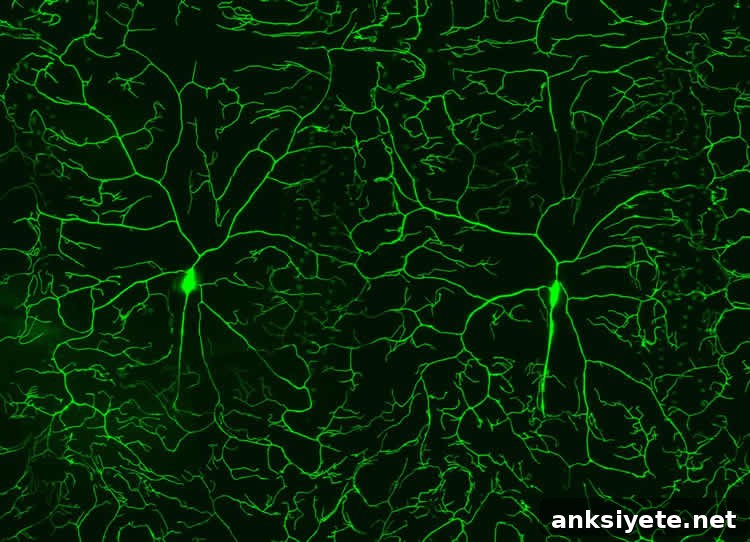
In addition to behavioral changes, some gene knockdowns altered the structure of nociceptor dendrites — the branching projections that connect sensory neurons to the body surface. Nine genes linked to insensitivity caused the larvae to develop fewer than average dendritic branches. Two genes associated with hypersensitivity, including smoke alarm, produced extra dendritic branching. Why these genes influence branching patterns is an open question the team plans to investigate.
Tracey and colleagues intend to follow up by mapping the molecular pathways through which these genes act in nociceptors. Understanding those pathways could reveal precise biochemical steps that can be targeted to modulate pain signaling.
Funding: Additional contributors to the paper include J.H. Pate Skene and Yu Wang, who collaborated on the work while affiliated with Tracey’s previous lab. The study received support from the National Institutes of Health and the Japan Society for the Promotion of Science.
Source: Kevin Fryling, Indiana University. Image credit: Stephanie E. Mauthner.
Abstract
Nociceptor-Enriched Genes Required for Normal Thermal Nociception
Highlights
• Laser capture microarray analyses identified 275 genes enriched in nociceptors.
• Nociceptor-specific RNAi screens implicated 36 genes in thermal nociception behaviors in Drosophila larvae.
• The screens revealed genes that affect nociception signaling and neuronal morphology.
• Homologs of many identified genes are enriched in mammalian nociceptors, suggesting conservation across species.
Summary
Using laser capture microdissection and microarray analysis to compare nociceptive and non-nociceptive neurons, the researchers identified 275 nociceptor-enriched genes. Nociceptor-specific RNAi and thermal nociception assays then tested the function of these genes. Targeting 14 genes produced insensitive thermal responses, while targeting 22 genes caused hypersensitive responses. Several previously uncharacterized genes received descriptive names based on their effects on heat sensitivity or resistance. Insensitive phenotypes were often associated with severely reduced branching of nociceptor neurites, whereas hyperbranched dendrites were observed in two hypersensitive cases. Many of the genes identified are conserved in mammals, making them promising candidates for further study in pain biology.
Article citation: “Nociceptor-Enriched Genes Required for Normal Thermal Nociception” by Ken Honjo, Stephanie E. Mauthner, Yu Wang, J.H. Pate Skene, and W. Daniel Tracey Jr., published in Cell Reports. Published online May 23, 2016. DOI: 10.1016/j.celrep.2016.06.003