Summary: Neurons in the suprachiasmatic nucleus adapt to different day lengths by changing their neurotransmitter profiles and network interactions. These cellular and circuit-level adjustments alter hypothalamic activity and influence daily behaviors.
Source: UCSD
Seasonal shifts in sunlight—longer daylight in summer and shorter days in winter—shape many human behaviors, influencing sleep and eating patterns as well as hormonal and brain activity.
One well-known example is seasonal affective disorder (SAD), a form of depression linked to reduced natural light exposure that most commonly appears during the winter months and is more prevalent at higher latitudes where daylight is limited.
Bright light therapy is an established treatment for SAD and is also effective for non-seasonal major depression, postpartum depression and bipolar disorder. Yet until recently, the cellular and circuit-level mechanisms by which changing day length and light exposure reshape brain function remained poorly understood.
In a study published September 2, 2022 in Science Advances, researchers at the University of California San Diego School of Medicine used a mouse model to reveal how specific neurons switch the neurotransmitters they express in response to day length, and how this switching reconfigures hypothalamic networks and behavior.
The work was led by senior author Davide Dulcis, Ph.D., associate professor in the Department of Psychiatry at UC San Diego School of Medicine and a member of the Center for Circadian Biology at UC San Diego.
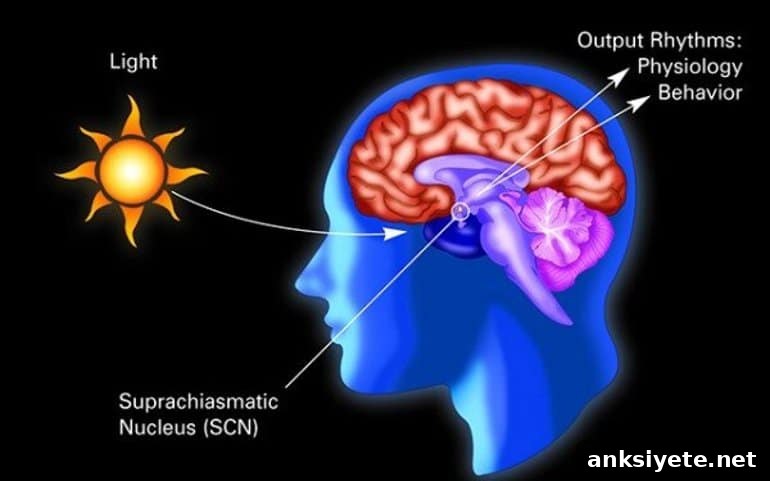
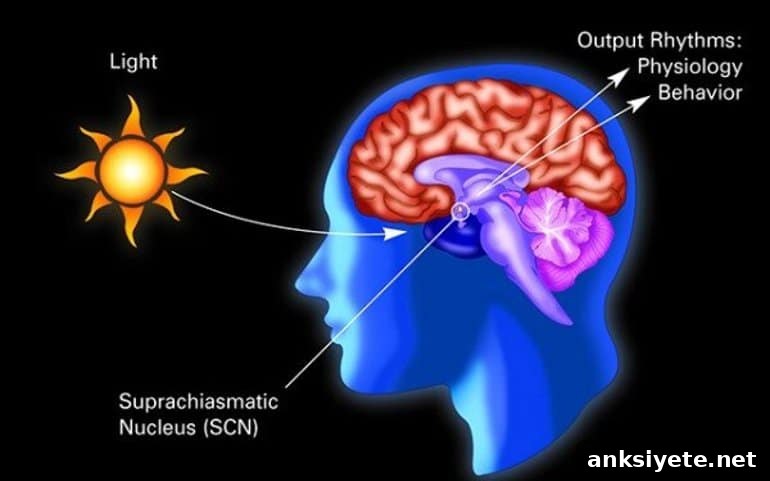
Located deep in the hypothalamus, the suprachiasmatic nucleus (SCN) is the brain’s master clock. Each SCN contains roughly 20,000 neurons that coordinate circadian rhythms—daily cycles of physiology and behavior that regulate metabolism, body temperature, hormone release and sleep-wake timing. The SCN receives direct input from light-sensitive retinal cells, translating changes in ambient light and day length into neural signals that set the body’s internal clock.
In this study, Dulcis and colleagues show that SCN neurons do more than passively relay light information. They dynamically adjust which neurotransmitters they express depending on photoperiod, and through multisynaptic connections they reshape activity in downstream hypothalamic regions such as the paraventricular nucleus (PVN). The PVN controls stress responses, metabolism, growth, reproduction and immune regulation, so changes in its activity can have broad physiological and behavioral consequences.
Using mice as a model system, the researchers focused on specific SCN cell types that express neuromedin S (NMS) and vasoactive intestinal peptide (VIP). They found that these SCN neurons display photoperiod-induced neurotransmitter plasticity: under different day-length conditions the balance and identity of neurotransmitter-expressing cells shift, and these changes propagate through the SCN-PVN network.
Functional recordings of calcium dynamics in live animals showed that NMS-expressing SCN neurons modify PVN network activity when mice are exposed to short, winter-like photoperiods. Moreover, chronic experimental manipulation of NMS neuron activity was sufficient to trigger neurotransmitter switching in PVN neurons and to alter locomotor behavior, indicating a causal relationship between SCN neurotransmitter plasticity, downstream hypothalamic function and daily activity patterns.
Seasonal alterations in neurotransmitter expression in both the SCN and PVN have been observed before in humans and animal models, but the molecular and circuit-level mechanisms were not well defined. This study identifies a coordinated, multisynaptic mechanism by which SCN neurons adjust neurotransmitter identity and thereby tune hypothalamic networks to seasonal light cues.
“The most impressive new finding in this study is that we discovered how to artificially manipulate the activity of specific SCN neurons and successfully induce dopamine expression within the hypothalamic PVN network,” said Dulcis.
“We revealed novel molecular adaptations of the SCN-PVN network in response to day length in adjusting hypothalamic function and daily behavior,” added first author Alexandra Porca, Ph.D., a member of Dulcis’ lab. “The multi-synaptic neurotransmitter switching we showed in this study might provide the anatomical and functional link mediating seasonal changes in mood and the effects of light therapy.”
Because these adaptive changes originate in neurons localized to the SCN, the authors propose that the SCN represents a promising therapeutic target for disorders linked to seasonal or light-related dysregulation of mood and behavior. By clarifying how photoperiod information is translated into specific molecular and network adaptations, the study provides a mechanistic framework for understanding how light exposure remodels hypothalamic circuits and influences daily life.
About this neuroscience research news
Author: Scott La Fee
Source: UCSD
Contact: Scott La Fee – UCSD
Image: The image is credited to National Institute of General Medical Sciences
Original Research: Open access. “Seasonal changes in day length induce multisynaptic neurotransmitter switching to regulate hypothalamic network activity and behavior” by Alessandra Porcu et al. Science Advances
Abstract
Seasonal changes in day length induce multisynaptic neurotransmitter switching to regulate hypothalamic network activity and behavior
Seasonal variations in day length (photoperiod) influence a wide range of physiological functions. The suprachiasmatic nucleus (SCN)–paraventricular nucleus (PVN) axis is a central pathway for processing photoperiod-related information. Although seasonal changes in neurotransmitter expression in the SCN and PVN have been documented in human and animal studies, the molecular mechanisms underlying SCN-PVN network responses to altered photoperiod remained unclear.
This study demonstrates in mice that NMS- and VIP-expressing neurons in the SCN undergo photoperiod-driven neurotransmitter plasticity. In vivo calcium recordings reveal that NMS neurons modulate PVN network activity under winter-like photoperiods. Chronic manipulation of NMS neurons is sufficient to induce neurotransmitter switching in PVN neurons and to change locomotor behavior. These findings identify previously unknown molecular and circuit-level adaptations of the SCN-PVN network that enable the hypothalamus to adjust function and behavior to seasonal changes in day length.