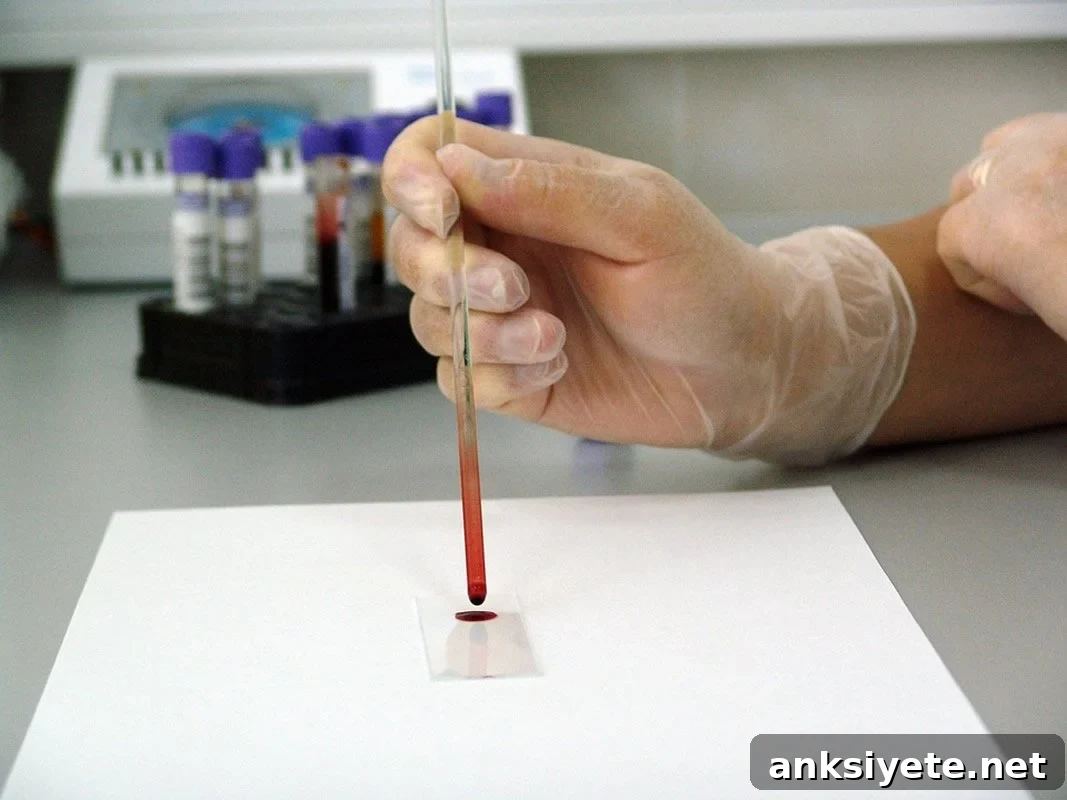
Summary: A new blood test that detects Alzheimer’s-related biomarkers is entering trials this autumn. The automated assay identifies traces of beta-amyloid in blood with strong accuracy and could simplify diagnosis and screening for Alzheimer’s disease in primary care and clinical trials.
Source: Lund University
Researchers at Lund University, in collaboration with Roche, have developed a fully automated blood assay that accurately detects beta-amyloid—an Alzheimer’s disease biomarker—in blood samples. If validated in clinical settings, the test could be adopted in primary care for screening and early detection. A major primary care trial is planned to begin this autumn to evaluate the test in routine healthcare.
Today, the standard methods for detecting abnormal beta-amyloid accumulation in the brain rely on cerebrospinal fluid analysis or PET imaging. Both approaches are costly, invasive or require specialist equipment and are typically limited to specialized clinics.
“Spinal fluid tests and PET scans are effective but expensive and confined to specialist care. For a long time we’ve sought simpler, more accessible diagnostic tools,” says Sebastian Palmqvist, associate professor at the Unit for Clinical Memory Research at Lund University, a clinician at Skåne University Hospital, and lead author of the study.
In a multicenter collaboration, the team examined whether a straightforward blood test could reliably detect early brain accumulation of beta-amyloid—indicating underlying Alzheimer’s disease. Using an automated, clinically applicable immunoassay developed by Roche, the researchers measured plasma Aβ42 and Aβ40 and found the method capable of identifying amyloid accumulation in the brain with high accuracy.
Earlier blood-based approaches showed only modest differences between Alzheimer’s patients and healthy older adults, and more recent high-accuracy methods have required advanced laboratory technology not readily available in clinical practice. The Roche Elecsys immunoassays used in this study are fully automated and designed for routine laboratory workflows, bringing practical detection closer to everyday healthcare.
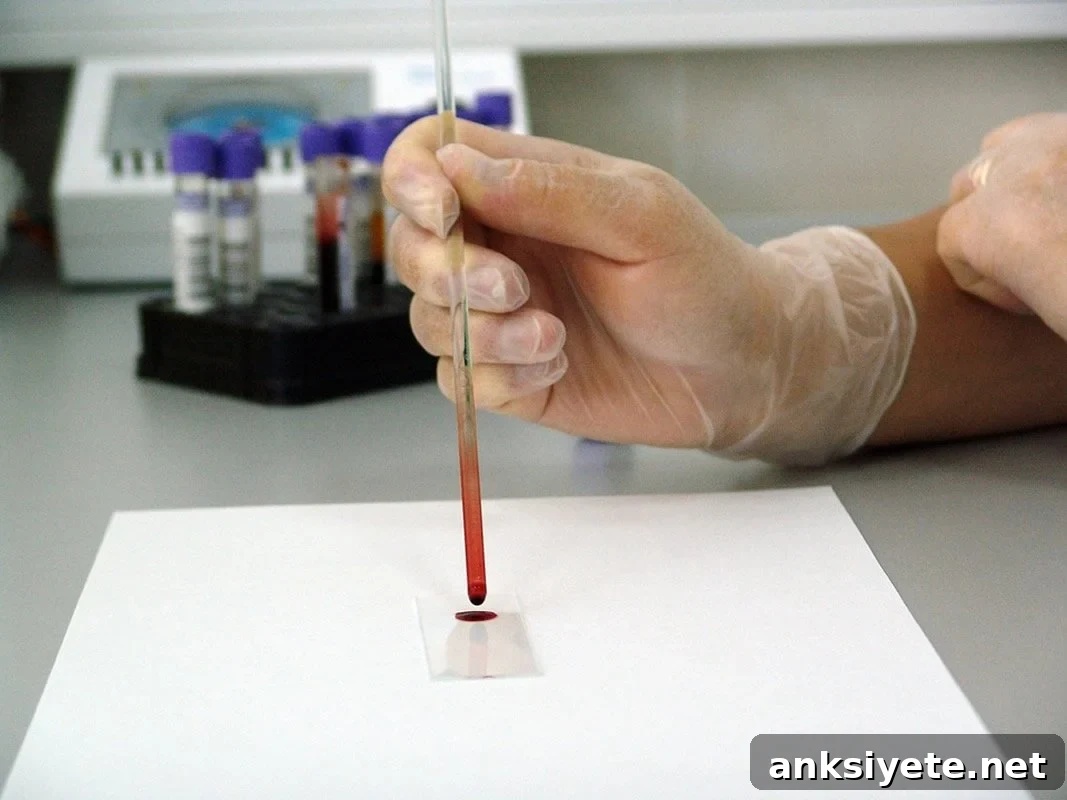
“We have collaborated with Roche for many years, and we are finally approaching a level of accuracy suitable for routine clinical care worldwide,” says Oskar Hansson, professor of neurology and head of the Unit for Clinical Memory Research at Lund University.
The study’s findings, published in JAMA Neurology, are based on plasma analyses from two cohorts: 842 participants from the Swedish BioFINDER study and 237 participants from a German biomarker study. The participants included cognitively unimpaired older adults, people with mild cognitive impairment (MCI), and patients with Alzheimer’s dementia.
In the primary cohort of 842 people (mean age 72, SD 5.6; 52.5% female), plasma Aβ42 and Aβ40 measured with Elecsys immunoassays predicted cerebral amyloid status—determined by the CSF Aβ42/Aβ40 ratio—with an area under the receiver operating characteristic curve (AUC) of 0.80 (95% CI, 0.77–0.83). When APOE genotype was added, predictive accuracy increased to an AUC of 0.85 (95% CI, 0.82–0.88). Adding plasma tau and neurofilament light chain yielded modest further improvements (AUC up to 0.87). Results were consistent across cognitively unimpaired and impaired subgroups and across age ranges.
When the plasma Aβ42 and Aβ40 model derived from the Swedish cohort was applied to the German validation cohort (n = 237; mean age 66, SD 10; 50.6% female), the AUC was 0.86 (95% CI, 0.81–0.91). In the validation group, plasma tau did not add predictive value. Modeling a screening scenario for Alzheimer’s clinical trials suggested that prescreening with plasma Aβ42 and Aβ40 plus APOE could reduce PET imaging costs by approximately 30% to 50%, depending on cutoffs used.
The authors conclude that automated plasma Aβ42 and Aβ40 assays can predict brain amyloid status across all stages of Alzheimer’s disease and that accuracy improves when combined with APOE genotyping. Potential applications include prescreening for clinical trials to lower costs and reduce the number of PET scans or lumbar punctures, and improving early detection and referral pathways in primary care so more patients can access symptomatic treatments.
“The critical next step is validating this simple blood-based approach in larger, more representative populations where the prevalence of underlying Alzheimer’s is lower, and testing it directly in primary care settings,” says Sebastian Palmqvist. “We will soon start a major primary care study in Sweden to confirm whether the assay performs reliably in routine clinical practice.”
Source:
Lund University
Media Contacts:
Sebastian Palmqvist – Lund University
Image Source:
The image is in the public domain.
Original Research: Open access
“Performance of Fully Automated Plasma Assays as Screening Tests for Alzheimer Disease–Related β-Amyloid Status.” Sebastian Palmqvist, MD, PhD; Shorena Janelidze, PhD; Erik Stomrud, MD, PhD; Henrik Zetterberg, MD, PhD; Johann Karl, PhD; Katharina Zink; Tobias Bittner, PhD; Niklas Mattsson, MD, PhD; Udo Eichenlaub, PhD; Kaj Blennow, MD, PhD; Oskar Hansson, MD, PhD. JAMA Neurology. doi: 10.1001/jamaneurol.2019.1632
Abstract (condensed)
Importance: Accurate blood-based biomarkers for Alzheimer’s disease could improve diagnosis in primary care, streamline referrals to memory clinics, and make screening for clinical trials more efficient.
Objective: To evaluate plasma Aβ and tau measured using fully automated immunoassays, together with other blood biomarkers, as predictors of cerebral amyloid status.
Design, Setting, and Participants: Two prospective, cross-sectional, multicenter studies. Cohort 1 included 842 participants enrolled between 2009 and 2015 from the Swedish BioFINDER study (513 cognitively unimpaired, 265 with MCI, 64 with AD dementia). Cohort 2 was a German biomarker study of 237 participants (34 cognitively unimpaired, 109 MCI, 94 AD dementia).
Main Outcome Measures: CSF Aβ42/Aβ40 ratio served as the reference standard for brain amyloid. Plasma Aβ42, Aβ40 and tau were measured with Elecsys immunoassays and tested as predictors of amyloid status; APOE genotype and plasma neurofilament levels were also evaluated.
Conclusions: Automated plasma Aβ42 and Aβ40 assays predict cerebral amyloid across AD stages and retain accuracy in an independent cohort. Including APOE genotype improves prediction. These blood tests hold promise for prescreening in clinical trials and expanding diagnostic capabilities in primary care to identify patients who may benefit from current symptomatic treatments.