New insights could inform SIDS understanding, depression treatment.
Breathing. Body temperature. Mood. Appetite. Blood pressure. Sexual desire.
Whatever the physiological function, the neurotransmitter serotonin appears to play a role in regulating it.
Serotonin is produced by a single broad class of brain cells, yet those serotonergic neurons perform many different jobs. Neuroscientists have long proposed that this diversity reflects distinct molecular subtypes with unique properties and roles, but technical limits have made these subtypes difficult to define and link to specific functions.
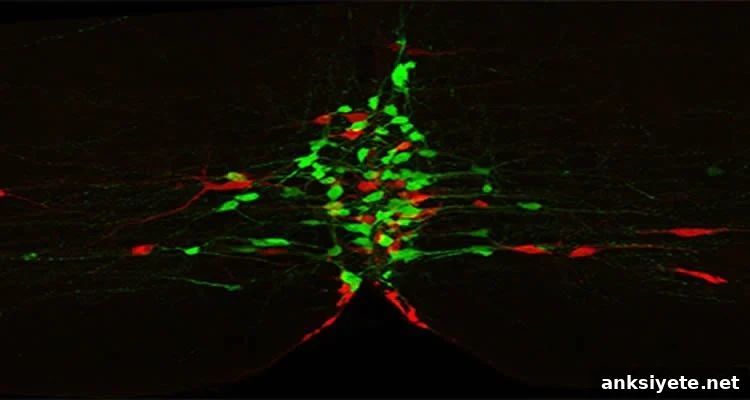
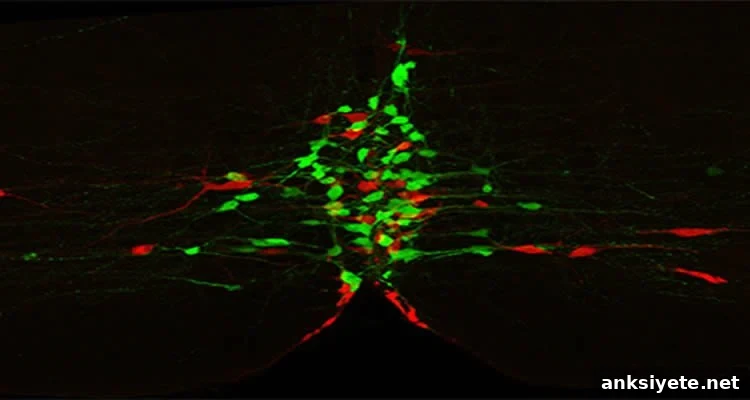
Using advanced genetic tools, researchers at Harvard Medical School and collaborators have now identified multiple molecular subtypes of serotonergic neurons in mice and connected particular subtypes to distinct physiological functions and neural circuits.
Most notably, the team showed that a defined subtype—Egr2-Pet1 neurons—is responsible for increasing breathing when carbon dioxide levels rise in the body.
“Traditionally neurons were classified by neurotransmitter and anatomical location. By combining molecular, genetic, electrophysiological and behavioral methods, we are discovering a much greater complexity,” said Susan Dymecki, professor of genetics at Harvard Medical School and senior author of the study.
The findings, published in Cell Reports, suggest new strategies for drug development aimed at serotonin-related disorders: by targeting the specific serotonergic neuron subtype involved in a disease process, it may be possible to reduce unwanted and potentially dangerous side effects.
“When treating conditions like clinical depression, you don’t want to interfere with essential cardiorespiratory or thermoregulatory processes,” Dymecki added.
Beyond therapeutic implications, the work provides a better framework for diagnosing and assessing risk in a range of serotonin-related conditions and improves understanding of disorders that involve serotonin’s role in breathing, including sudden infant death syndrome (SIDS).
Mapping new territory
One motivation for this study arose from Dymecki’s collaboration with Boston Children’s Hospital neuropathologist Hannah Kinney and other investigators who examine brainstem samples from infants who died of SIDS. Many SIDS cases show abnormalities in brainstem serotonergic neurons, prompting the question of whether a malfunction in the subtype that regulates breathing could contribute to SIDS risk.
“This project combined our genetic tools, interest in brainstem development, and the opportunity to address a devastating infant disorder,” Dymecki said.
A multidisciplinary team of physiologists, electrophysiologists, mouse geneticists and molecular biologists used genetic methods to selectively silence serotonergic neurons one molecular subtype at a time in mice. This approach allowed the researchers to test which subtypes are necessary for the breathing response to elevated carbon dioxide.
Surprisingly, among the several subtypes analyzed only the Egr2-Pet1 neurons were required for the CO2-driven respiratory response; other neighboring serotonergic subtypes in the same brain region did not contribute to that function.
“This shows that within a single anatomical cluster of serotonin-producing neurons there can be substantial heterogeneity: neighboring cells can share the same microenvironment yet serve very different roles,” said Rachael Brust, a graduate student in the Dymecki lab and first author on the paper.
The investigators propose that these functional differences arise primarily from developmental lineage—the cells’ molecular history during development—rather than simply their adult anatomical position.
Painting a profile
After isolating the Egr2-Pet1 subtype, the team characterized its chemical and electrical properties. They found that these neurons respond strongly to small drops in pH that occur when carbon dioxide levels increase: even modest acidification raises the electrical firing rate of Egr2-Pet1 cells.
When these neurons fire in response to elevated CO2 and lower pH, they trigger downstream circuits that cause the animal to breathe more deeply and rapidly, expelling excess carbon dioxide and restoring normal pH. Disabling signaling specifically in Egr2-Pet1 neurons blunted this respiratory reflex, demonstrating their causal role.
Further tracing revealed that Egr2-Pet1 neurons project to brain regions that integrate sensory signals and then relay information to respiratory rhythm-generating centers, identifying a clear sensor-to-effector pathway for respiratory control.
Dymecki described this population as both a sensor for elevated CO2 and low pH and an effector that increases respiratory drive to restore balance.
“This work is exciting not only for its clinical implications but also for our basic scientific understanding,” she said. “It is the first systematic interrogation of different molecular subtypes of serotonergic neurons that links a defined function to a single subtype and reveals that it has distinct properties.”
By deciphering the individual neuron subtypes that carry out specific tasks and modulate precise circuits, researchers hope to open new avenues for targeted treatments that address the many roles of serotonin across physiology and behavior.
This work was supported by the National Institutes of Health (grants F31NS073276, 5R21DA023643-02, 5P01HD036379-13, P20NS076916), the Parker B. Francis Fellowship and the Iowa City Veterans Affairs Medical Center.
Contact: Stephanie Dutchen – Harvard Medical School
Source: Harvard press release
Image Source: Image credited to Rachael Brust and adapted from the Harvard press release
Original Research: Full open access research titled “Functional and Developmental Identification of a Molecular Subtype of Brain Serotonergic Neuron Specialized to Regulate Breathing Dynamics” by Rachael D. Brust, Andrea E. Corcoran, George B. Richerson, Eugene Nattie, and Susan M. Dymecki in Cell Reports. Published online December 18, 2014. DOI: 10.1016/j.celrep.2014.11.027