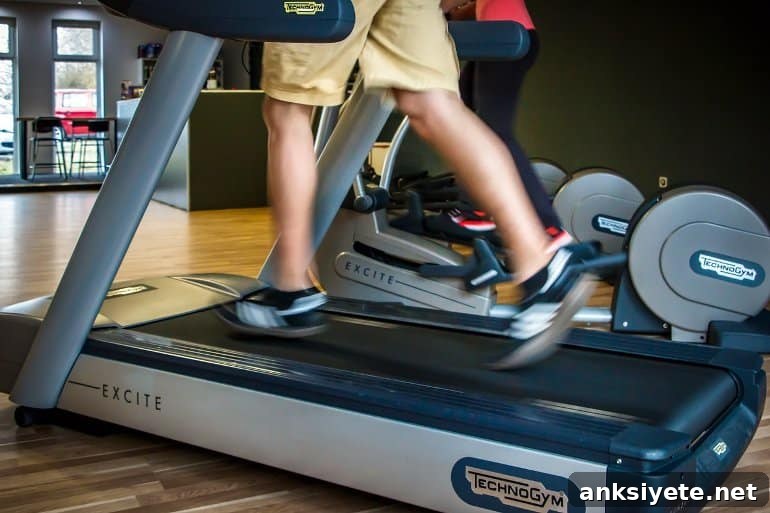
Summary: Regular treadmill walking improves cognitive function—especially learning and memory—and helps preserve hippocampal volume in people with relapsing-remitting multiple sclerosis (MS).
Source: Kessler Foundation
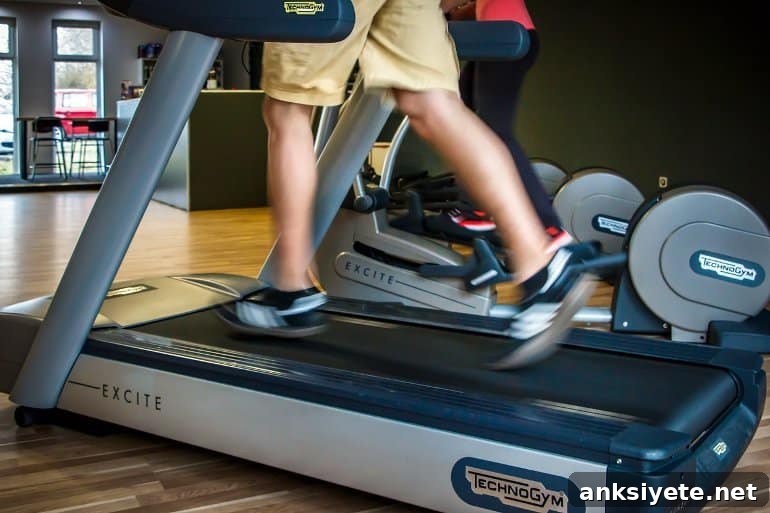
A pilot study conducted by MS researchers indicates that supervised treadmill walking may be an effective, low-cost behavioral strategy to reduce the cognitive burden of multiple sclerosis.
The study, titled “Effects of walking exercise training on learning and memory and hippocampal neuroimaging outcomes in MS: A targeted, piloted randomized controlled trial,” was published in Contemporary Clinical Trials.
This single-blind randomized controlled trial enrolled 11 ambulatory adults with relapsing-remitting MS who had measurable impairments in new learning. Participants were randomly assigned to one of two 12-week exercise programs: supervised treadmill walking (intervention) or low-intensity resistive exercise (active control). Neuropsychological assessments of learning and memory and hippocampal neuroimaging were completed before and after the intervention period by assessors blinded to treatment allocation.
Participants in the treadmill walking group showed improvements in verbal learning and memory and experienced preservation of normalized hippocampal volume compared with the control group, where hippocampal atrophy was observed. Effects on hippocampal resting-state functional connectivity were not statistically significant in this small pilot sample. These findings offer promising proof-of-concept evidence that walking-based aerobic exercise can benefit cognitive outcomes and brain structure in MS.
The study design intentionally targeted participants with preexisting deficits in learning and memory, a priority highlighted by lead author Brian Sandroff, PhD, senior research scientist in the Center for Neuropsychology and Neuroscience Research at Kessler Foundation. Focusing on individuals who already show cognitive impairment makes it easier to detect whether a behavioral intervention can produce clinically meaningful change.
“This study is an important first step in the development of an intervention targeted at the specific cognitive domains affected by MS,” said Dr. Sandroff. Co-author John DeLuca, PhD, Senior Vice President for Research and Training at Kessler Foundation, added: “Exercise interventions should be a focus for MS research. Demonstrating efficacy for low-cost, noninvasive, widely available interventions can help people with MS maintain participation at home, at work, and in their communities.”
Both authors emphasize that larger, adequately powered trials are needed to confirm these preliminary results, to refine exercise protocols, and to clarify the relationships between aerobic training, functional brain connectivity, and structural brain changes. If replicated, treadmill-based walking programs could be translated into practical clinical and community interventions aimed at preserving cognitive function in people living with MS.
Funding: EMB Serono investigator-initiated grant.
About this multiple sclerosis research news
Author: Deb Hauss
Source: Kessler Foundation
Contact: Deb Hauss – Kessler Foundation
Image: The image is in the public domain
Original Research: Closed access. “Effects of walking exercise training on learning and memory and hippocampal neuroimaging outcomes in MS: A targeted, pilot randomized controlled trial” by Brian Sandroff et al., Contemporary Clinical Trials.
Abstract
Effects of walking exercise training on learning and memory and hippocampal neuroimaging outcomes in MS: A targeted, pilot randomized controlled trial
Purpose
This pilot investigation examined whether 12 weeks of supervised treadmill walking could improve learning and memory (L/M) and influence hippocampal neuroimaging measures in fully ambulatory people with relapsing-remitting MS who had documented impairments in acquiring new information. The study used a single-blind randomized controlled design to compare treadmill walking with an active control condition of low-intensity resistive exercise.
Methods
Eleven fully ambulatory participants with MS-related deficits in new learning were randomized to 12 weeks of supervised treadmill walking or 12 weeks of low-intensity resistive exercise. Neuropsychological tests of learning and memory and hippocampal neuroimaging scans were collected before and after the intervention period. Assessments were conducted by evaluators who remained blind to participants’ assigned condition to limit bias in outcome measurement.
Results
Moderate-to-large intervention effects were observed on measures of verbal learning and memory, as assessed by the California Verbal Learning Test-II (CVLT-II). The intervention group improved relative to the control group on CVLT-II performance. A composite measure of learning and memory showed smaller effects. Notably, the treadmill walking group exhibited preservation of normalized hippocampal volume, while the control group demonstrated hippocampal atrophy across the study period. No significant group differences emerged for hippocampal resting-state functional connectivity in this small sample.
Conclusions
These pilot trial results provide initial proof-of-concept that treadmill walking exercise training may help manage learning and memory impairments and preserve hippocampal volume in people with relapsing-remitting MS. Larger clinical trials are warranted to confirm these effects, optimize exercise prescriptions, and evaluate long-term functional benefits for cognitive health and daily life participation in MS.