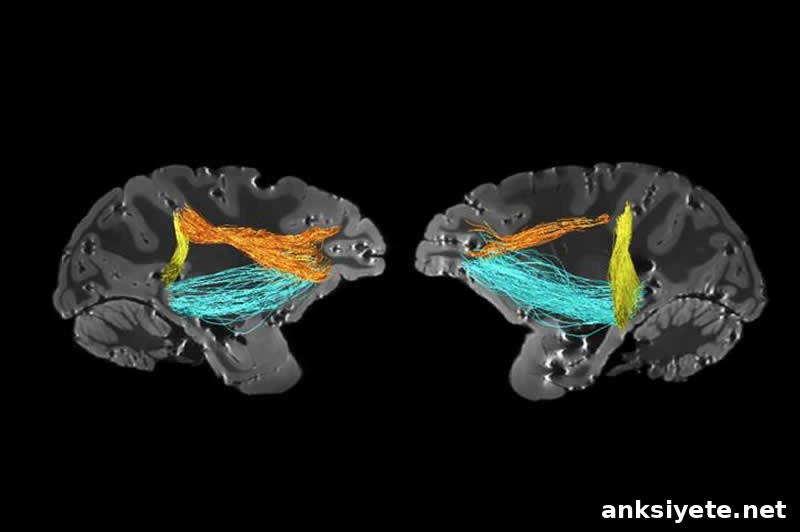
Summary: The posterior inferotemporal cortex (PITd) plays a direct and critical role in guiding attention. This unexpected finding may prompt researchers to revise established ideas about how attentional control is organized in the brain.
Source: Rockefeller University
Reading a single line of text while tuning out background noise illustrates a basic but essential brain function: selective attention. The brain continuously filters incoming sensory information so that a small subset receives focused, high-priority processing. Without this filtering, sensory input would be overwhelming and chaotic.
For decades, studies have identified a small number of brain regions in the parietal and frontal lobes as the main controllers of selective attention. A new study, however, adds an unexpected player: a region in the temporal lobe known as the posterior inferotemporal cortex (PITd). This discovery broadens the map of attentional control and suggests some long-held assumptions may need reexamination.
“The last time an attention-control area was discovered was 30 years ago,” says Winrich Freiwald, head of Rockefeller’s Laboratory of Neural Systems and co-author of the study published in the Proceedings of the National Academy of Sciences. “Finding PITd as an attentional controller is a fundamental result that may prompt us to rethink classical models of attention.”
A serendipitous discovery
Freiwald and collaborator Heiko Stemmann of the University of Bremen first noticed activity in PITd during experiments that monitored brain responses while monkeys performed a demanding visual task. The task required the animals to attend to a subset of rapidly moving dots on a screen while ignoring distractors. As expected, motion-sensitive visual areas and known attention-control regions became active. But one activated area, PITd, was puzzling: it is located in the dorsal part of the posterior inferotemporal cortex and was not known for motion sensitivity or for encoding basic visual features.
The researchers wondered whether PITd might play a role in directing attention rather than processing specific visual features. Because PITd lies outside the classic network of attention areas, the idea seemed unlikely—but the team decided to test it directly.
Mapping the locus of attention
Attention-control regions typically carry a spatial representation of the visual field: their neurons signal where attention is directed rather than what is being seen. Such neurons respond selectively when attention is focused on a particular location, and their activity is largely independent of the specific visual features present at that location.
To probe PITd, the team recorded from roughly 200 randomly chosen neurons while monkeys performed attention tasks. The researchers expected only a few neurons, if any, to show spatially specific responses. What they observed instead was striking: many PITd neurons fired selectively when attention was directed to particular locations, regardless of the visual features at those locations. The first neuron they recorded showed a clear spatial preference; the second did too, and so on. The responses were so robust that the scientists say they could distinguish the attended side of the display by listening to the neuronal signals.
These PITd neurons not only tracked where the animals were directing attention but also predicted lapses in attention. When the monkeys made mistakes by attending to the wrong location, PITd activity signaled those errors. Crucially, the neurons’ responses did not change when motion direction or color of the stimuli varied—another hallmark of an attention-control signal rather than a sensory-tuning response.
To test causality, the researchers then applied brief electrical stimulation to PITd. Stimulation biased the animals’ performance in ways consistent with shifting attention: activating PITd improved performance at the stimulated location without changing the animals’ ability to discriminate visual features. This intervention provides key evidence that PITd plays a causal role in steering spatial attention.
Implications and a new outlook
PITd’s discovery helps fill a gap in our understanding of how attention is distributed across the brain. Historically, attention has been attributed to two broad networks: a “what” pathway responsible for identifying object features, and a “where” pathway that selects locations in space. PITd appears to encode the spatial locus of attention—the “where”—but it sits anatomically among regions traditionally associated with object processing, the “what” pathway. That atypical placement suggests that the classical dichotomy between “what” and “where” networks may be overly simplistic.
Freiwald notes that PITd may have been overlooked because research efforts naturally concentrated on the first-discovered attention areas. “If you only look where earlier studies pointed, you might miss equally important control regions nearby,” he says. The unusual properties and placement of PITd encourage researchers to broaden their search for how attentional control is organized and distributed across cortical areas.
Beyond adding a new node to attention networks, PITd’s identification invites a reevaluation of functional anatomy: how attention is coordinated with object recognition and with the many other computations performed by temporal cortex. Future work will need to clarify how PITd communicates with known frontal and parietal attention regions and how its role varies across different types of attentional tasks.
Source:
Rockefeller University
Media Contacts:
Katherine Fenz – Rockefeller University
Image Source:
The image is credited to Laboratory of Neural Systems at The Rockefeller University.
Original Research: Open access
“Evidence for an attentional priority map in inferotemporal cortex.” Heiko Stemmann and Winrich A. Freiwald. PNAS doi: 10.1073/pnas.1821866116.
Abstract
Evidence for an attentional priority map in inferotemporal cortex
Brains select a subset of incoming sensory signals for enhanced processing based on behavioral goals—a process known as selective attention. This selection is commonly attributed to parietal and frontal control regions. Here, we show that the posterior inferotemporal cortex (PITd) also displays the core signatures of attentional control. PITd was identified with fMRI during an attention-demanding motion discrimination task. Single-cell recordings revealed strong modulation by attention across multiple tasks while showing no tuning to task-relevant stimulus features such as motion direction or color. PITd neurons tracked the subject’s attentional state and predicted forthcoming errors in attentional selection. Artificial stimulation of PITd shifted the focus of attention without altering feature discrimination. These properties are consistent with a feature-blind priority map encoding the locus of attention. Together, the findings position PITd, strategically located to access object information, as an attentional priority map.