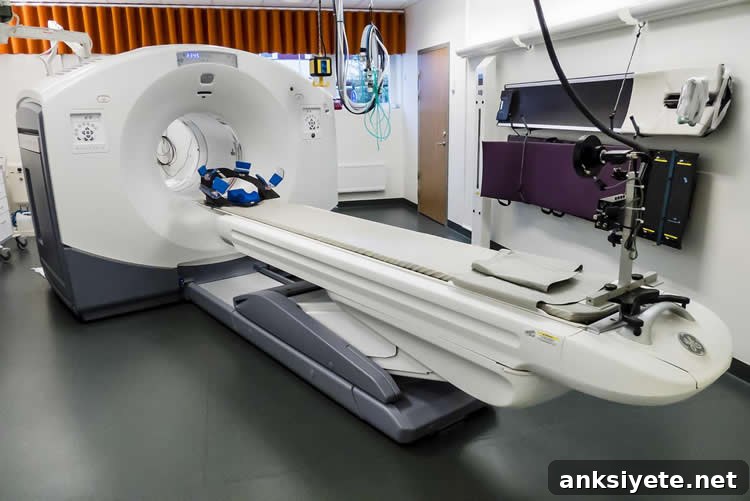
Summary: New research links the dopamine D2 receptor to long-term episodic memory and hippocampal function.
Source: Umeå University.
A European research team led by Professor Lars Nyberg at Umeå University reports that the dopamine D2 receptor is associated with long-term episodic memory, a cognitive function that commonly declines with age and in dementia. This discovery improves understanding of why some people experience memory impairment while others do not. The findings were published in the journal PNAS.
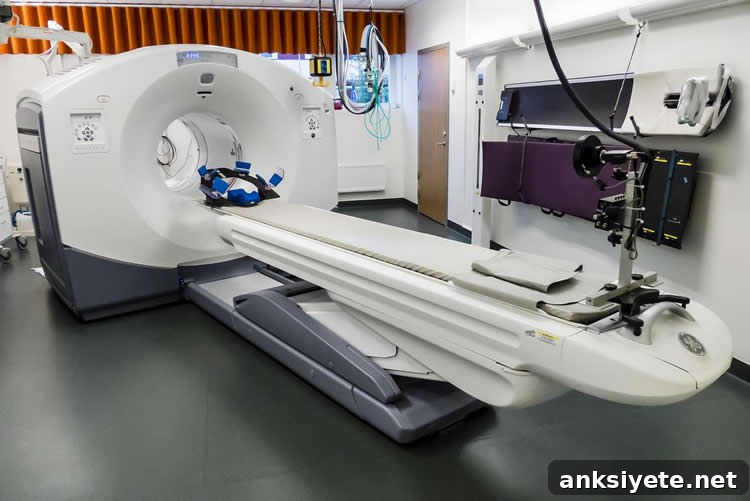
Using a combination of positron emission tomography (PET), structural and functional MRI, cognitive testing, and advanced statistical analysis, the research team investigated how the dopamine system relates to memory performance in older adults. Dopamine is a key neurotransmitter for motor control and a range of cognitive functions. Prior research has linked the D1 receptor system to prefrontal cortex–mediated processes, but the specific contribution of the D2 receptor system to memory and cognition has been less well defined.
In this study, PET imaging measured individual differences in D2 receptor availability across a large sample of 181 healthy adults aged 64–68. All participants completed a comprehensive cognitive battery assessing long-term episodic memory, working memory, and processing speed, and underwent MRI scans to evaluate brain structure and resting-state functional connectivity.
The investigators found that D2 receptor availability in the striatum, particularly the caudate, was positively associated with long-term episodic memory performance, but not with working memory or processing speed. Whole-brain analyses revealed that D2 receptor availability within the hippocampus also correlated with episodic memory. In addition, hippocampal and caudate D2 receptor availability were interrelated, and higher caudate D2 availability predicted stronger resting-state functional connectivity between the ventral caudate and medial temporal cortex, a region that includes the hippocampus.
These results support the interpretation that D2 receptors contribute specifically to hippocampus-based cognition by influencing both striatal and hippocampal regions and their interactions. The hippocampus is centrally involved in encoding and retrieving long-term episodic memories, and altered dopamine signaling at D2 receptors may help explain individual differences in memory performance among older adults.
“Our results link dopamine D2 receptor availability to long-term episodic memory, likely via effects on hippocampal function,” says Lars Nyberg, Professor of Neuroscience and Director at the Umeå Centre for Functional Brain Imaging (UFBI). “Episodic memory commonly declines with age and in dementia, so understanding how the dopamine system supports hippocampal–striatal interactions is important for explaining why some individuals maintain memory function while others are more vulnerable.”
The study was conducted at Umeå University by Lars Nyberg and collaborators including Nina Karalija, Micael Andersson, Anders Wåhlin, Jan Axelsson, Anna Rieckmann, Katrine Riklund, and others. The research was supported by several funding sources, including the Knut and Alice Wallenberg Foundation.
Funding: The study received financial support from, among others, the Knut and Alice Wallenberg Foundation (KAW).
Source: Anna Lawrence – Umeå University
Image credit: Mikael Stiernstedt
Original research: Full open-access article titled “Dopamine D2 receptor availability is linked to hippocampal–caudate functional connectivity and episodic memory” by Lars Nyberg et al., published in PNAS. DOI: 10.1073/pnas.1606309113. Published online June 23, 2016.
Umeå University. “New Clues About The Aging Brain’s Memory Functions.” NeuroscienceNews. June 29, 2016.
Abstract
Dopamine D2 receptor availability is linked to hippocampal–caudate functional connectivity and episodic memory
Dopamine D1 and D2 receptors may contribute differently to distinct aspects of memory and cognition. While the D1 receptor system has been associated with processes supported by the prefrontal cortex, the role of D2 receptors has been less clear. It has been hypothesized that D2 receptors make a particular contribution to hippocampus-based cognitive functions. In a sample of 181 healthy adults aged 64–68, the study combined assessments of episodic memory, working memory, and processing speed with MRI and PET imaging of D2 receptors using [11C]raclopride. Caudate D2 receptor availability was positively associated with episodic memory but showed no relation to working memory or processing speed. Whole-brain analyses additionally linked hippocampal D2 receptor availability to episodic memory. Hippocampal and caudate D2 receptor availability were interrelated, and resting-state functional connectivity between the ventral caudate and medial temporal cortex increased with higher caudate D2 availability. Together, these findings indicate that D2 receptors contribute specifically to hippocampus-based cognition by modulating striatal and hippocampal regions and their interactions.
Authors: Lars Nyberg, Nina Karalija, Alireza Salami, Micael Andersson, Anders Wåhlin, Neda Kaboovand, Ylva Köhncke, Jan Axelsson, Anna Rieckmann, Goran Papenberg, Douglas D. Garrett, Katrine Riklund, Martin Lövdén, Ulman Lindenberger, and Lars Bäckman. Published in PNAS, online June 23, 2016.