
Two patients experienced lasting relief from severe, disabling dystonia after deep brain stimulation (DBS), and their symptom improvement persisted for months even after their devices were accidentally turned partly or completely off, according to a report published in the journal Movement Disorders.
“Conventional wisdom holds that dystonia symptoms worsen within hours or days after stimulation stops, but these two young men retained clinical benefit despite interruptions of DBS lasting several months. To our knowledge, these cases represent the longest documented durations of sustained benefit in primary generalized dystonia. When symptoms did eventually recur, they were markedly milder than before DBS,” said senior author Michele Tagliati, MD, director of the Movement Disorders Program in the Department of Neurology at Cedars-Sinai.
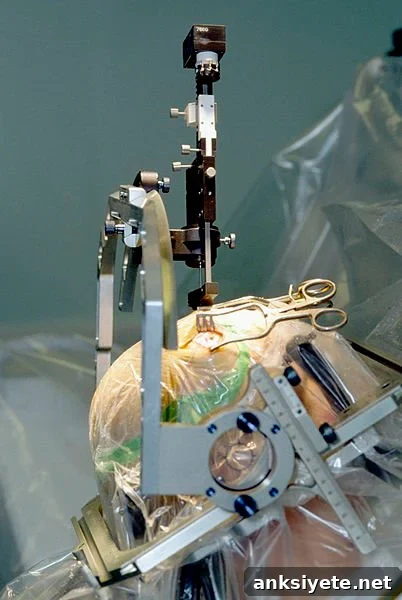
Dystonia is a neurological condition that causes involuntary muscle contractions and twisting movements, producing symptoms that range from mild discomfort to severe disability. When medications fail to control symptoms or produce intolerable side effects at higher doses, neurologists and neurosurgeons may recommend deep brain stimulation to modulate abnormal neural activity. The procedure places electrical leads in precise brain regions—typically one on each side—connected to a pulse generator implanted near the collarbone. Clinicians then use an external handheld controller to fine-tune stimulation settings. Tagliati is an expert in DBS programming, which is tailored to each patient to optimize benefits.
Relatively few studies have examined what happens when DBS is interrupted. One earlier report described rapid worsening of dystonia within 48 hours in 14 patients after stimulation stopped, with some patients becoming worse than their preoperative baseline. By contrast, another study of ten patients with generalized dystonia found that four patients showed no symptom return after 48 hours without stimulation.
Tagliati noted that the new cases align more closely with the latter study. “Several factors appear to influence which patients retain symptom relief after prolonged interruption of DBS: patient age, disease duration before treatment, how long they’ve received stimulation, and the specific stimulation parameters used. Both of our patients were young—around 20 years old—and both began DBS relatively soon after dystonia onset: one at four years, the other at seven years. One patient had five years of continuous stimulation before the interruption; the other had 18 months,” he said.
“We cannot definitively explain why these factors matter,” Tagliati added, “but our working hypothesis is that a younger brain with shorter exposure to the maladaptive effects of dystonia may have greater neuroplasticity and therefore a stronger, longer-lasting response to DBS. Notably, both patients were treated with lower energy settings than are commonly used, raising the possibility that extended low-frequency stimulation may help reestablish healthier low-frequency brain activity over time.”
In both cases the stimulation interruptions were accidental and were identified only when patients returned for follow-up after noticing mild symptom recurrence. In one patient—who had five years of prior DBS—only the right-side stimulator had been inactive for about three months; the left-side device remained operational. In the other case, the left stimulator had been off for roughly seven months and the right for about two months.
Tagliati previously coauthored a 2011 Journal of Neurology study showing that earlier DBS intervention in dystonia tends to produce faster and better outcomes. “Our earlier work demonstrated that younger patients with shorter disease duration not only improve more quickly but also achieve the best long-term results. That study showed age and disease duration together are strong predictors of sustained clinical benefit. Older patients may not show the same rapid gains, but many still experience gradual improvement over several years,” he said.
Notes about this neurology research
Tagliati has received speaker honoraria from Medtronic, Inc., and consulting fees from St. Jude Medical, Inc., Abbott Laboratories and Impax Laboratories, Inc., unrelated to this study.
Contact: Sandy Van – Cedars-Sinai Medical Center
Source: Cedars-Sinai Medical Center press release
Image Source: Image credited to Thomasbg at Wikimedia Commons and is licensed as Creative Commons Attribution-Share Alike 3.0 Unported.
Original Research: Abstract for “Sustained Relief of Generalized Dystonia Despite Prolonged Interruption of Deep Brain Stimulation” by Tyler Cheung MD, Cen Zhang MD, Joseph Rudolph MD, Ron L. Alterman MD and Michele Tagliati MD, FAAN in Movement Disorders. Published online February 11, 2013 DOI: 10.1002/mds.25353
Abstract for “Factors predicting protracted improvement after pallidal DBS for primary dystonia: the role of age and disease duration” by Ioannis U. Isaias et al. in Journal of Neurology. Published online August 2011 doi:10.1007/s00415-011-5961-9