A simple computer-based training task can rewire the brain to better regulate emotional reactions, according to a study published in NeuroImage by researchers at Ben-Gurion University of the Negev (BGU).
Dr. Noga Cohen, who led the study as part of her Ph.D. work at BGU’s Cognitive Neuropsychology Lab under Prof. Avishai Henik, explains that the research demonstrates how non-emotional cognitive training that improves the ability to ignore irrelevant information can reduce brain responses to emotional stimuli and strengthen connections involved in emotion regulation. “These changes were accompanied by stronger neural connectivity between brain regions that inhibit emotional reactions,” she said.
The team plans to explore whether this non-emotional executive control training can help people with depression or anxiety and those prone to exaggerated physiological responses to emotional information, such as elevated blood pressure. The training is simple, non-invasive, and can be adapted for diverse populations, including children, older adults, and people with neurological or psychiatric conditions.
In the controlled experiment, the researchers scanned the brains of 26 healthy volunteers with functional magnetic resonance imaging (fMRI) before and after multiple computerized training sessions. During training, participants responded to a central target arrow indicating left or right while ignoring flanking arrows pointing either the same or opposite direction. This design required recruitment of executive control to suppress irrelevant information. The team also collected resting-state fMRI data to evaluate changes in functional connectivity when the brain was not engaged in a task, and later measured responses during an emotional reactivity task that involved ignoring negative pictures.
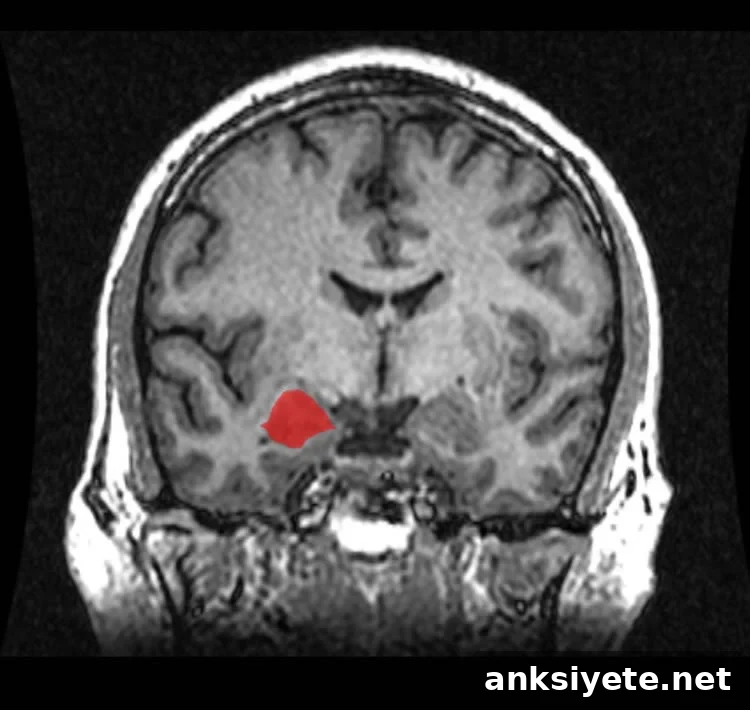
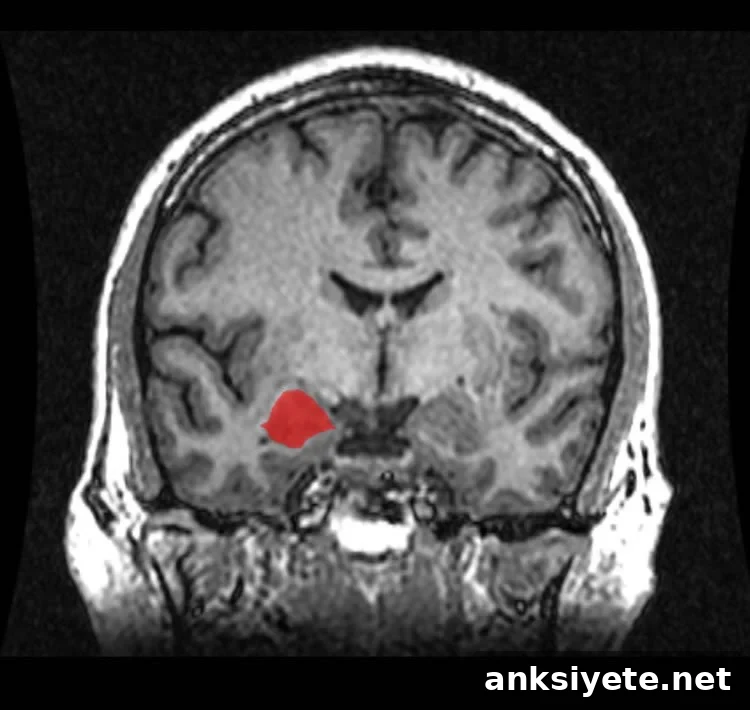
Participants who underwent the more intensive training regimen—characterized by a high frequency of incongruent trials that demand more executive control—showed significant reductions in amygdala activation in response to aversive images. The intensive training group also exhibited increased connectivity between the amygdala and a region in the right inferior frontal cortex previously implicated in emotion regulation. These neural effects emerged only after multiple training sessions and were not observed following a single session or after low-frequency training.
Dr. Cohen emphasized the potential clinical relevance: “While this study involved a relatively small sample of healthy participants and focused on short-term outcomes, it suggests that targeted executive control training can alter amygdala reactivity and strengthen prefrontal–amygdala connections. This provides a promising foundation for further research aimed at developing interventions for individuals with emotion regulation difficulties.”
The authors note that a prior study from the same group found comparable training reduced the tendency to become stuck in repetitive negative thinking about adverse events, supporting the cognitive and behavioral benefits of such executive control exercises.
Funding: This research received support from the German Academic Exchange Service (DAAD), the International Brain Research Organization (IBRO), and Minerva. Additional support came from Marie Curie Actions (CIG grant 34206) and the National Institute for Psychobiology in Israel Young Investigator Research Grant (145-14-15).
Source: Andrew Lavin – BGU
Image Source: The image is in the public domain
Original Research: Abstract for “Using executive control training to suppress amygdala reactivity to aversive information” by N. Cohen, D.S. Margulies, S. Ashkenazi, A. Schaefer, M. Taubert, A. Henik, A. Villringer, and H. Okon-Singer in NeuroImage. Published online January 5, 2015. doi:10.1016/j.neuroimage.2015.10.069
Abstract
Using executive control training to suppress amygdala reactivity to aversive information
Effective emotion regulation is crucial for adaptive behavior and is thought to depend on functional connectivity between prefrontal control areas and the amygdala. This study tested whether a non-emotional method—repeated engagement of executive control—can reduce neural and behavioral reactivity to aversive information.
Participants trained on a task that required resolving conflict between target and flanking arrows. Those who received high-frequency executive control training (80% incongruent trials) across multiple sessions showed reduced amygdala reactivity to negative images and less behavioral interference from aversive pictures. These effects did not appear after a single session and were absent in the low-frequency training group (20% incongruent trials). Resting-state fMRI revealed increased connectivity between the amygdala and the right inferior frontal gyrus following high-frequency training, indicating strengthened amygdala–prefrontal coupling. These results are the first to demonstrate that non-emotional executive control training can modulate amygdala responses to aversive stimuli and alter relevant brain network connectivity.