Humans are intuitive physicists from birth, predicting how objects will fall, topple, or roll under gravity. New research identifies brain cells that appear to underlie this inborn understanding.
Researchers at Johns Hopkins University discovered neurons in a region of the visual cortex traditionally associated with recognizing color, texture, and shape that use large-scale visual cues to infer the direction of gravity. The study, published in Current Biology, shows these neurons supply a stable reference for “which way is up,” supporting both object prediction and perceptual stability.
“Gravity is a constant and powerful force in our environment,” said senior author Charles E. Connor, professor of neuroscience and director of the Zanvyl Krieger Mind/Brain Institute at Johns Hopkins. “Our findings reveal how the visual system can extract the direction of gravity from scene structure, information that is essential for predicting object motion and for maintaining balance and posture.”
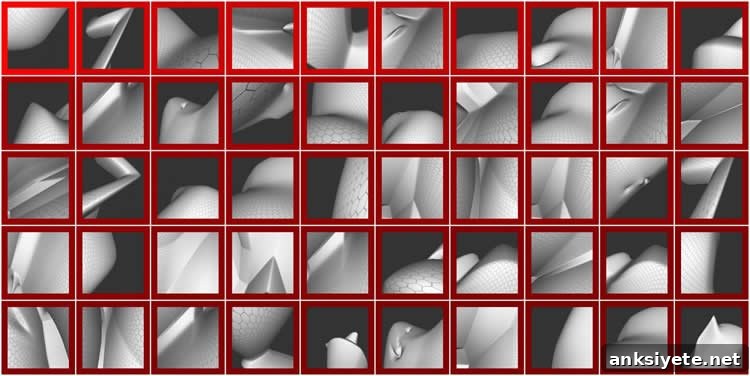
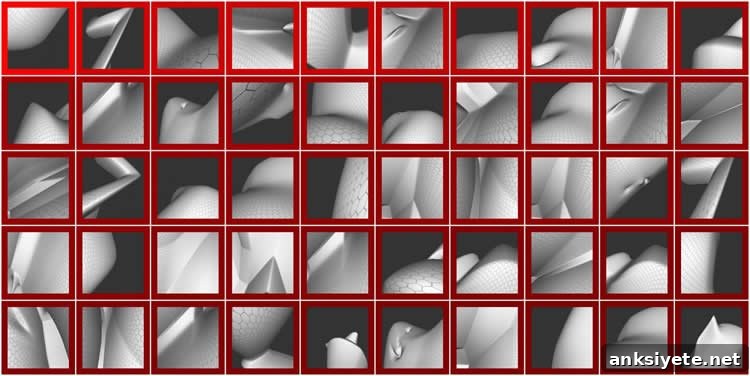
Connor and lead author Siavash Vaziri recorded responses from individual neurons in the ventral visual pathway of rhesus monkeys, a model closely related to human vision. Each neuron’s activity was measured while the animals viewed roughly 500 abstract three-dimensional scene elements displayed on a monitor. The stimuli ranged from small object-like forms to expansive planes that resembled floors, ceilings, and interior or exterior landscapes.
The team found that many neurons responded robustly to diverse stimuli that shared a common geometric alignment: large planes and long, sharp edges oriented within the same tilted rectilinear frame. Individual neurons were tuned to specific tilts, so together they could provide a continuous signal indicating the direction of gravity relative to the viewer, even as the head or eyes moved.
Put simply, these neurons encode environmental structure in a way that signals the orientation of gravity, helping the brain determine which direction is up.
“Even when we tilt our head or change gaze, the world does not appear to spin,” Connor said. “That perceptual stability depends on signals that convey a constant sense of the scene’s orientation. These neurons appear to be part of that mechanism.”
The discovery builds on earlier work from the same laboratory, first reported in Neuron in 2014, which showed ventral pathway neurons sensitive to large-scale scene structure. That earlier finding was unexpected because the ventral pathway has long been viewed primarily as a region for recognizing objects. The new results help explain why scene- and object-related processing co-exist anatomically: understanding the gravitational reference frame is fundamental to predicting how objects will behave.
Connor noted practical examples of this capability: “When a tennis player dives for a ball, the visual scene tilts dramatically, yet the player retains an accurate intuition about how the ball will fall and how to position a return. The ventral visual cortex contributes more than mere recognition—it supports a rich, physics-informed representation of object structure, material properties, balance, and motion potential.”
Funding: The research was supported by National Institutes of Health grant EY024028.
Source: Jill Rosen – Johns Hopkins University
Image Source: Image credited to Johns Hopkins University.
Original Research: Abstract for “Representation of Gravity-Aligned Scene Structure in Ventral Pathway Visual Cortex” by Siavash Vaziri and Charles E. Connor in Current Biology. Published online January 9, 2016. doi:10.1016/j.cub.2016.01.022
Abstract
Representation of Gravity-Aligned Scene Structure in Ventral Pathway Visual Cortex
Highlights
• Object- and scene-selective neurons in the ventral visual pathway show markedly different shape tuning.
• Individual scene-selective neurons respond to a diverse array of planes and extended edges.
• The diverse stimuli that activate these neurons tend to share a common rectilinear alignment tied to gravity.
• These neurons could encode a gravity-related reference frame that supports object perception and prediction.
Summary
The ventral visual pathway, traditionally associated with representing object identity and shape, also encodes large-scale scene structure aligned to the gravitational reference frame in which objects move and interact. In recordings from macaque ventral pathway neurons that prefer scene-like stimuli over isolated objects, each neuron responded not to a single shape category but to multiple scene elements that typically align with gravity: ground-like planes, ceiling-like planes, and extended convex or concave edges corresponding to wall-floor-ceiling junctions. For any given neuron, these elements generally shared a common alignment in eye-centered coordinates, meaning the neuron integrated information about multiple gravity-aligned structures as they would appear from a particular head and eye orientation. This coding strategy provides ambiguous information about individual structures but explicit information about the orientation of the environment relative to gravity. In the ventral pathway, such a representation could aid in predicting physical events involving gravity, distinguishing object-driven motion from non-gravitational movement (for example, animacy), and stabilizing perception against changes in head orientation. Together with recent evidence that the ventral pathway represents object weight, these results suggest this cortical pathway contributes not only to recognition but also to an intuitive physical understanding of objects and scenes.
“Representation of Gravity-Aligned Scene Structure in Ventral Pathway Visual Cortex” by Siavash Vaziri and Charles E. Connor in Current Biology. Published online January 9, 2016. doi:10.1016/j.cub.2016.01.022