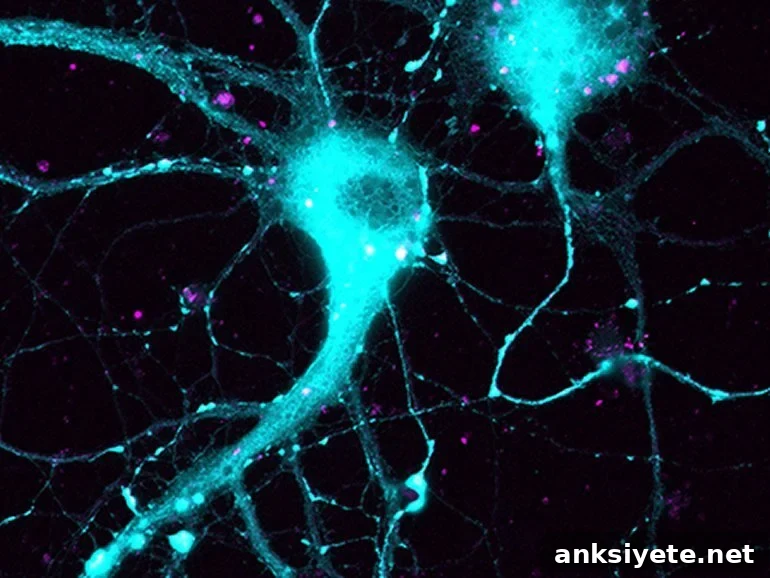
Summary: BIN1, a gene linked to Alzheimer’s disease, influences hippocampal neural activity. Neurons with elevated BIN1 levels show increased firing and are more likely to become hyperexcitable. This study identifies BIN1 as the first gene connected to hyperexcitability as a potential driving factor in Alzheimer’s disease.
Source: University of Alabama Birmingham
Researchers at the University of Alabama at Birmingham are investigating how a gene known as BIN1 may contribute to the development of Alzheimer’s disease. First flagged in large genetic studies in 2009, BIN1 has been repeatedly associated with Alzheimer’s risk, yet its role in the brain remained unclear.
In a paper published online in eLife, the UAB team reports that BIN1 helps regulate neuronal activity. Excessive neuronal activity—referred to as hyperexcitability—is increasingly recognized as a feature of early Alzheimer’s, and the new findings suggest BIN1 can drive this state. This work marks BIN1 as the first Alzheimer’s-associated gene shown to induce hyperexcitability in neural networks.
BIN1 emerged as an Alzheimer’s risk locus through genome-wide association studies that compared the genomes of thousands of people with and without the disease. These studies implicated noncoding variants near BIN1 that likely alter its expression rather than changing the protein’s sequence.
“Genetic studies repeatedly pointed to BIN1 variants in people with Alzheimer’s, but until now we lacked a clear understanding of what BIN1 does in neurons,” said Erik Roberson, M.D., Ph.D., Rebecca Gale Professor in the Department of Neurology at UAB and lead author of the study.
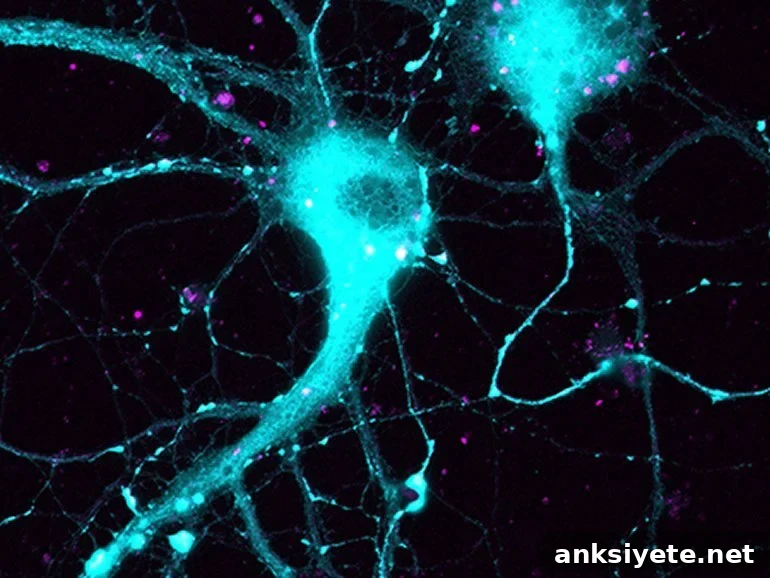
Using cultured rat hippocampal neurons and a variety of approaches to raise BIN1 expression and monitor activity, the researchers observed that neurons with higher BIN1 levels fired more frequently and showed signs of network hyperexcitability. Measurements included increased synaptic transmission rates and larger or more frequent calcium transients—both indicators of heightened neuronal activity.
“That matters because hyperexcitability is a hallmark of early Alzheimer’s,” Roberson said. “When neurons fire too often, it appears to contribute to neuronal dysfunction and damage.”
Previous work had linked BIN1 to Tau, a protein that aggregates into tangles and is a classical pathological feature of Alzheimer’s disease. In the current study the team found that Tau plays a central role in the hyperexcitability produced by BIN1.
“Reducing Tau made neurons resistant to BIN1-induced hyperexcitability,” said Yuliya Voskobiynyk, a senior graduate student in Roberson’s lab who led the experiments. “We also identified a third component in this pathway: L-type voltage-gated calcium channels. These calcium channels, which are essential for neuronal firing, form a complex with BIN1 and Tau. Lowering Tau levels both blocked hyperexcitability and reduced the formation of that complex.”
The experiments were performed in cell cultures and animal models, and Roberson emphasizes that the findings are preliminary. Tau remains a major focus of Alzheimer’s research worldwide, and the interactions between BIN1, Tau, and calcium channels are only beginning to be explored.
“It’s clear that BIN1 has a role in Alzheimer’s biology, but important questions remain,” Roberson said. “We do not yet know whether disease risk results from too much BIN1, too little, or from subtle shifts in which BIN1 isoforms are produced in people with Alzheimer’s.”
Next steps for the lab include defining BIN1’s normal function in the healthy brain and determining how those functions change in disease. Roberson’s team is already pursuing drug strategies aimed at blocking interactions between Tau and BIN1-like proteins, exploring whether such interventions could prevent or reduce hyperexcitability and downstream damage.
“This study links Tau, BIN1 and calcium channels in a pathway that can alter neuronal network behavior,” Roberson said. “Understanding the molecular details of how these proteins bind and influence one another may reveal new therapeutic targets for Alzheimer’s.”
Funding: This research was supported by National Institutes of Health grants RF1AG059405, R01NS075487, R01MH114990, T32NS095775 and T32NS061788; the Alzheimer’s Association; and the Weston Brain Institute.
Co-authors include Jonathan R. Roth, J. Nicholas Cochran, Travis Rush, Jacob S. Mesina, Mohammad Waqas and Rachael Vollmer from the UAB Center for Neurodegeneration and Experimental Therapeutics, Alzheimer’s Disease Center and Evelyn McKnight Brain Institute; Nancy V.N. Carullo and Jeremy Day, Ph.D., of the UAB Department of Neurobiology; and Lori McMahon, Ph.D., of the UAB Department of Cell, Developmental and Integrative Biology.
About this genetics research article
Source:
University of Alabama Birmingham
Contacts:
Bob Shepard – University of Alabama Birmingham
Image Source:
Image credited to University of Alabama Birmingham.
Original Research: Open access
“Alzheimer’s disease risk gene BIN1 induces Tau-dependent network hyperexcitability” by Yuliya Voskobiynyk, Jonathan R. Roth, J. Nicholas Cochran, Travis Rush, Nancy VN Carullo, Jacob S. Mesina, Mohammad Waqas, Rachael M. Vollmer, Jeremy J. Day, Lori L. McMahon, Erik D. Roberson. eLife.
Abstract
Alzheimer’s disease risk gene BIN1 induces Tau-dependent network hyperexcitability
Genome-wide association studies identified the BIN1 locus as a significant genetic risk factor for Alzheimer’s disease (AD). A key obstacle to understanding BIN1’s role in AD has been its unclear function in neurons. Many AD-associated BIN1 variants are noncoding and likely alter expression levels. In this study, increasing expression of the predominant neuronal human BIN1 isoform in cultured rat hippocampal neurons produced network hyperexcitability on multielectrode arrays, raised the frequency of synaptic transmission, and increased calcium transients—together indicating that elevated BIN1 promotes greater neuronal activity. Mechanistically, BIN1 interacted with L-type voltage-gated calcium channels (LVGCCs), and those BIN1–LVGCC interactions were modulated by Tau in rat neurons and mouse brain. Notably, reducing Tau prevented BIN1-induced network hyperexcitability. These findings clarify aspects of BIN1’s neuronal function and suggest it may contribute to Tau-dependent hyperexcitability in Alzheimer’s disease.