Could Brainwaves Become a Routine Health Vital Sign?
Summary: Researchers are developing a more accessible way to monitor brain health.
Source: Simon Fraser University
Researchers at Simon Fraser University aim to make a brain vital-sign test as routine as blood pressure or heart rate during a medical check-up.
A team led by Professor Ryan D’Arcy, in collaboration with partners from the Mayo Clinic, Sheba Medical Centre in Israel, and the high-tech firm HealthTech Connex Inc., is developing a practical and accessible approach for monitoring brain health.
In a paper published in the journal Frontiers in Neuroscience, the researchers present the first physiology-based framework for brain vital signs. Their method translates complex brainwave data into objective, clinically useful metrics by applying established brainwave technologies that have been in use for decades.
HealthTech Connex Inc. is developing the NeuroCatch™ platform to capture high-quality recordings of the brain’s vital signs and to support clinical deployment.
“The brain vital-sign framework presented in Frontiers in Neuroscience represents an important first step toward an easy, repeatable way to monitor brain health,” says D’Arcy. “Potential applications include concussion and other brain injuries, stroke, dementia, and a range of neurological disorders.”
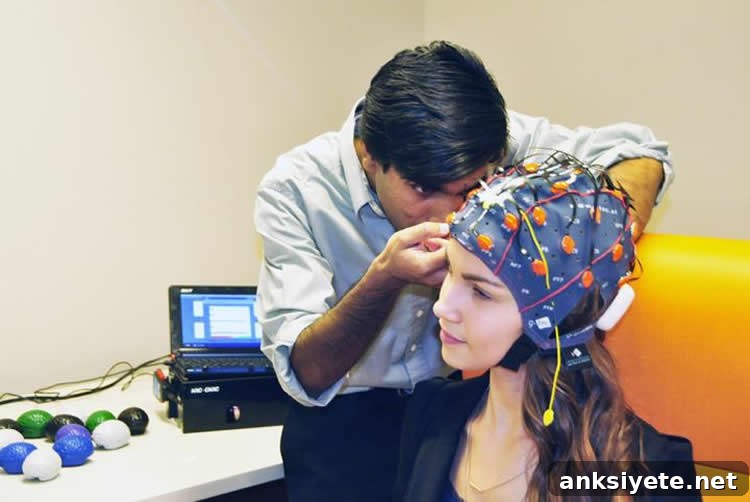
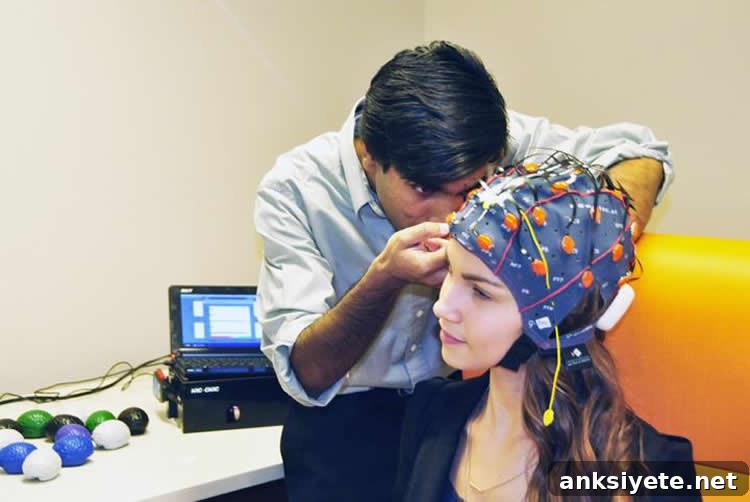
Vital signs such as blood pressure or pulse are commonly used in clinics and hospitals to assess bodily systems. The NeuroTech Lab at Simon Fraser University, based in Surrey Memorial Hospital, has adapted non-invasive electrode measurements of the brain’s electrical activity to track core brain functions over time—what the team describes as the brain’s vital signs.
The researchers focused on event-related potentials (ERPs), which are specific patterns in the brain’s electrical response tied to sensory processing, attention, and cognitive processing. ERPs are derived from electroencephalography (EEG) and provide objective, physiological measures of brain function that are not dependent on behaviour-based assessments.
Historically, ERP methods have been used mainly in research settings with limited clinical translation. Over the last two decades, D’Arcy’s group has worked to bridge that gap by developing clinical ERP applications that can evaluate functional status after injury or disease.
“Brainwaves offer objective physiological measures of brain function,” says D’Arcy, who holds the BC Leadership Chair in Medical Technologies at SFU. “We have spent twenty years addressing the challenge of turning those signals into a rapid, accessible vital sign for brain function.”
Unlike traditional assessments that are typically applied after symptoms or injury appear and often rely on subjective behavior-based tests, this framework supports routine baseline measurements. Establishing an objective baseline makes it possible to detect changes in brain function if injury or disease occurs and to monitor treatment response.
The framework selects three core ERPs as initial indicators of brain health: the auditory N100 (related to auditory sensation), the auditory oddball P300 (basic attention), and the N400 (speech and higher-level cognitive processing). The research demonstrates that these components can be reliably recorded in individual subjects and transformed into an accessible brain vital-sign (BVS) metric.
The team validated the framework in healthy younger and older adults (ages 22–82). The results showed high detection rates of the selected ERPs at the individual level and confirmed expected age-related differences, such as delayed P300 latency in older adults. The BVS transformation reflected these differences, with the basic attention latency sub-component indicating slower processing in older participants.
Lead author Sujoy Ghosh Hajra, a PhD student working with D’Arcy, emphasizes the significance of the work: “We describe the world’s first physiology-driven brain vital-sign measure that allows us to quantify brain vitality over time.” The paper’s global interest—exceeding 1,000 views—underlines the clinical need for objective brain health metrics.
About this neurology research article
Funding: This research was supported in part by Mathematics of Information Technology and Complex Systems (MITACS, Grant #IT03240), the Natural Sciences and Engineering Research Council of Canada (NSERC, Grant #298457-2009), and the Canadian Institutes for Health Research (CIHR, Grant #CCI-109608).
Conflict of Interest: Several authors have affiliations with HealthTech Connex Inc., a company developing the NeuroCatch™ platform, which could present a potential financial interest in commercialization.
Source: Marianne Meadahl – Simon Fraser University
Image credit: Marianne Meadahl, SFU
Original research: Full open access research: “Developing Brain Vital Signs: Initial Framework for Monitoring Brain Function Changes Over Time” by Sujoy Ghosh Hajra, Careesa C. Liu, Xiaowei Song, Shaun Fickling, Luke E. Liu, Gabriela Pawlowski, Janelle K. Jorgensen, Aynsley M. Smith, Michal Schnaider-Beeri, Rudi Van Den Broek, Rowena Rizzotti, Kirk Fisher and Ryan C. N. D’Arcy, published online May 12, 2026 in Frontiers in Neuroscience. DOI: 10.3389/fnins.2016.00211
Abstract
Developing Brain Vital Signs: Initial Framework for Monitoring Brain Function Changes Over Time
Clinical assessment of brain function traditionally depends on indirect, behavior-based tests that can be subjective and influenced by confounding factors. Event-related potentials (ERPs), extracted from EEG recordings, provide objective physiological measures but have seen limited clinical use. Building on two decades of clinical ERP development, the authors identify the need for an accessible framework to extract and interpret ERP measures as routine brain vital signs.
The proposed framework isolates three ERPs as initial indicators: the auditory N100 for sensation, the P300 for basic attention, and the N400 for speech-related cognitive processing. Validation in healthy adults across a wide age range confirmed reliable identification of these ERPs at the individual level, revealed predictable age-related latency changes, and demonstrated a linear transformation into a brain vital-sign (BVS) metric. These findings represent a foundational step toward using ERPs as standardized, physiologically driven indicators of brain health, with potential applications in monitoring conditions such as concussion and dementia.
Paper: “Developing Brain Vital Signs: Initial Framework for Monitoring Brain Function Changes Over Time” by Sujoy Ghosh Hajra et al., Frontiers in Neuroscience, published online May 12, 2026. DOI: 10.3389/fnins.2016.00211