Johns Hopkins scientists hope discovery will drive drug treatments.
Researchers at Johns Hopkins University School of Medicine report a major advance in understanding the cellular mechanisms that drive meningioma, the most common type of brain and spinal cord tumor. Published in Molecular Cancer Research, the new study identifies a critical pathway that becomes dysregulated in these tumors and points to molecular targets that could be explored for future drug development.
The research team, led by Gilson S. Baia, Ph.D., a faculty research associate in the Department of Neurosurgery, focused on a signaling cascade known as the Hippo pathway and its downstream effector YAP1 (Yes-associated protein 1). In normal tissues, the Hippo pathway helps control organ size and prevents excessive cell proliferation by keeping YAP1 out of the nucleus. When this regulatory system fails, YAP1 moves into the cell nucleus and activates genes that drive cell growth and tumor formation.
Baia and colleagues based their work on prior findings that about two-thirds of meningioma cases harbor mutations in the NF2 tumor suppressor gene. NF2 encodes the protein Merlin, which contributes to Hippo pathway activation. When Merlin is lost or nonfunctional, Hippo signaling weakens and YAP1 is freed to enter the nucleus. The Johns Hopkins team set out to determine whether this chain of events is central to meningioma development and progression.
To investigate YAP1’s role, the team analyzed 70 human meningioma tissue samples and found nuclear YAP1 expression in every sample examined, independent of tumor grade. That consistent presence indicates that YAP1 activation may be an early, common event in meningioma biology rather than a change limited to high-grade tumors. In laboratory experiments, reducing nuclear YAP1 levels in meningioma cells decreased tumor cell proliferation, while overexpressing YAP1 increased both cell growth and migratory behavior.
Further strengthening the link, the researchers implanted human meningioma cell lines engineered to overexpress YAP1 into mouse brains. All mice that received cells with excess YAP1 developed tumors, demonstrating that elevated YAP1 is sufficient to drive tumor formation in vivo. These findings connect loss of Merlin (from NF2 mutation), Hippo pathway disruption, and YAP1-driven gene activation into a coherent mechanism for meningioma initiation and growth.
The next priority for the Johns Hopkins team is to identify the specific genes YAP1 activates when it localizes to the nucleus in meningioma cells. By mapping the YAP1-dependent transcriptional program, researchers hope to uncover direct molecular targets for therapeutic intervention. Drugs that block YAP1 activity, prevent its nuclear localization, or inhibit its key target genes could form the basis of new treatments designed to slow or halt meningioma progression.
This study also places meningioma in the broader context of cancer biology. The Hippo pathway and YAP1 have been implicated in several other malignancies, including lung and ovarian cancers, and NF2 mutations appear in other tumor types such as mesothelioma. Establishing YAP1 as an oncogenic driver in meningioma expands opportunities to repurpose or develop agents that target this pathway across multiple cancers.
Notes about this brain and spinal cord research and article
Funding: The research was supported by donations from Leonard and Phyllis Attman and the Meningioma Mommas Foundation.
Investigators: Other Johns Hopkins researchers involved in the study include Otavia L. Caballero, M.D., Ph.D.; Brent A. Orr, M.D., Ph.D.; Janelle S. Y. Ho; and Gregory Riggins, M.D., Ph.D.
Contact: Stephanie Desmon – Johns Hopkins Medicine
Source: Johns Hopkins Medicine press release
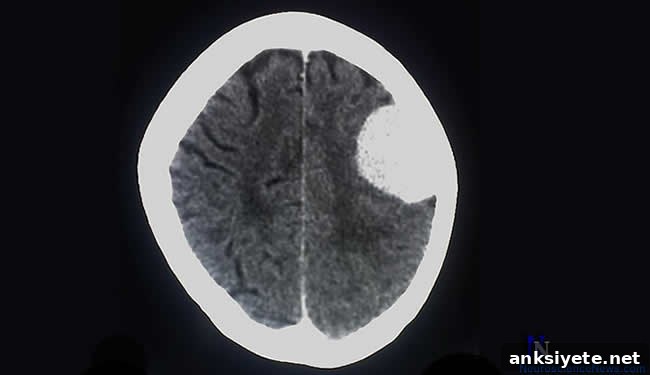
Image Source: Neuroscience image of a meningioma tumor taken from a public-domain image.
Original Research: Abstract for “Yes-Associated Protein 1 Is Activated and Functions as an Oncogene in Meningiomas” by Gilson S. Baia et al., Molecular Cancer Research 2012; doi: 10.1158/1541-7786.MCR-12-0116