Summary: Lowering levels of H3Q5dop in rat models during cocaine withdrawal reversed cocaine-driven changes in gene expression and reduced drug-seeking behaviors.
Source: Mount Sinai Hospital
Researchers at the Icahn School of Medicine at Mount Sinai have identified a previously unrecognized role for dopamine that operates independently of classic synaptic transmission. Their findings, published in the journal Science, reveal that dopamine can modify chromatin to influence gene expression changes associated with chronic cocaine exposure and relapse vulnerability.
In this study, lead author Ian Maze, PhD, Associate Professor of Neuroscience and Pharmacological Sciences at Mount Sinai, and colleagues show that dopamine is not limited to transmitting signals between neurons. Instead, dopamine can be chemically attached to histone proteins in the cell nucleus, a process that alters how tightly DNA is packaged and thereby shifts which genes are turned on or off. According to Maze, this dopaminylation of histones affects brain regions responsible for motivation and reward, and it plays a significant role in susceptibility to cocaine relapse when disrupted by drug exposure.
The work centers on chromatin biology: each cell contains long strands of DNA wrapped around histone protein “spools” to form nucleosomes. How tightly DNA is packaged influences gene activity—tightly wound DNA is less accessible and less likely to be expressed, while looser packaging increases expression. Histones are subject to many chemical modifications that regulate this packaging and the resulting gene expression patterns.
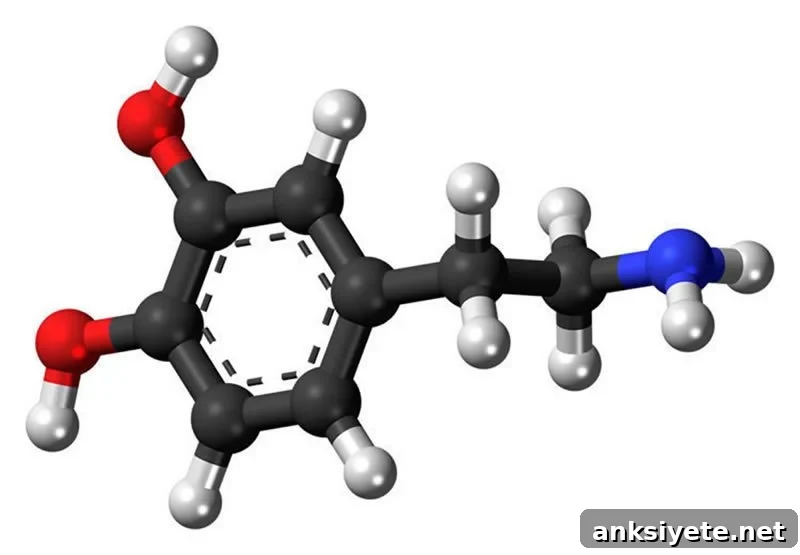
Dopamine is widely known as a neurotransmitter that reinforces rewarding behaviors like eating and sex, supporting motivation, attention, mood, and movement. The new findings add a nuclear dimension to dopamine’s influence: beyond signaling between cells, dopamine can become covalently bound to histone proteins, directly influencing transcriptional programs in neurons.
The research specifically implicates histone H3 glutamine 5 dopaminylation (H3Q5dop) in the ventral tegmental area (VTA), a midbrain region central to reward circuitry and relapse risk. The team discovered that the enzyme transglutaminase 2 can attach dopamine to histone H3, creating H3Q5dop. Accumulation of this modification in VTA neurons during cocaine withdrawal was linked to sustained changes in gene expression that sensitize the reward circuit and increase relapse vulnerability.
To test causality, the investigators reduced H3Q5dop levels in the VTA of rats undergoing cocaine withdrawal. This intervention reversed many cocaine-induced transcriptional changes, decreased dopamine release in the nucleus accumbens, and reduced cocaine-seeking behavior, demonstrating that H3Q5dop contributes directly to relapse-related plasticity.
Ashley Lepack, PhD, a researcher in Maze’s lab and first author of the study, emphasizes that histone dopaminylation represents a neurotransmission-independent mechanism by which dopamine can alter gene expression, offering new insight into molecular drivers of relapse vulnerability.
The authors note broader implications: this form of chromatin modification may influence other reward-related behaviors and disorders and could be relevant to neurodegenerative conditions involving dopamine neurons, such as Parkinson’s disease. Maze cautions that while the findings suggest intriguing possibilities—such as whether aberrant dopaminylation contributes to neuronal loss—further work is required to define any direct links in humans.
These results build on the team’s prior work showing that serotonin can also modify histone proteins to regulate gene expression, indicating a wider class of neurotransmitter-driven chromatin modifications that shape neuronal function and behavior.
Early analyses of human post-mortem tissue suggest parallels with the rodent results, but the authors stress that key biochemical questions remain before translating these findings to clinical trials. From a therapeutic perspective, the rodent experiments have already identified molecular mechanisms capable of reversing addictive behaviors, offering potential targets for future interventions.
Contributing institutions include the State University of New York at Buffalo, The Rockefeller University, McGill University, and Vanderbilt University School of Medicine. The research was funded by grants from the National Institute on Drug Abuse and the National Institute of Mental Health.
Original Research: Closed access. Citation: “Dopaminylation of histone H3 in ventral tegmental area regulates cocaine seeking,” Ashley E. Lepack et al., Science. DOI: 10.1126/science.aaw8806.
About this neuroscience research article
Media contacts
Elizabeth Dowling – Mount Sinai Hospital
Image source:
The image is in the public domain.
Feel free to share this genetics and addiction news.