
Why do Parkinson’s disease symptoms differ so widely between patients? A research consortium led by the CNRS Laboratoire d’Enzymologie et Biochimie Structurales has made important progress toward answering this question.
Parkinson’s disease is driven by abnormal assemblies of a neuronal protein called alpha-synuclein, which forms fibrillar deposits inside neurons and ultimately contributes to their death. The research team has successfully produced and characterized two structurally distinct types of alpha-synuclein aggregates. Crucially, they demonstrate that one structural form is markedly more toxic and more capable of invading neurons than the other. These findings, published in Nature Communications on October 10, reveal a molecular basis for patient-to-patient variation in alpha-synuclein accumulation and open the door to more precise diagnostic and therapeutic approaches tailored to distinct forms of the disease.
Parkinson’s disease is the second most common neurodegenerative disorder after Alzheimer’s and affects tens of thousands of people in many countries. Clinical presentation varies: around 60% of patients experience pronounced tremors, while others develop non-motor symptoms such as depression, behavioral changes, and diverse motor impairments. These variations in clinical features have long suggested that Parkinson’s disease may encompass multiple molecular subtypes.
The underlying pathology centers on alpha-synuclein, a protein normally abundant at neuronal synapses. When alpha-synuclein misfolds, it can self-assemble into fibrils that spread from neuron to neuron. Misfolded fibrils recruit native alpha-synuclein within newly invaded neurons, enlarging the deposits. Because of this template-driven propagation, many researchers consider these aggregates to behave in a prion-like manner. Persistent deposits are harmful: they disrupt cellular function and trigger pathways leading to apoptosis, or programmed cell death.
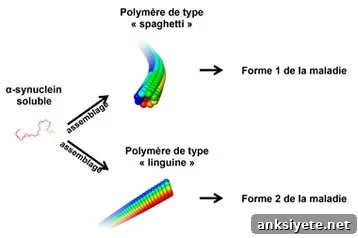
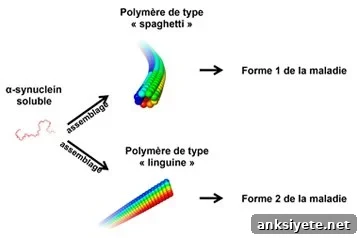
In controlled laboratory experiments, the investigators generated two reproducible alpha-synuclein aggregate strains that differ only in the stacking arrangement of the protein molecules. Under high-resolution imaging and biochemical analysis, one strain forms thin, cylindrical fibrils—the “spaghetti” type—while the other assembles into broader, flatter ribbons akin to “linguine.” To determine whether structural distinctions translate into different biological behaviors, the team exposed cultured neuronal cells to each aggregate type and monitored outcomes.
Results showed clear functional divergence. The “spaghetti” strain adhered to neuronal membranes more effectively, entered cells more readily, and resisted the cell’s clearance mechanisms. Once internalized, spaghetti-type aggregates were far more toxic and induced rapid neuronal loss. By contrast, the “linguine” strain displayed weaker cell binding and uptake, was partially controlled by cellular degradation pathways, and proved less acutely toxic under the same conditions. These differences indicate that aggregate architecture alone can dictate pathogenic potential and propagation efficiency.
The authors propose that the existence of at least two alpha-synuclein aggregate conformations helps explain why clinicians encounter distinct Parkinson’s disease phenotypes. Ongoing experiments in animal models, including mice, aim to confirm whether these laboratory findings reproduce differences in disease progression and symptom patterns in vivo. If validated, such strain-specific behavior could have immediate clinical implications.
First, biochemical or imaging assays that discriminate aggregate types might enable more accurate diagnosis and staging by revealing the dominant alpha-synuclein strain in a patient’s brain or biological samples. Second, knowing which strain is present could inform prognosis by estimating the likely virulence and spread of pathology. Finally, a refined structural understanding of each aggregate form can guide development of targeted therapies designed to disrupt assembly, block cell entry, enhance clearance, or neutralize strain-specific toxic mechanisms—paving the way for precision medicine approaches in Parkinson’s disease.
Notes about this Parkinson’s disease research
Contact: Ronald Melki – CNRS Délégation Paris Michel-Ange
Source: CNRS Délégation Paris Michel-Ange press release
Image source: CNRS/Luc Bousset, adapted from the original press materials.
Original research: “Structural and functional characterization of two alpha-synuclein strains” by Luc Bousset, Laura Pieri, Gemma Ruiz-Arlandis, Julia Gath, Poul Henning Jensen, Birgit Habenstein, Karine Madiona, Vincent Olieric, Anja Böckmann, Beat H. Meier and Ronald Melki. Published in Nature Communications, October 10, 2013. DOI: 10.1038/ncomms3575.
Keywords: Parkinson’s disease, alpha-synuclein, protein aggregates, neuronal toxicity, prion-like propagation, diagnosis, targeted therapy