
Testing saliva for the stress hormone cortisol in otherwise healthy older adults may help identify people who should undergo cognitive screening, according to a study published online August 19, 2015, in the journal Neurology.
Researchers found that higher evening salivary cortisol levels were linked to smaller total brain volume and poorer performance on tests of memory and thinking. The results suggest a potential, noninvasive way to flag older adults at higher risk of cognitive decline for further evaluation.
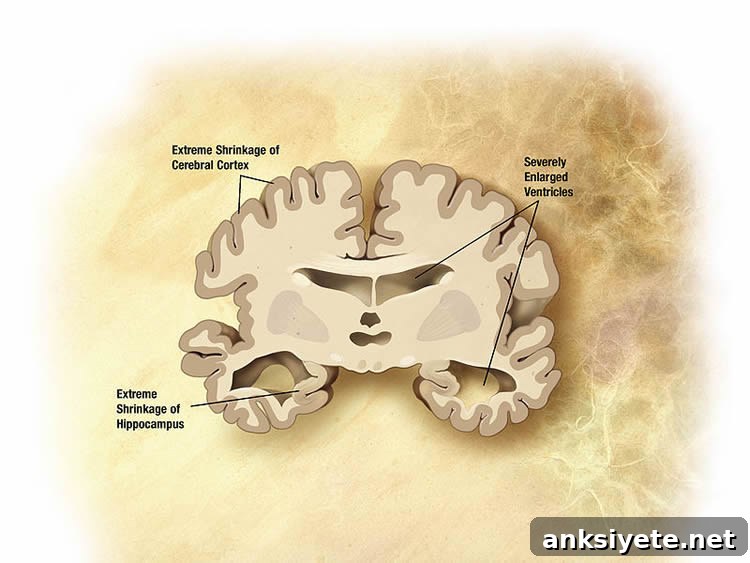
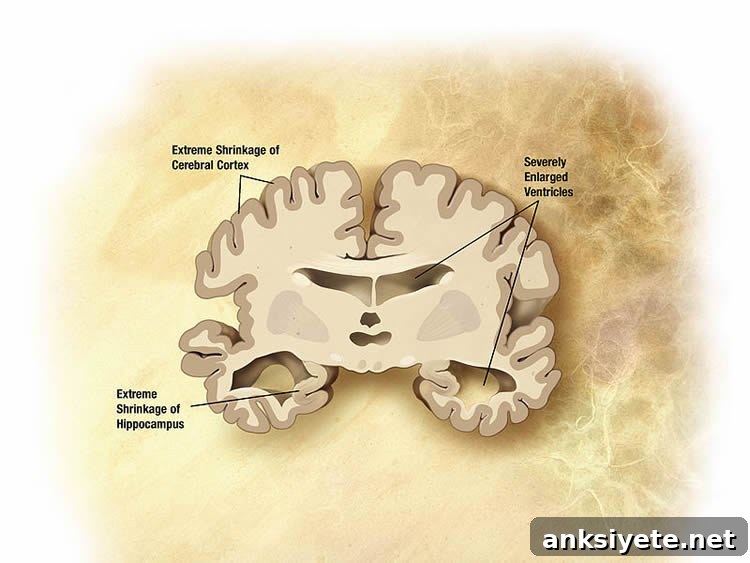
“Previous research has shown that depression increases dementia risk, but the mechanisms remain unclear,” said Lenore J. Launer, PhD, of the National Institute on Aging and a member of the American Academy of Neurology. “Elevated cortisol is common in depression, and one theory is that prolonged exposure to high cortisol may damage the hippocampus, a region critical for memory.”
The study analyzed data from 4,244 community-dwelling participants who did not have dementia and whose average age was 76. Each participant underwent a 1.5T brain MRI to measure regional and total brain volumes and completed a battery of cognitive tests assessing memory, processing speed, executive function, and other domains. Saliva samples were collected at home once in the morning (about 45 minutes after waking) and once at night to determine cortisol levels. For analysis, participants were grouped into tertiles representing low, medium, and high cortisol.
Compared with participants in the lowest evening cortisol tertile, those in the highest tertile had a smaller total brain volume — a mean difference of about 16 milliliters. Volume reductions were observed across brain regions but were more pronounced in gray matter than in white matter. Higher evening cortisol also correlated with poorer overall cognitive performance across domains, including memory and executive function.
Interestingly, higher morning cortisol showed a different pattern: it was modestly associated with greater normal-appearing white matter volume and with slightly better processing speed and executive functioning, but it was not linked to gray matter volume or memory performance. These contrasting associations for morning versus evening cortisol suggest that diurnal cortisol patterns may differentially influence brain tissue and cognitive abilities in older adults.
Because the study is cross-sectional — a single snapshot in time — it cannot determine causality. “We don’t know whether elevated cortisol leads to brain volume loss or whether age-related brain changes impair the brain’s ability to regulate cortisol,” Launer noted. It is possible that reduced brain resilience with aging makes the brain less able to modulate the effects of the hypothalamic-pituitary-adrenal (HPA) axis, allowing cortisol exposure to contribute to further neuronal loss. Better understanding of these relationships could point to interventions that limit cortisol’s impact on brain health and cognition.
The authors acknowledged limitations, including that cortisol was measured on only one day. However, the large sample size may reduce the influence of day-to-day variability on the main findings.
Funding: The study received support from the National Institutes of Health, the National Institute on Aging, the Icelandic Heart Association, and the Icelandic Parliament.
Source: Rachel Seroka – American Academy of Neurology (AAN)
Original research: The study is titled “Salivary cortisol, brain volumes, and cognition in community-dwelling elderly without dementia” by Mirjam I. Geerlings, Sigurdur Sigurdsson, Gudny Eiriksdottir, Melissa E. Garcia, Tamara B. Harris, Vilmundur Gudnason, and Lenore J. Launer, published online August 19, 2015, in Neurology. DOI: 10.1212/WNL.0000000000001931.
Abstract
Salivary cortisol, brain volumes, and cognition in community-dwelling elderly without dementia
Objective: This study evaluated how morning and evening salivary cortisol levels relate to regional brain volumes and cognitive functioning in older adults living in the community who do not have dementia.
Method: From the Age, Gene/Environment Susceptibility (AGES)–Reykjavik Study, researchers included 4,244 participants without dementia (mean age 76 ± 5 years; 58% women). All participants had 1.5T brain MRI scans, cognitive assessments, and saliva collected at home 45 minutes after awakening and at night. Linear regression models were used to examine cross-sectional associations between cortisol levels, brain volumes, and cognitive outcomes, adjusting for age, sex, education, intracranial volume, smoking, steroid use, white matter lesions, and brain infarcts on MRI.
Results: Higher evening cortisol was associated with smaller total brain volume (highest vs. lowest tertile: −16.0 mL; 95% CI −19.7 to −12.2 mL), after adjustment for covariates. Volume reductions affected multiple brain regions and were larger in gray matter than in white matter. Higher evening cortisol also correlated with worse cognitive functioning across domains. Higher morning cortisol was linked to modestly greater normal-appearing white matter volume and to better processing speed and executive function, but it showed no association with gray matter volume or memory performance.
Conclusions: In older adults, morning and evening cortisol levels show different associations with gray and white matter volumes and with cognitive function. Clarifying these differential relationships may help guide strategies to reduce the impact of HPA axis dysfunction on late-life cognitive impairment.