
Summary: A new study finds that sleep deprivation raises levels of the Alzheimer’s-associated protein tau and speeds its spread in the brain. The results suggest that insufficient sleep alone can promote processes linked to Alzheimer’s disease.
Researchers at Washington University School of Medicine in St. Louis report that poor sleep increases tau and accelerates tau pathology in both mice and humans.
Poor sleep has long been associated with Alzheimer’s disease, but the mechanisms linking sleep disruption to neurodegeneration were unclear. In experiments with mice and in human cerebrospinal fluid samples, investigators from Washington University demonstrate that sleep loss elevates tau protein levels and promotes the spread of tau aggregates across brain regions, a key step toward cognitive decline.
The findings, published in the journal Science, indicate that disturbed sleep itself can contribute to biological changes that favor Alzheimer’s progression and reinforce the idea that maintaining healthy sleep may protect brain health.
“This work suggests that everyday behaviors such as sleep or sleep loss can influence how rapidly Alzheimer’s pathology spreads through the brain,” said senior author David Holtzman, MD. “Previous research linked sleep disruption and Alzheimer’s in part through amyloid beta, but here we show that lack of sleep also markedly increases the damaging protein tau and accelerates its spread.”
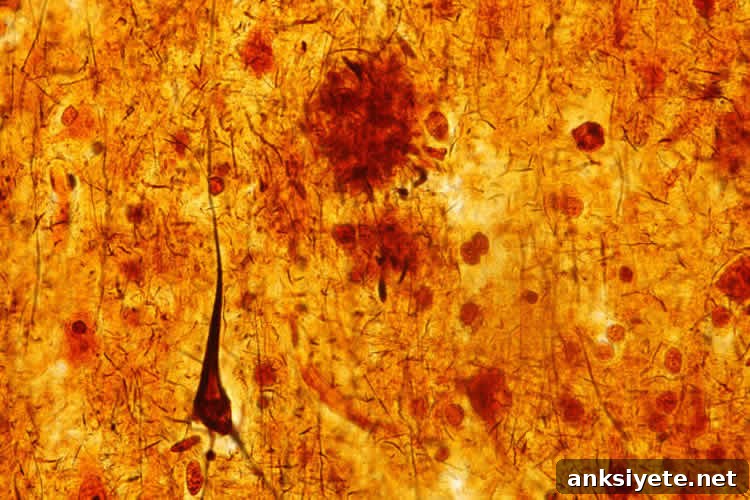
Tau normally occurs in the brain and plays roles in neuron structure and function. Under pathological conditions, however, tau can form toxic tangles that harm nearby brain tissue and lead to cognitive impairment. Earlier observations showed higher tau levels in older adults who sleep poorly, but it was uncertain whether sleep loss directly caused the increase. To address that question, the research team measured tau in both animal and human models under normal and sleep-deprived conditions.
In mice, tau levels in the fluid that bathes brain cells roughly doubled during the animals’ active period at night compared with their typical sleep period during the day. When researchers disturbed the mice’s daytime rest, tau concentrations rose significantly. Similar effects were observed in humans: cerebrospinal fluid (CSF) samples collected from eight participants showed that an all‑night period of wakefulness increased CSF tau by about 50 percent compared with levels after a normal night’s sleep.
Because sleep loss can cause stress and changes in behavior that might independently affect tau, the investigators used genetically modified mice that could be kept awake without producing typical stress-related responses. These mice were aroused for extended periods by a benign, reversible chemical stimulus; when the stimulus ended they resumed normal sleep without compensatory stress indicators. In these mice, prolonged wakefulness also increased interstitial fluid tau, supporting the conclusion that wakefulness itself—rather than stress or other behavioral changes—drives tau elevation.
The researchers interpret these results to mean that normal waking activity releases tau into the brain’s interstitial fluid, and that sleep reduces that release and facilitates clearance. Repeated or chronic sleep deprivation disrupts this balance, allowing tau to accumulate and increasing the likelihood that it will assemble into harmful tangles.
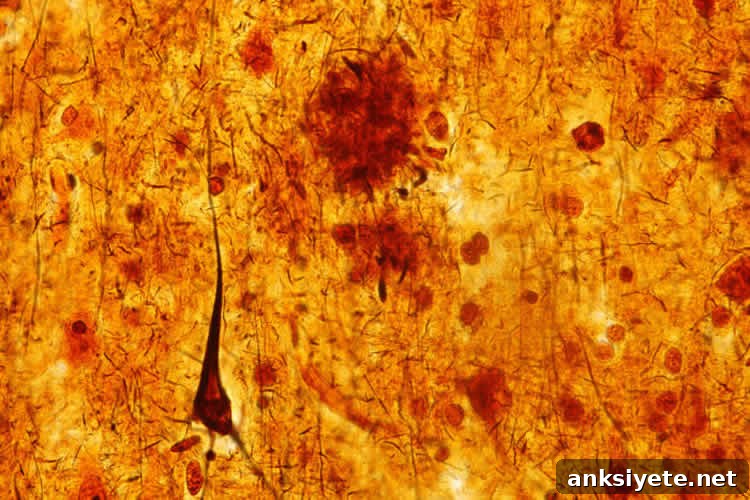
In Alzheimer’s disease, tau tangles first appear in memory-related regions such as the hippocampus and entorhinal cortex and then spread to other areas of the brain. To test whether sleep deprivation affects this propagation, the team injected small tau aggregates into the hippocampi of mice and subjected one group to repeated daily periods of enforced wakefulness while allowing a control group to sleep normally. After four weeks, tau pathology had spread farther in the sleep‑deprived mice, appearing in the same brain regions that are commonly affected in human Alzheimer’s disease.
“Maintaining good sleep is a practical strategy everyone can try,” Holtzman said. “While we still need more research to determine whether consistent sleep in older adults prevents Alzheimer’s, these results and related studies suggest that healthy sleep habits may delay or slow disease progression once it starts.”
The investigators also observed that disrupted sleep increased release of alpha‑synuclein, a protein linked to Parkinson’s disease, noting that sleep disturbances are common in people with Parkinson’s as well.
Funding: The study received support from the BrightFocus Foundation (grant A2017114F); Deutsche Forschungsgemeinschaft (grant 3625/1-1); multiple National Institutes of Health grants (including F32 NS089381, K08NS105929, R01NS073613, R01NS092652, P01NS074969, UL1 TR000448, KL2 TR000450, R03 AG047999, K76 AG054863, P50 AG05681, and P01 AG26276); the JPB Foundation; the Tau Consortium; and the McDonnell Center for Systems Neuroscience at Washington University School of Medicine in St. Louis.
Source: Tamara Bhandari, Washington University School of Medicine in St. Louis.
Publisher: Organized and summarized by NeuroscienceNews.com.
Original research: Holth JK, Fritschi SK, Wang C, Pedersen NP, Cirrito JR, Mahan TE, Finn MB, Manis M, Geerling JC, Fuller PM, Lucey BP, and Holtzman DM. “The sleep‑wake cycle regulates brain interstitial fluid tau in mice and CSF tau in humans.” Science. Published January 2019. doi: 10.1126/science.aav2546
Abstract
The sleep-wake cycle regulates brain interstitial fluid tau in mice and CSF tau in humans
The sleep‑wake cycle influences interstitial fluid (ISF) and cerebrospinal fluid (CSF) levels of proteins implicated in neurodegeneration. While amyloid‑β has been linked to sleep and Alzheimer’s disease, tau appears to drive neurodegeneration more directly. This study assessed whether ISF/CSF tau levels and tau seeding and spreading are affected by the sleep‑wake cycle and by sleep deprivation (SD). Mouse ISF tau increased by about 90% during normal wakefulness versus sleep and increased roughly 100% during experimental SD. Human CSF tau rose by more than 50% after a night without sleep. In a tau seeding and spreading model, chronic SD enhanced tau pathology spread. Chemogenetically induced wakefulness in mice increased both ISF amyloid‑β and tau. These results indicate that the sleep‑wake cycle regulates ISF tau and that sleep deprivation increases ISF and CSF tau and promotes tau pathology spreading.