
Summary: Mutations in the ATG4D gene, a key component of the cellular recycling process autophagy, have been linked to a rare neurodevelopmental disorder in children that causes motor coordination difficulties and speech impairment.
Source: NIH
Researchers at the National Human Genome Research Institute (NHGRI) and the Undiagnosed Diseases Program (UDP) at the NIH identified three children with a previously undescribed neurodevelopmental condition associated with bi-allelic ATG4D variants. Two of the children are siblings and one is unrelated.
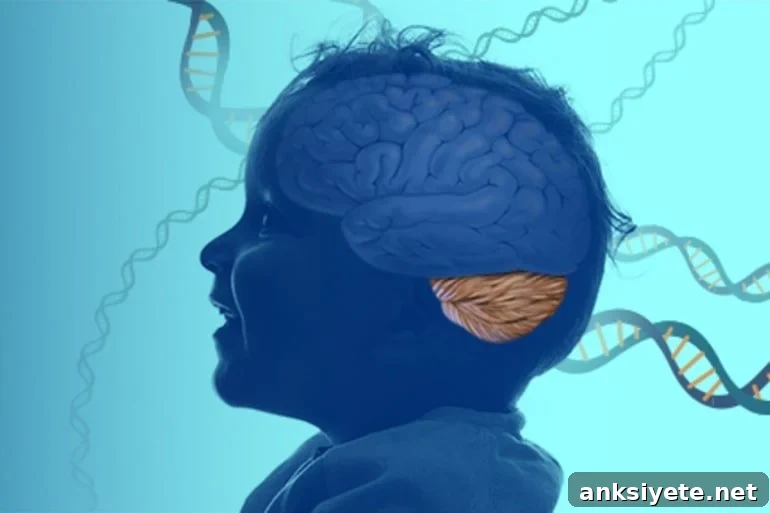
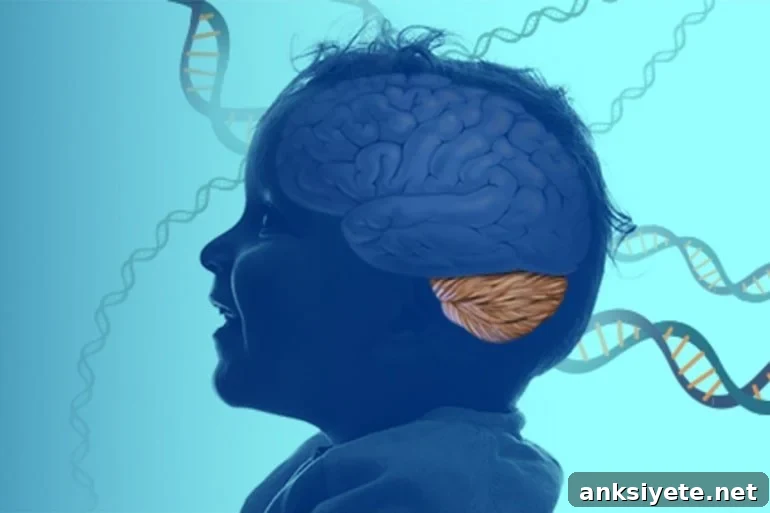
All three children exhibited impaired motor coordination and speech delays; one child also showed abnormalities in the cerebellum, the brain region critical for coordinated movement and other functions. Genetic analysis revealed that each child carried mutations in both copies of the ATG4D gene.
ATG4D encodes one of four ATG4 cysteine proteases involved in autophagy, the cell’s mechanism for breaking down and recycling damaged proteins and cellular components. Autophagy is essential across tissues, but neurons are particularly dependent on it for long-term health and function. Until now, the specific contribution of ATG4D to neuronal health had been poorly understood.
Interest in ATG4D’s neurological role initially increased after a 2015 study described a genetic neurological disease in Lagotto Romagnolo dogs. Those animals displayed abnormal behavior, cerebellar atrophy, defects in coordination and eye movement, and mutations in ATG4D. That canine work suggested a possible link to human disease, but a direct connection to human neurodevelopmental disorders had not been established.
“We’ve already identified many of the more obvious genetic causes of disease,” said May Christine Malicdan, M.D., Ph.D., NHGRI staff scientist and senior author of the study. “Now we can probe more challenging genes like ATG4D using modern genomic and cellular tools.”
Computational predictions indicated the ATG4D variants in these children would produce dysfunctional proteins. However, humans have three other ATG4 genes with overlapping activity that can, in some cell types, compensate for loss of ATG4D. This redundancy may mask defects in non-neuronal tissues.
When researchers tested the children’s ATG4D variants in cultured skin cells, autophagy appeared largely preserved, likely due to compensation by the other ATG4 family members. The investigators reasoned that brain cells — especially specific neuronal subtypes that rely more on ATG4D — might be less able to compensate for its loss.
“The brain is highly complex, and different neurons depend on distinct gene sets to perform their specialized functions,” Malicdan explained. “A change in a gene that seems redundant elsewhere can have a major impact in neural tissues.”
To model cells that depend more heavily on ATG4D, the team used laboratory cell lines in which the other ATG4 genes were deleted. When they introduced the children’s ATG4D variants into these engineered cells, the cells failed to complete critical steps of autophagy. These functional studies indicate that the ATG4D mutations impair autophagic processing and support the idea that defective cellular recycling underlies the patients’ neurological symptoms.
Despite these advances, many questions remain about how ATG4D supports neuronal health. “We still have only a high-level view of many cellular pathways like autophagy,” Malicdan said. Rare genetic disorders that isolate a single gene’s contribution can be invaluable tools for dissecting such pathways.
Autophagy dysfunction has been implicated in more common neurodegenerative conditions, including Alzheimer’s disease, and understanding ATG4D’s role may inform broader research efforts. Insights gained from this rare syndrome could reveal mechanisms relevant to other neurological conditions that involve autophagy pathways.
“That’s the central promise of rare disease research,” Malicdan noted. “Studying uncommon disorders can clarify biological pathways that are also important in more frequent diseases.”
NIH clinicians and researchers are continuing to follow the children described in this report while searching for additional patients with similar clinical and genetic features. Although therapy development is still distant, clarifying ATG4D’s function and its role in autophagy could eventually point to targeted strategies to treat this disorder and other diseases linked to autophagy dysfunction.
About this genetics research news
Author: Anna Rogers
Source: NIH
Contact: Anna Rogers – NIH
Image: The image is credited to Darryl Leja, National Human Genome Research Institute
Original Research: Open access. “Bi-allelic ATG4D variants are associated with a neurodevelopmental disorder characterized by speech and motor impairment” by May Christine Malicdan et al., published in npj Genomic Medicine.
Abstract
Bi-allelic ATG4D variants are associated with a neurodevelopmental disorder characterized by speech and motor impairment
Autophagy controls the removal of damaged organelles and protein aggregates, and is essential for neuronal development, maintenance, and function. Yet relatively few neurodevelopmental disorders have been linked to pathogenic variants in genes that encode autophagy-related proteins.
This report describes three individuals from two unrelated families who share a neurodevelopmental syndrome with speech and motor impairment and overlapping facial features. Each individual carried rare, conserved, bi-allelic variants in ATG4D, one of four ATG4 cysteine proteases that play roles in autophagosome formation, a core step of autophagy. While autophagosome formation and the initial induction of autophagy were intact in patient-derived cells, further functional studies revealed impaired processing of GABARAPL1, a primary ATG4D substrate.
An in vitro priming assay showed decreased GABARAPL1 priming for three of the four ATG4D variants. Rescue experiments in a cell line lacking all four ATG4 isoforms further demonstrated reduced priming activity for two missense variants located within the cysteine protease domain required for GABARAPL1 processing, indicating these variants compromise ATG4D function.
Taken together, the clinical observations, bioinformatic analyses, and functional assays support the conclusion that bi-allelic loss-of-function variants in ATG4D contribute to the pathogenesis of this syndromic neurodevelopmental disorder characterized by speech and motor deficits.