
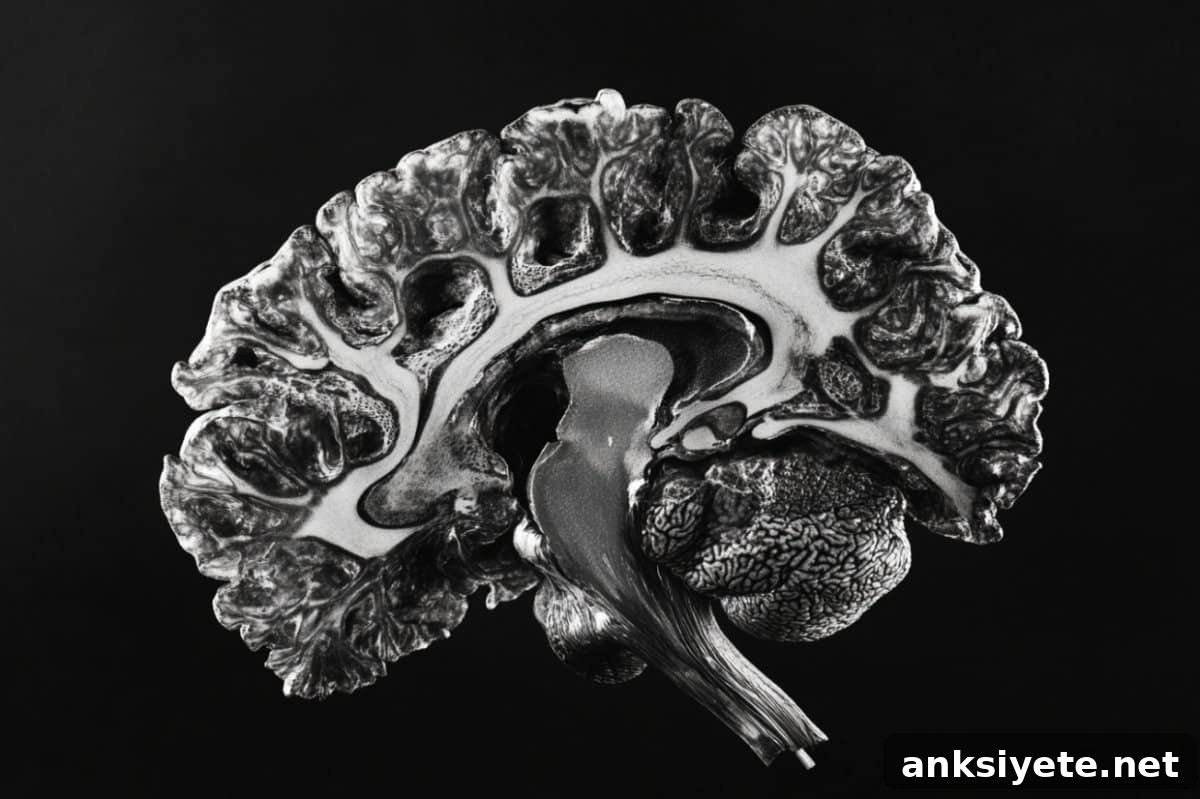
Summary: A major new study shows that multiple sclerosis (MS) can be diagnosed accurately using a specialized MRI scan, avoiding the need for invasive lumbar punctures. The rapid, 8-minute T2*-weighted MRI identifies brain lesions centered on veins—a hallmark of MS—and, when combined with a practical “rule of six,” provides a reliable, non-invasive diagnostic alternative.
Researchers developed a simple diagnostic guideline called the “rule of six”: the presence of six vein-centered lesions on T2*-weighted MRI supports a definitive MS diagnosis. This approach improves patient experience, reduces diagnostic delay, and could generate substantial cost savings for health services by cutting hospital stays and complications associated with lumbar puncture.
Key Facts:
- Non-invasive diagnosis: An 8-minute T2*-weighted MRI can replace painful lumbar punctures for many patients.
- Rule of Six: Finding six lesions with a central vein supports a conclusive MS diagnosis.
- Time and cost savings: Earlier diagnosis (by about three months on average) and fewer hospital admissions could save health services millions annually.
Source: University of Nottingham
Summary of the study
A multicenter study led by researchers at the University of Nottingham, published in Neurology Open Access, tested whether a specific MRI technique—T2*-weighted imaging—could reliably diagnose MS in patients with a clinically isolated syndrome (CIS) without requiring cerebrospinal fluid (CSF) analysis from lumbar puncture. The T2*-weighted sequence highlights the so-called central vein sign (CVS): small veins running through white-matter lesions, a feature commonly associated with MS.
Funded by the National Institute for Health and Care Research (NIHR), the study evaluated a short, clinically feasible MRI sequence available at most neuroscience centers. Patients who were being assessed for possible MS underwent both the 8-minute MRI and a lumbar puncture. Investigators followed participants for 18 months to confirm final diagnoses and compare the diagnostic performance of MRI-based CVS assessment with CSF oligoclonal band (OCB) testing.
MS is a chronic neurological disease that affects approximately 150,000 people in the UK. Diagnosis is often complex because MS presents with varied symptoms and progression rates. At present, clinicians commonly use conventional MRI along with lumbar puncture to look for CSF abnormalities, but lumbar punctures are invasive, sometimes painful, and occasionally lead to complications that require additional care.
Common problems with lumbar puncture include patient discomfort, post-procedure recovery time and, in some cases, complications that prolong hospital stays. Additionally, CSF findings are not always definitive: OCBs are absent in some people with MS and can be present in other disorders that mimic MS, contributing to diagnostic uncertainty.
Professor Nikos Evangelou, Clinical Professor of Neurology at the University of Nottingham and lead author of the study, notes that more than half of people diagnosed with MS in the UK have had at least one lumbar puncture during their diagnostic pathway. The new findings demonstrate that the diagnosis can often be made without this invasive procedure, improving patient experience and streamlining care.
Study methods and diagnostic criteria
The research team enrolled patients from three UK neuroscience centers (Nottingham, Cardiff and London) who required lumbar puncture under the 2017 McDonald diagnostic criteria. A six- to eight-minute T2*-weighted MRI sequence was used to assess lesions for the central vein sign. Two operational definitions were tested: a threshold requiring 40% of eligible lesions to show a central vein, and the simpler “rule of six” — diagnosing MS when six lesions with a central vein are identified.
Study participants received both the MRI and lumbar puncture at baseline, and clinical diagnosis after 18 months served as the reference standard to compare diagnostic performance. The team also recorded tolerability and side-effect profiles for both procedures.
Results
Of 113 enrolled participants, 99 completed the study. The mean age was 38 and 73% were female. After 18 months, 80 patients were diagnosed with MS, 10 remained with CIS, eight had alternative diagnoses, and one remained undiagnosed.
Diagnostic sensitivity was high for both MRI CVS measures and CSF OCB testing. The 40% CVS threshold detected MS in 90% of cases, while OCB testing reached 84% sensitivity. The rule of six achieved 91% sensitivity—comparable to OCBs. Importantly, side effects were far more common after lumbar puncture (reported by 75% of participants) than after MRI (9%). All participants preferred the MRI to the lumbar puncture.
Implications and next steps
The results indicate that CVS assessment with T2*-weighted MRI is at least as sensitive as CSF OCB testing for supporting MS diagnosis in patients with a typical CIS presentation. The simple rule of six provides comparable diagnostic performance to the more complex 40% threshold, making it clinically practical.
Replacing lumbar puncture with an 8-minute MRI where appropriate could reduce patient discomfort, cut complications and shorten diagnostic timelines—on average by about three months—leading to earlier treatment decisions. The research team estimates potential savings for healthcare services, such as the NHS, of up to several million pounds annually, freeing resources for improved patient care.
Further research is recommended to evaluate CVS specificity across a broader range of clinical presentations and in populations where differential diagnoses may be more challenging. Nevertheless, these findings support recent changes in diagnostic guidance recognizing MRI-based CVS assessment, as proposed by the Nottingham research team, as a reliable, non-invasive option for diagnosing MS.
About this MS and neuroimaging research news
Author: Charlotte Wall
Source: University of Nottingham
Contact: Charlotte Wall – University of Nottingham
Image: The image is credited to Neuroscience News
Original Research: Open access. “Comparison of the Diagnostic Performance of the Central Vein Sign and CSF Oligoclonal Bands Supporting the Diagnosis of Multiple Sclerosis” by Nikos Evangelou et al., Neurology Open Access.
Abstract
Comparison of the Diagnostic Performance of the Central Vein Sign and CSF Oligoclonal Bands Supporting the Diagnosis of Multiple Sclerosis
Background and Objectives
The central vein sign (CVS) describes venules visible within MS brain lesions on T2*-weighted MRI. In revisions to MS diagnostic criteria, the simplified rule of six (finding six lesions with a central venule) can support diagnosis as an alternative to lumbar puncture. This study evaluated whether T2*-weighted MRI is more sensitive than CSF oligoclonal bands for diagnosing MS at presentation with a typical clinically isolated syndrome and compared tolerability of lumbar puncture versus MRI.
Methods
This multicenter prospective diagnostic study enrolled participants from three UK neuroscience centers who required lumbar puncture under 2017 McDonald criteria. A short T2*-weighted sequence assessed CVS using two definitions: a 40% threshold and the rule of six. Results were compared with OCB testing, using clinical diagnosis at 18 months as the reference standard.
Results
Of 113 participants, 99 completed the protocol (mean age 38; 73% female). Eighty were diagnosed with MS. Diagnostic sensitivity was 90% for the 40% CVS threshold and 84% for OCB testing (no significant difference). The rule of six had 91% sensitivity. Side effects were reported by 75% after lumbar puncture and 9% after MRI. All participants preferred MRI.
Discussion
Both CVS and OCB testing showed similar sensitivity for supporting MS diagnosis in typical CIS. CVS assessed by the 40% threshold or the simpler rule of six produced equivalent diagnostic performance and was better tolerated. Additional studies should assess CVS specificity more widely.
Classification of Evidence
This study provides Class IV evidence that CSF OCBs and the CVS are equally sensitive in supporting a diagnosis of MS in patients presenting with CIS.