
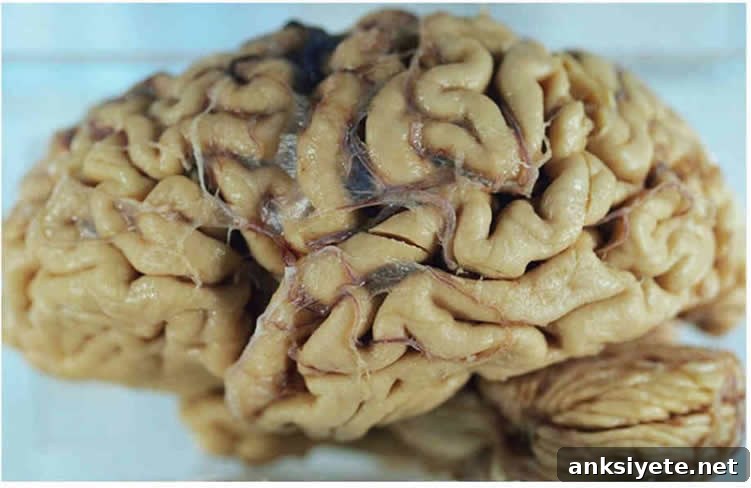
A new multi-institutional study led by researchers at the Indiana University School of Medicine has identified an immune-related gene linked to faster accumulation of amyloid plaques in the brains of people with Alzheimer’s disease and older adults at risk for the condition.
Published in the journal Brain, the study reports that a variant in the IL1RAP gene is associated with a greater increase in amyloid plaque over a two-year period. Remarkably, the effect of this IL1RAP variant on amyloid accumulation was independent of, and in some analyses stronger than, the well-known APOE ε4 allele, which has long been associated with Alzheimer’s disease risk.
The investigators measured brain amyloid deposition using 18F-florbetapir positron emission tomography (PET) scans in almost 500 individuals, obtaining baseline scans and follow-up scans two years later. They then performed a genome-wide association study (GWAS) to identify genetic variants that correlated with the rate of amyloid buildup during that interval. As expected, APOE ε4 carriers showed higher rates of accumulation, but the analysis also revealed a novel association with IL1RAP, the gene encoding interleukin-1 receptor accessory protein, a key regulator of immune signaling in the brain.
IL1RAP plays a central role in microglial function. Microglia are the brain’s resident immune cells that respond to injury and clear debris, including protein aggregates such as amyloid plaques. The study’s lead author, Vijay K. Ramanan, M.D., Ph.D., noted that the IL1RAP finding was particularly intriguing because microglial activity and immune signaling are receiving growing attention in Alzheimer’s research as potential drivers of disease progression or protection.
Alzheimer’s disease currently affects millions of older adults and there are no therapies proven to halt or reverse the underlying neurodegenerative process. As a result, researchers are increasingly focused on biological mechanisms that influence the deposition and clearance of amyloid plaques, especially during early stages when symptoms are mild or not yet evident. Prior neuropathological studies have shown microglia clustering around amyloid plaques, and PET imaging of microglial activation provides supporting in vivo evidence that immune responses change in Alzheimer’s disease.
The study linked the amyloid-associated IL1RAP variant to several important clinical and imaging outcomes, including:
- Lower microglial activity as measured by PET imaging markers of inflammation and activation.
- Greater atrophy of the temporal cortex, a brain region critical for memory.
- Faster decline in cognitive test performance over time.
- An increased probability that participants with mild cognitive impairment would progress to a clinical diagnosis of Alzheimer’s disease.
Andrew Saykin, Psy.D., director of the Indiana Alzheimer Disease Center and head of the Alzheimer’s Disease Neuroimaging Initiative Genetics Core, emphasized that these results point to the IL-1/IL1RAP immune signaling pathway as a promising target. Existing drugs that modulate IL-1 or IL1RAP signaling are already used to treat certain inflammatory and rheumatologic conditions, and therapeutic antibodies against IL1RAP are under investigation in oncology. Those existing agents and experimental tools could be repurposed or adapted for laboratory studies to test whether modulating IL1RAP alters amyloid clearance or disease progression in preclinical and translational models.
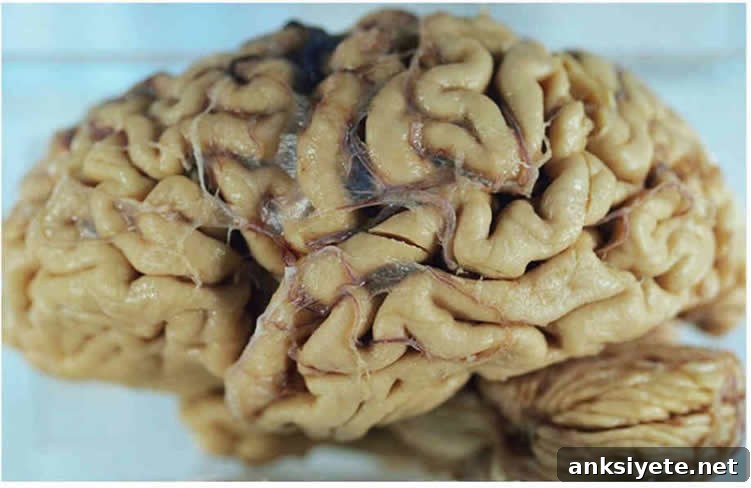
The research drew on data from several longitudinal cohorts that follow older adults across the clinical spectrum from normal aging through mild cognitive impairment to Alzheimer’s disease. Those cohorts include participants in the national Alzheimer’s Disease Neuroimaging Initiative (ADNI), the Indiana Memory and Aging Study, the Religious Orders Study, and the Rush Memory and Aging Project. Combining imaging, genetic, and clinical data across these cohorts allowed the investigators to test whether genetic variation predicts longitudinal amyloid change and related outcomes.
Key contributors to the study include Vijay K. Ramanan, Shannon L. Risacher, Kwangsik Nho, Sungeun Kim, Li Shen, Brenna C. McDonald, Karmen K. Yoder, Gary D. Hutchins, John D. West, Eileen F. Tallman, Sujuan Gao, Tatiana M. Foroud, Martin R. Farlow of the Indiana University School of Medicine; Philip L. De Jager and Robert C. Green of Harvard Medical School; David A. Bennett of Rush University Medical Center; Paul S. Aisen and Arthur W. Toga of the University of Southern California; Ronald C. Petersen and Clifford R. Jack Jr. of the Mayo Clinic; William J. Jagust of the University of California, Berkeley; and Michael W. Weiner of the University of California, San Francisco.
Funding: This work was supported by multiple grants from the National Institute on Aging, part of the National Institutes of Health, and by a consortium of private partners coordinated through the Foundation for the NIH.
Source: Eric Schoch, Indiana University
Original research: “GWAS of longitudinal amyloid accumulation on 18F‑florbetapir PET in Alzheimer’s disease implicates microglial activation gene IL1RAP,” published in Brain. DOI: 10.1093/brain/awv231
Abstract
GWAS of longitudinal amyloid accumulation on 18F‑florbetapir PET in Alzheimer’s disease implicates microglial activation gene IL1RAP
Brain amyloid deposition is believed to be a key early event in Alzheimer’s disease pathogenesis. To discover genes that influence this process, the authors performed a genome-wide association study of longitudinal change in brain amyloid burden measured by 18F‑florbetapir PET. They identified a novel association between a variant in IL1RAP (rs12053868‑G) and higher rates of amyloid accumulation that was independent of APOE ε4 status (P = 1.38 × 10⁻⁹) and validated by deep sequencing. Carriers of rs12053868‑G were more likely to progress from mild cognitive impairment to Alzheimer’s disease and showed greater longitudinal atrophy of the temporal cortex on MRI. In independent datasets, rs12053868‑G was associated with accelerated cognitive decline and with lower cortical 11C‑PBR28 PET signal, an in vivo marker of microglial activation. These observations support a critical role for activated microglia in limiting amyloid buildup and nominate the IL‑1/IL1RAP pathway as a potential target for interventions aimed at modulating amyloid accumulation.