
For 150 years, Broca’s area has been regarded as the brain’s command center for producing spoken language. New research from teams at UC Berkeley and Johns Hopkins University challenges that long-standing view, showing that Broca’s area actually disengages when we speak aloud.
Published in the Proceedings of the National Academy of Sciences, the study presents a more nuanced view of how frontal brain regions contribute to speech. Rather than serving as a simple speech-production center, Broca’s area appears to coordinate and integrate information across sensory and motor regions before speech begins, then quiets down during the actual vocalization. These findings have important implications for diagnosing and treating language deficits that follow stroke, epilepsy surgery and traumatic brain injury.
“Millions of people each year experience strokes and other brain injuries that can impair language,” said study lead author Adeen Flinker, who conducted this work while a Ph.D. student at UC Berkeley and is now a postdoctoral researcher at New York University. “Our results improve the framework for mapping language during neurosurgery and for assessing language impairments, moving beyond the simple idea that Broca’s area is the singular seat of speech production.”
Historically, researchers divided language function in the brain into two broad zones: perceptual regions that process incoming speech and frontal regions that produce speech. This dichotomy traces back to the 1860s, when French physician Pierre Paul Broca localized expressive language deficits to the left frontal lobe. Patients with Broca’s aphasia characteristically produce short, effortful utterances and often omit small connecting words, and those clinical observations helped cement Broca’s area in the popular and scientific imagination as the center for speech output.
The new study refines that historic model. Flinker and colleagues show that Broca’s area, located in the left frontal cortex above and behind the left eye, becomes actively engaged as the brain moves from perceiving spoken or written words to planning the sequence of sounds and mouth movements needed to reproduce them. That engagement is tightly linked in time with activity in the temporal cortex, which organizes sensory input, and with the motor cortex, which executes speech movements. Crucially, the team observed that Broca’s area reduces its activity precisely when patients begin to utter word sequences.
“Broca’s area appears to act as a coordinator during planning — integrating sensory and motor information and sequencing upcoming words — but it then shuts down during actual speech delivery,” Flinker explained. “It may remain active across a conversation to plan future phrases and sentence structure, rather than continuously driving the motor act of vocalization.”
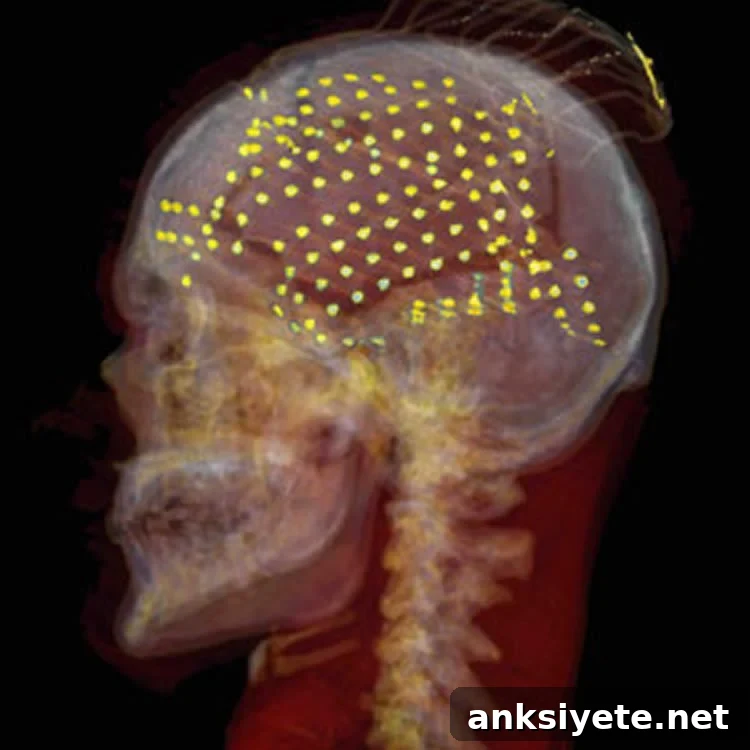
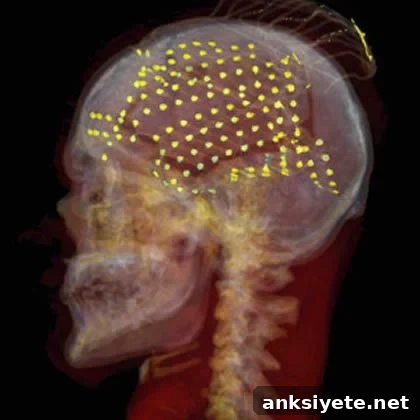
To reach these conclusions, researchers recorded intracranial electrical signals from seven patients who were hospitalized for treatment of epilepsy and who had electrodes temporarily implanted for clinical monitoring. The participants repeated spoken and written words aloud while researchers measured neural activity. Using event-related causality analysis, the team traced signal flow from the auditory cortex, where words were initially processed, to Broca’s area, and then to the motor cortex, where the final execution of speech occurs. This time-resolved tracking allowed researchers to distinguish planning-related engagement from execution-related silence in Broca’s area.
The study’s co-authors include Robert Knight and Avgusta Shestyuk of the Helen Wills Neuroscience Institute at UC Berkeley, Nina Dronkers of the Center for Aphasia and Related Disorders at the Veterans Affairs Northern California Health Care System, and Anna Korzeniewska, Piotr Franaszczuk and Nathan Crone at Johns Hopkins School of Medicine. Their collaborative work brings clinical intracranial recording techniques together with advanced analytical methods to map the dynamic interactions among auditory, frontal and motor regions during language processing.
Clinical and research implications are significant. A refined understanding of Broca’s role could improve presurgical language mapping and reduce the risk of postoperative language deficits. It may also guide more targeted rehabilitation strategies for patients with aphasia or other speech disorders by focusing therapy on network interactions and planning processes rather than treating Broca’s area as a lone production center.
Contact: Yasmin Anwar, UC Berkeley press office
Source: UC Berkeley press release
Image Source: Image credited to Adeen Flinker, adapted from the UC Berkeley press release
Original Research: “Redefining the role of Broca’s area in speech” by Adeen Flinker, Anna Korzeniewska, Avgusta Y. Shestyuk, Piotr J. Franaszczuk, Nina F. Dronkers, Robert T. Knight, and Nathan E. Crone. Published online February 17, 2015 in Proceedings of the National Academy of Sciences. DOI: 10.1073/pnas.1414491112