
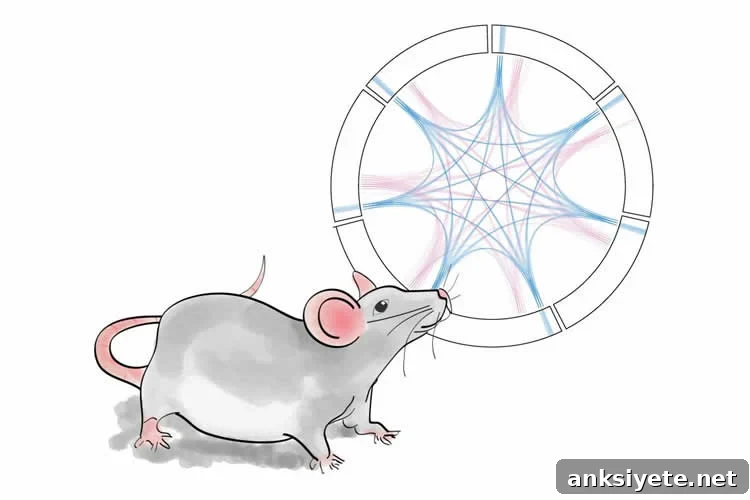
Summary: A new mouse study identifies distinct networks of brain electrical activity that predict which animals are more likely to develop depression-like responses after exposure to stress.
Source: Duke University
New research from Duke University suggests that patterns of electrical activity across multiple brain regions could reveal who is vulnerable to depression and, in the future, help guide targeted prevention and therapies.
Neuroscientists and electrical engineers at Duke recorded coordinated electrical signals across the brains of mice and found specific network patterns that differed between animals that later developed depression-like behaviors and those that remained resilient after the same stressful experience.
If similar signatures are found in humans, these findings could pave the way for predictive tests that identify people at higher risk of developing mood disorders following major life stressors.
“What we are essentially creating is an electrical map of depression in the brain,” said Dr. Kafui Dzirasa, associate professor of psychiatry and behavioral sciences, neurobiology and biomedical engineering at the Duke University School of Medicine. “We hope this could be used as a predictive signature of depression, in the same way that blood pressure predicts risk for heart attack or stroke.”
The study appeared March 1 in the journal Cell.
Life presents major stressors to most people at some point—loss of a loved one, job loss or serious illness can trigger intense emotions. While many recover, others develop persistent psychiatric disorders such as major depressive disorder. Understanding why some individuals are vulnerable while others are resilient remains a central question in mental health research.
Historically, researchers have focused on activity within single brain regions. In 2010, Dzirasa and collaborator Dr. Miguel Nicolelis advanced the field by developing methods to monitor electrical signals from many brain areas simultaneously in mice. This multi-site recording approach reveals how separate regions coordinate their activity to produce behavioral states.
“You can think of different brain regions as individual instruments in an orchestra,” Dzirasa explained. “We are interested not only in what each instrument is playing, but how they coordinate to generate the music.”
In the current experiment, researchers subjected mice to a chronic social defeat stress paradigm: each test mouse lived for ten days in the presence of a larger, aggressive mouse. This social stress produces behaviors in many mice that mirror features of human depression, including social avoidance, increased anxiety and disrupted sleep.
Before and after this stress exposure, the team measured electrical activity (local field potentials) in seven brain regions implicated in mood regulation and depression, including the prefrontal cortex, amygdala, ventral striatum, ventral tegmental area and ventral hippocampus.
Applying machine learning tools developed at Duke, the investigators assembled spatiotemporal profiles of brain activity for each animal. These profiles—effectively the brain’s “music”—revealed a distinct network of coordinated signals that predicted which mice would later exhibit depression-like behaviors.
The vulnerability network identified by the researchers originates in the prefrontal cortex and ventral striatum, relays through the amygdala and ventral tegmental area, and converges in the ventral hippocampus. This specific pattern of activity was heightened by acute threat and was also more active in three independent mouse models of depression vulnerability.
Importantly, the vulnerability network appears to be mechanistically distinct from the networks that encode established pathological changes after chronic stress. In other words, the brain circuits that forecast vulnerability are not the same as those that reflect ongoing dysfunction, suggesting separate targets for prediction and treatment.
The work has potential clinical implications. Electroconvulsive therapy remains among the most effective treatments for severe depression but can produce broad side effects because it affects large areas of the brain. Dzirasa and colleagues propose that identifying precise network signatures could allow more targeted neuromodulation—delivering electrical stimulation to specific circuits in ways that reduce side effects while restoring healthy function.
Conor Liston, an assistant professor of neuroscience and psychiatry at Weill Cornell Medicine who was not involved in the study, commented that the approach of combining multi-circuit recordings with machine learning and advanced statistical tools is likely to influence future research into the network basis of many psychiatric disorders. He noted that behavioral and clinical symptoms across conditions are increasingly viewed as emerging from altered brain network dynamics.
Funding: This research was supported by the National Institutes of Health (MH79201-03S1, MH099192-05S1, MH099192-05S2 and MH096890), the Lennon Family Foundation, the DARPA HIST program and the One Mind Institute Rising Star Award. Additional support was provided by Kerima L. Collier.
Source: Kara Manke, Duke University
Publisher: Organized by NeuroscienceNews.com
Image credit: Jeff Macinnes and Kafui Dzirasa, Duke University
Original Research: Published in Cell; doi: 10.1016/j.cell.2018.02.012
Brain-wide Electrical Spatiotemporal Dynamics Encode Depression Vulnerability
Highlights
• Brain-wide electrical spatiotemporal map of stress states
• Hippocampally directed network signals stress vulnerability in stress-naive animals
• Early life stress increases activity in stress vulnerability network
• Stress vulnerability network is mechanistically distinct from pathology networks
Summary
Fluctuations in local field potential oscillations across the brain reflect emergent network-level signals that influence behavior. By using machine learning to decode how these oscillations coordinate in time and space, the study identifies a spatiotemporal network that predicts the emergence of depression-related behavioral dysfunction in mice subjected to chronic social defeat. Activity in this network begins in prefrontal cortex and ventral striatum, passes through the amygdala and ventral tegmental area, and converges in ventral hippocampus. The network is enhanced by acute threat and in multiple models of vulnerability, and it is biologically distinct from networks that encode pathology after stress. These results reveal a convergent mechanism by which vulnerability to major depressive disorder is mediated in the brain.