
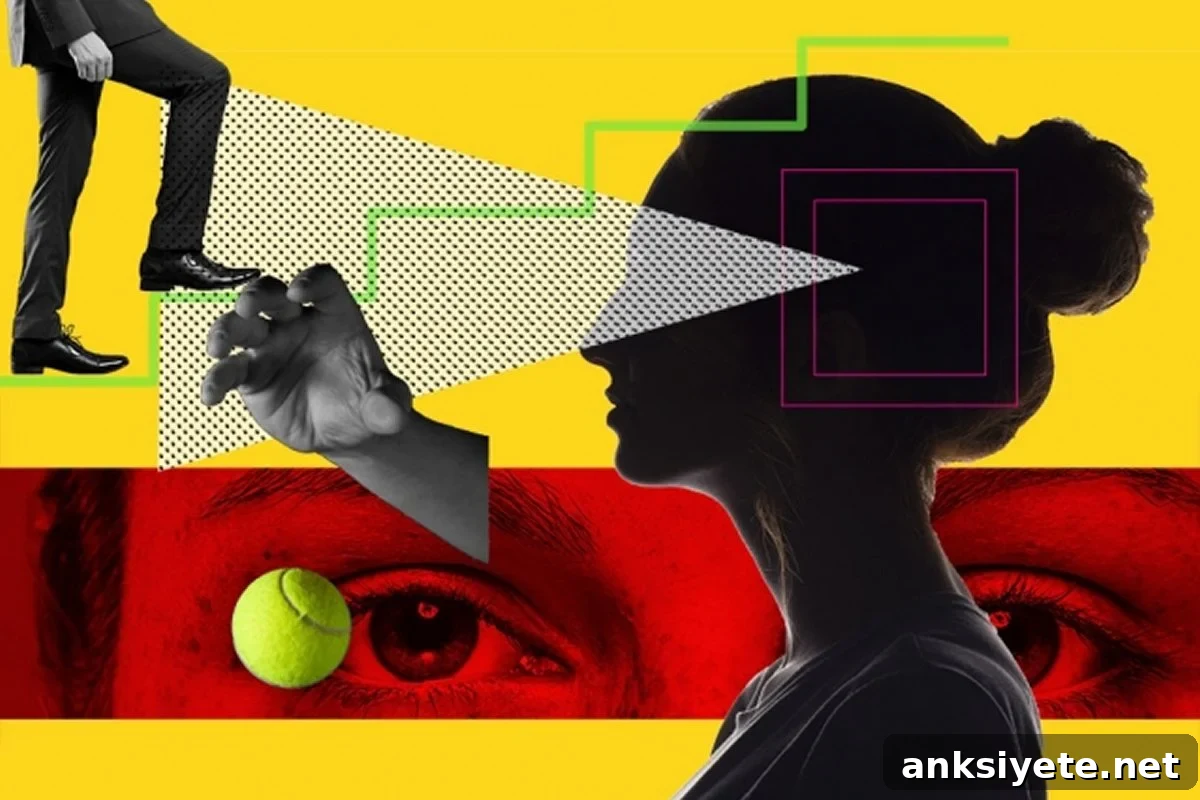
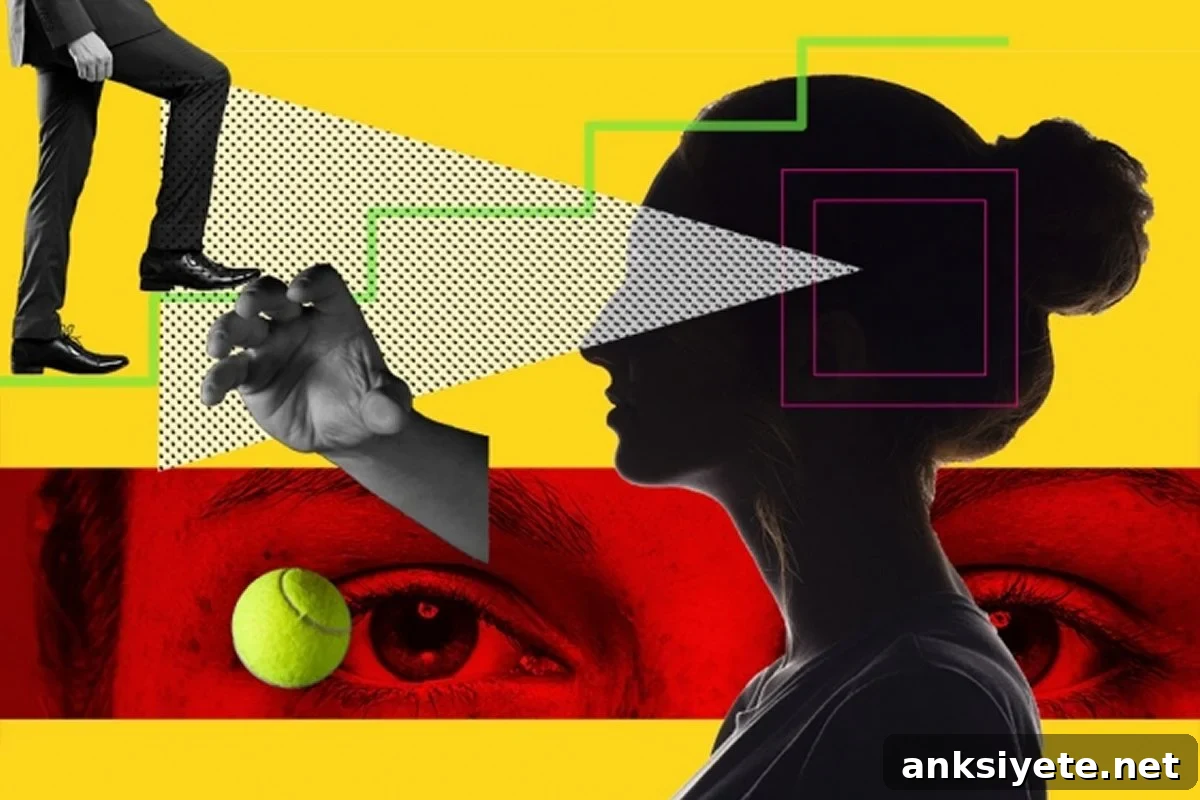
Summary: Patterns of brain activity in the frontal cortex encode prior beliefs and shape how we perceive and act under uncertainty.
Source: MIT
Overview: For decades, research has shown that perception is not a passive recording of sensory input but is shaped by expectations—so-called prior beliefs—formed from past experience. These priors help the brain interpret weak or ambiguous signals, allowing experts to spot subtle cues that novices might miss. MIT neuroscientists have now identified neural signatures that represent these prior beliefs and shown how those signatures bias neural dynamics and behavior when timing is uncertain.
Decision-making under uncertainty is often described by Bayesian integration: the brain combines noisy sensory evidence with prior experience to form the most probable interpretation. Mehrdad Jazayeri, the Robert A. Swanson Career Development Professor of Life Sciences and a member of MIT’s McGovern Institute for Brain Research, led a study that reveals how prior beliefs become embedded in frontal cortical activity and influence timing behavior.
The team trained animals on a timing reproduction task called “ready-set-go,” in which subjects measure the interval between two flashes (“ready” and “set”) and then reproduce that interval by generating a delayed response (“go”). The task was run in two distinct contexts: a Short context with intervals between 480 and 800 milliseconds, and a Long context with intervals between 800 and 1,200 milliseconds. A visual cue at the start of each trial signaled which context applied, letting animals form expectations about the likely interval range.
Behavioral results confirmed a classic Bayesian pattern: animals biased their reproduced intervals toward the mean of the expected range. Identical sensory inputs produced different responses depending on the animal’s context-driven belief. For example, an 800 ms interval was reproduced slightly shorter when the animal expected short intervals and slightly longer when the animal expected long intervals. These context-dependent biases demonstrated that animals incorporated prior beliefs to reduce the impact of timing uncertainty.
Ready, set, go
To uncover how prior beliefs influence neural activity, the researchers recorded from roughly 1,400 neurons in a frontal cortical region previously implicated in timing. During the ready-set epoch, individual neurons displayed evolving activity patterns, and about 60 percent of recorded neurons showed context-dependent differences. Instead of focusing on single neurons, the team analyzed the collective evolution of population activity over time. This population-level analysis revealed a simple computational mechanism: prior experience warps the neural representation of time so that activity patterns associated with a given interval are biased toward values within the expected range.
“Trials that were identical in almost every possible way, except for the animal’s belief, led to different behaviors,” Jazayeri says. “That was compelling experimental evidence that the animal is relying on its own belief.”
By warping latent neural dynamics, the frontal cortex effectively shifts the mapping from sensory input to motor output in a manner consistent with Bayesian inference. As Mate Lengyel, professor of computational neuroscience, notes, this work brings together perception, neural dynamics, and Bayesian computation in a coherent framework supported by theory, behavior, and neural recordings.
Embedded knowledge
Prior experience is thought to reshape the strengths of synaptic connections among neurons. Those synaptic changes constrain how neurons influence one another and determine the repertoire of activity patterns a cortical network can generate. The new findings indicate that prior beliefs are embedded into these synaptic constraints so that ongoing neural activity is naturally biased toward more probable interpretations of ambiguous sensory input.
To test whether synaptic changes could produce the observed neural warping, the team trained recurrent neural network models to perform the same ready-set-go task. Using machine-learning methods to adjust synaptic weights, they obtained networks that replicated the animals’ behavior and reproduced the warped neural representations that incorporate prior statistics. Reverse-engineering these trained networks showed that a low-dimensional curved manifold in latent neural dynamics supported the warping effect and Bayesian integration.
Importantly, perturbation experiments in silico demonstrated causality: when the researchers “unwarped” the model’s neural representation, the behavioral bias disappeared. This computational validation supports the idea that warping latent cortical dynamics is a mechanistic basis for integrating priors with uncertain sensory evidence.
Future work will investigate how these synaptic changes are learned and gradually refined as animals acquire and stabilize prior beliefs while training on timing and other tasks. Understanding the learning rules and circuit mechanisms that embed priors into cortical dynamics will clarify how perception and action are continuously adapted by experience.
Authors and publication
Lead authors: Hansem Sohn, Devika Narain, and Nicolas Meirhaeghe. Senior author: Mehrdad Jazayeri. The study, “Bayesian Computation through Cortical Latent Dynamics,” was published in Neuron.
Funding: Support came from the Center for Sensorimotor Neural Engineering, the Netherlands Scientific Organization, the Marie Sklodowska Curie Reintegration Grant, the National Institutes of Health, the Sloan Foundation, the Klingenstein Foundation, the Simons Foundation, the McKnight Foundation, and the McGovern Institute.
Source:
MIT
Media contacts:
Anne Trafton – MIT
Image source:
Christine Daniloff, MIT.
Original research:
“Bayesian Computation through Cortical Latent Dynamics.” Hansem Sohn, Devika Narain, Nicolas Meirhaeghe, Mehrdad Jazayeri. Neuron. DOI: 10.1016/j.neuron.2019.06.012