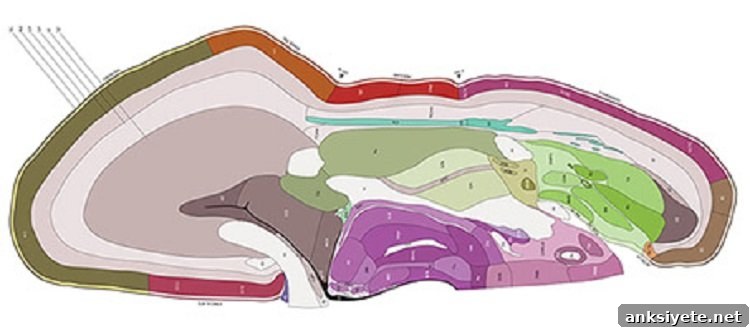
High-resolution BrainSpan Atlas reveals where genes are active in the prenatal brain, highlights molecular roots of autism and other neurodevelopmental disorders, and pinpoints features that make the human brain unique.
Scientists at the Allen Institute for Brain Science have produced a detailed molecular blueprint of the developing human brain, mapping gene expression across anatomical structures during mid-pregnancy at an unprecedented level of resolution. This first major report using data from the BrainSpan Atlas of the Developing Human Brain, published in Nature, offers new insights into prenatal brain organization, the origins of neurodevelopmental disorders such as autism, and molecular features that distinguish the human neocortex. The complete dataset is freely available through the Allen Brain Atlas data portal.
“Knowing precisely where a gene is expressed in the developing brain provides essential clues about its function,” says Ed Lein, an investigator at the Allen Institute for Brain Science. “The BrainSpan Atlas presents a comprehensive view of which genes are switched on or off within specific nuclei and cell types during prenatal development. That creates a blueprint for normal brain formation and a powerful framework to investigate how deviations in gene expression lead to disease.”
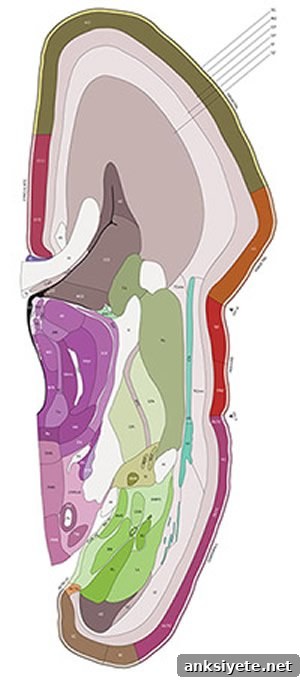
The BrainSpan Atlas is part of a large collaborative consortium aiming to chart the transcriptome—the full set of expressed genes—throughout human development. By profiling gene expression across brain regions, cell types and developmental stages, the atlas provides a foundational reference for researchers studying prenatal development, comparative neuroscience, and the genetic architecture of neurodevelopmental disorders.
Thomas R. Insel, then director of the National Institute of Mental Health, emphasized the atlas’s value: previous studies documented molecular and cellular changes during brain growth, but BrainSpan is the first comprehensive map showing the dramatic trajectory of gene expression across prenatal and postnatal development. This resource is already reshaping how scientists study conditions such as autism and schizophrenia by revealing how genes associated with these disorders converge during prenatal stages—even when those genes do not appear related in the adult brain.
Spotlight on Autism
While the atlas can inform many developmental conditions, the team highlighted autism as a disorder with particularly strong links to early prenatal gene expression. Using the BrainSpan maps, researchers identified a genetic hub connected to autism risk: many autism-associated genes are highly expressed in newly generated excitatory neurons of the developing cortex. The cortex supports higher cognitive functions and social behaviors often affected in autism, so this localization suggests a prenatal cellular and circuit-level origin for aspects of the disorder.
“Our maps pointed to a concentrated period and cell population where autism-related genes are active,” says Lein. “By identifying these hotspots, the BrainSpan Atlas generates testable hypotheses about when and where developmental disruptions may lead to autism.”
What Makes the Human Brain Unique?
Deciphering human-specific features requires comparing developmental gene expression across species and locations. The BrainSpan data help pinpoint genes with human-specific sequence changes and reveal where those genes are active in the prenatal brain. The analysis showed enrichment of such genes in the frontal cortex and in specialized cell types including inhibitory GABAergic interneurons and neurons in the transient subplate zone—a scaffold important for early circuit formation. These regions and cell classes exhibit developmental differences across species, so their enriched gene expression in humans offers molecular clues to the expansion and specialization of the human neocortex.
A Shared Resource for the Research Community
From the outset, making the data publicly accessible was a central goal of the project. Because prenatal human brain tissue is limited, the BrainSpan Atlas enables investigators worldwide to ask questions about early human development that would otherwise be difficult or impossible to pursue. The dataset supports studies in developmental neuroscience, genetics, disease modeling, and comparative evolution.
“The scale and level of anatomical detail in this project were only possible through a collaborative, interdisciplinary effort,” says Allan Jones, Chief Executive Officer at the Allen Institute for Brain Science. “Now that the data are freely available, researchers everywhere can build on this resource to drive new discoveries about brain development and disease.”
The BrainSpan consortium includes principal investigators from the Allen Institute for Brain Science, Yale University, University of Southern California, The Saban Research Institute of Children’s Hospital Los Angeles, UCLA, and Massachusetts General Hospital. Major funding for the project was provided by the National Institute of Mental Health through multiple awards totaling tens of millions of dollars. The content of the work reflects the authors’ findings and does not necessarily represent official views of the funding agency.
Contact: Ed Lein – Allen Institute for Brain Science
Source: Allen Institute for Brain Science press release
Image Source: Adapted from the Allen Institute for Brain Science press release
Original Research: “Transcriptional landscape of the prenatal human brain,” Nature (published online April 2, 2014). DOI: 10.1038/nature13185