
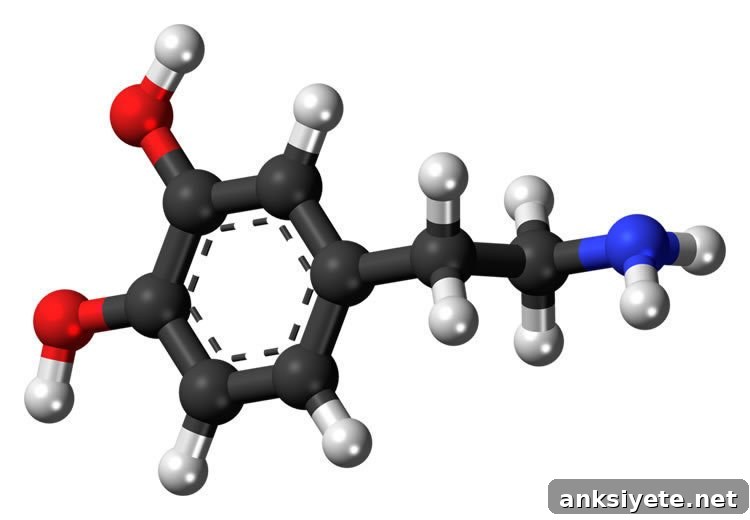
Summary: New research identifies a key role for dopamine in the early stages of heroin addiction. The study shows that heroin triggers dopamine release in the brain’s reward circuitry, and that silencing dopamine neurons reduces heroin self-administration in mice, suggesting dopamine is required for the initial reinforcing effects of opioids.
Source: eLife.
Researchers have clarified how dopamine contributes to heroin’s powerful addictive effects, according to a study published in the open-access journal eLife.
This advance improves understanding of the neural circuits behind opioid reinforcement and could guide the development of more effective addiction treatments and safer painkillers with lower addiction risk.
Addiction arises when the positive effects of a drug—such as pleasure or reward—strengthen the tendency to repeat drug-taking behavior. This process, often called drug reinforcement, depends on brain systems that encode value and motivation. By mapping the precise neural mechanisms that underlie reinforcement from opioids like heroin, scientists aim to prevent addiction and design better therapies.
“There has been ongoing debate about whether the initial reinforcing effects of opioids involve dopamine,” said Michaël Loureiro, a postdoctoral fellow at the University of Geneva. “Using modern genetic tools, we selectively manipulated and observed specific neural populations to revisit this question.”
The team began by measuring dopamine levels in the nucleus accumbens, a core structure in the brain’s reward network, using a genetically encoded fluorescent dopamine sensor. Within a minute of administering heroin to mice, the sensor recorded a clear rise in fluorescence, indicating a rapid and significant increase in dopamine concentration in the nucleus accumbens.
Next, the researchers monitored activity in dopamine-producing neurons by imaging calcium signals, which reflect neuronal firing. They observed that dopamine neurons in the ventral tegmental area (VTA) became repeatedly activated after heroin infusions. The timing and pattern of neuronal activation matched the dopamine release measured in the nucleus accumbens, linking VTA activity to the surge in dopamine.
To map the pathways these activated dopamine neurons use, the team applied neural tracers that label projections to distinct brain regions. After heroin exposure, most of the activated dopamine neurons were found to project specifically to the medial shell region of the nucleus accumbens, highlighting a targeted circuit likely responsible for heroin’s reinforcing effects.
Crucially, the researchers tested whether dopamine activation is necessary for heroin reinforcement. Using chemogenetic techniques to silence dopamine neurons in mice that had learned to self-administer heroin by pressing a lever, they observed a marked reduction in drug-seeking behavior. When dopamine neurons were inhibited during the early phase of exposure, mice were less likely to develop lever-pressing habits for heroin. These results demonstrate that activation of dopamine neurons projecting to the nucleus accumbens medial shell is required for the early positive reinforcement produced by opioid drugs.
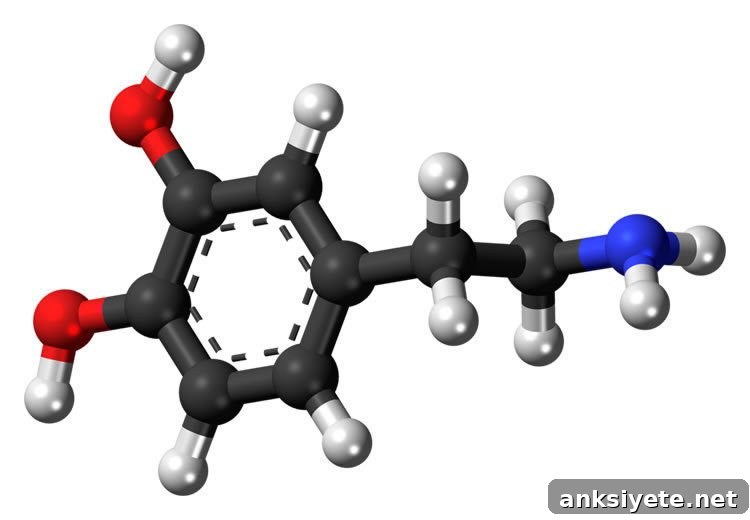
The team also used optogenetic approaches to further test the interaction between dopamine signaling and heroin reinforcement. In mice engineered so that a subset of VTA dopamine neurons could be activated by light, the animals learned to self-stimulate those neurons via lever pressing. When heroin was available, mice decreased their lever pressing for optical stimulation, indicating heroin substituted for the positive reinforcement provided by direct dopamine neuron activation. Similarly, heroin reduced the animals’ motivation to self-stimulate by inhibiting VTA GABA neurons that normally restrain dopamine activity, consistent with a disinhibition model.
“Our findings support the dopamine activation hypothesis for opioid reinforcement,” said senior author Christian Lüscher, Professor of Neuroscience at the University of Geneva. “By disentangling the specific VTA-to-accumbens circuits that drive heroin reinforcement, we can refine addiction therapies and inform the development of pain-relief medications with reduced addiction liability.”
Funding: Schweizerischer Nationalfonds zur Förderung der Wissenschaftlichen Forschung; European Commission.
Source: Emily Packer – eLife
Publisher: Organized by NeuroscienceNews.com
Image Source: NeuroscienceNews.com image is in the public domain.
Original Research: “Dopamine neurons projecting to medial shell of the nucleus accumbens drive heroin reinforcement” by Julie Corre, Ruud van Zessen, Michaël Loureiro, Tommaso Patriarchi, Lin Tian, Vincent Pascoli, and Christian Lüscher. Published in eLife on October 30, 2018. DOI: 10.7554/eLife.39945
Dopamine neurons projecting to the medial shell of the nucleus accumbens drive heroin reinforcement
The dopamine hypothesis proposes that increased mesolimbic dopamine is a shared feature of addictive drugs and underlies initial reinforcement that can progress to compulsive consumption. While psychostimulant studies support this model, its application to opioids has been controversial. Using genetically encoded dopamine and calcium indicators, cFos mapping, chemogenetic inhibition, and optogenetic stimulation in mice, this study shows that heroin activates a subset of VTA dopamine neurons that preferentially project to the medial shell of the nucleus accumbens. Inhibition of these dopamine neurons blocked heroin self-administration, and heroin reduced optogenetic self-stimulation of dopamine neurons, consistent with heroin’s reinforcing effects operating through disinhibition of specific VTA dopamine cells. Together, these experiments provide causal evidence that dopamine neurons projecting to the nucleus accumbens medial shell are essential for early heroin reinforcement.