When animals must choose between two important drives—feeding and mating—the decision can reveal how brain circuits prioritize behavior. New research in nematode worms shows that male brains can suppress food-seeking to prioritize mate-searching, offering a clear example of how sex-specific neural regulation shapes behavior.
The work, published in the journal Current Biology, highlights how subtle, cell-specific differences in gene expression alter the function of sensory neurons and ultimately change behavior between males and hermaphrodites.
“While human behavior is shaped by many cultural and social influences, these findings illustrate fundamental biological mechanisms that may underlie sex differences in behavior and differential vulnerability to neurological disorders,” said Douglas Portman, Ph.D., associate professor in the Department of Biomedical Genetics and the Center for Neural Development and Disease at the University of Rochester and lead author of the study.
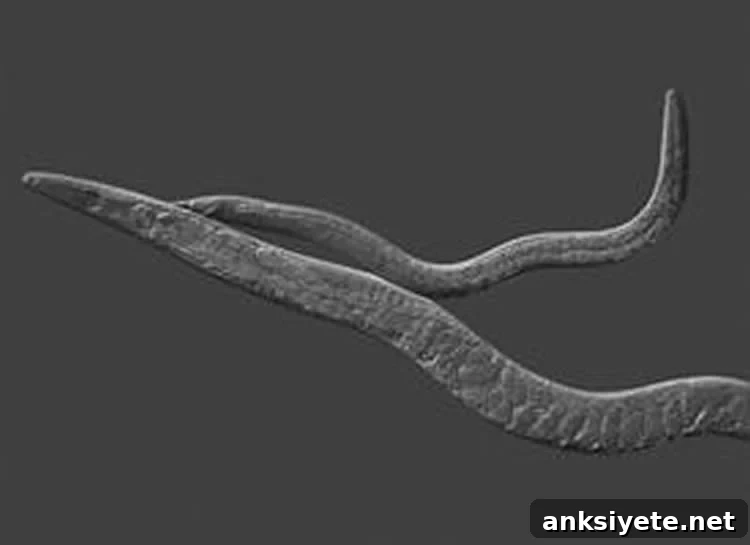
The experiments used Caenorhabditis elegans, a microscopic roundworm widely used to study development, neuroscience, and basic biology. C. elegans has a fully mapped nervous system, and discoveries made in this model organism have often informed understanding of animal and human biology; research on this worm has contributed to several Nobel Prizes in physiology and chemistry.
This study focused on a single pair of olfactory sensory neurons, known as AWA, which detect chemical cues in the environment. Chemosensation—smell, taste, and related chemical senses—guides C. elegans in locating food, avoiding danger, and finding mates. The researchers examined how the sexual identity of the AWA neurons affects the expression of specific chemoreceptors and how that regulation influences behavioral choices.
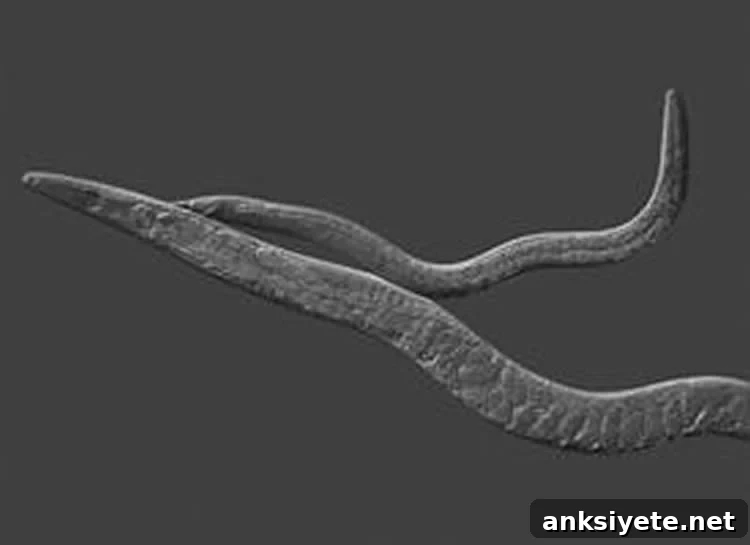
C. elegans exists as two sexes in laboratory strains: males and hermaphrodites. Hermaphrodites can self-fertilize but also mate with males, and they are often considered modified females for behavioral and reproductive comparisons. Previous observations have shown consistent behavioral differences: when placed on a food source, hermaphrodites typically remain on the food patch, while males frequently leave and wander—behavior interpreted as active mate searching.
The Rochester team discovered that the expression of a chemoreceptor called ODR-10 in AWA neurons is regulated by the sexual identity of those neurons. ODR-10 binds a chemical signature associated with bacterial food. In hermaphrodites, higher ODR-10 expression makes AWA neurons more sensitive to food odor, promoting food retention. In males, reduced ODR-10 expression diminishes sensitivity to that odor, biasing behavior away from feeding and toward mate searching. Importantly, this suppression is not fixed: when males experience food deprivation, ODR-10 expression rises dramatically, temporarily restoring food-seeking sensitivity.
To test how these molecular differences affect behavior, the researchers ran behavioral assays on petri dishes that presented worms with a direct trade-off between feeding and mating. Hermaphrodites were placed in the center of a dish at a food source and tended to remain there. Males were placed on separate food patches at the edge of the dish, with an extra ring of food surrounding the central hermaphrodite patch to make the route to potential mates more challenging.
Two groups of males were compared: wild-type males and genetically engineered males that overexpressed the ODR-10 receptor, making them more sensitive to the odor of food. Wild-type males typically left their peripheral food patches, crossed the food ring, and reached the hermaphrodite at the center to mate. The engineered males with elevated ODR-10 were more likely to stay on their own food patches and were far less successful at locating mates. By quantifying offspring, the team found that wild-type males achieved roughly ten times more reproductive success than males forced into a feeding-biased state by increased ODR-10.
In complementary experiments, reducing ODR-10 expression in hermaphrodites caused them to behave more like males and abandon food patches to seek other behaviors, demonstrating that tuning a single sensory receptor in a single neuron pair is sufficient to switch behavioral priorities.
“These findings show that changing the properties of just one cell can alter whole-animal behavior,” Portman said. “They add to growing evidence that sex-specific regulation of gene expression contributes to neural plasticity and may explain behavioral and disease differences between sexes.”
Additional authors on the study include Deborah Ryan, Renee Miller, KyungHwa Lee, and Kelli Fagan from the University of Rochester, and Scott Neal and Piali Sengupta from Brandeis University. The research received support from the National Institute of General Medical Sciences, the National Science Foundation, the Human Frontiers Science Program, and the National Alliance for Autism Research / Autism Speaks.
Contact: Mark Michaud, University of Rochester
Source: University of Rochester press release
Image Source: Image adapted from University of Rochester materials
Original Research: “Sex, Age, and Hunger Regulate Behavioral Prioritization through Dynamic Modulation of Chemoreceptor Expression,” by Deborah A. Ryan et al., published in Current Biology. DOI: 10.1016/j.cub.2014.09.032.