
Summary: Lower doses of the common antibiotic Doxycycline reduces toxicity of alpha synuclein and may be used to help treat Parkinson’s disease, a new study reports.
Source: NYU Langone Medical Center
Focusing attention during decision-making
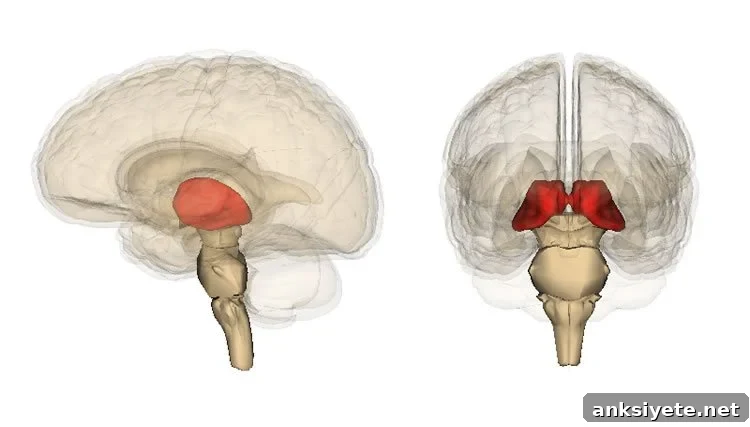
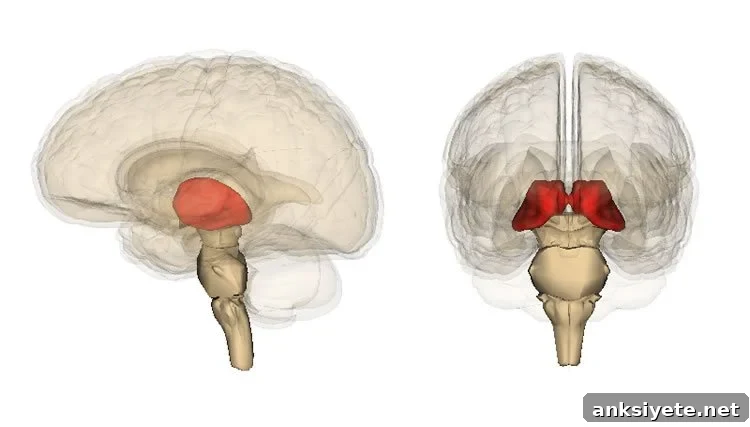
New research from NYU Langone Medical Center reveals a surprising role for the thalamus in decision-making. Once considered primarily a relay station for sensory information, the thalamus—specifically its mediodorsal (MD) region—appears to actively shape prefrontal cortex (PFC) circuits to support attention and rule-based choices. The study, published in Nature, provides evidence that the MD thalamus amplifies connections within the PFC, enabling flexible, experience-driven behavior.
The prefrontal cortex has long been associated with executive functions such as working memory, sustained attention, and the ability to apply learned rules when choosing between alternatives. Using a combination of live mouse experiments and computational modeling, the researchers show that the MD thalamus does more than transmit information: it increases the effective connectivity of relevant PFC networks so that they can represent and maintain task rules during decision-making.
“Our findings offer one of the clearest demonstrations to date that the mediodorsal thalamus can act like a conductor, coordinating cortical circuit connectivity as the brain follows learned rules and selects actions in real time,” says senior investigator Michael Halassa, MD, PhD, of the NYU Langone Neuroscience Institute.
The implications extend beyond normal cognition. Because many psychiatric and neurological disorders involve disrupted cortical connectivity—manifesting as attention problems, psychosis, or sleep disturbances—modulating thalamic function could represent a new avenue for improving cognitive function across a range of conditions.
Newfound circuitry mechanism
To probe how MD and PFC interact, researchers trained mice on a task that required selecting a sensory cue—light or sound—based on previously learned rules to obtain a food reward. By selectively enhancing activity in the MD, they observed that mice reduced their decision errors by more than 25 percent, demonstrating improved rule-guided attention and choice. In contrast, boosting PFC excitability directly impaired performance, in some cases reducing success to chance levels, likely because it caused competing cortical representations to activate simultaneously rather than allowing a single rule-specific circuit to dominate.
These results support a new model of mammalian decision-making: rather than encoding every association with strong, fixed cortical wiring, the brain may rely on many weakly connected cortical circuits that represent different behavioral rules or associations. The thalamus selectively amplifies the connections for the circuits that are relevant in the current context, promoting the emergence of rule-specific neural activity patterns that can guide behavior reliably.
Methodologically, the team used targeted genetic techniques to express a light-sensitive protein in specific neurons, enabling precise control of MD and PFC activity with light stimulation. Simultaneously, implanted electrodes recorded neural activity while mice performed the behavioral task. This combination allowed the researchers to link manipulation of thalamic or cortical excitability with changes in circuit dynamics and behavior.
By designing tasks that require integrating sensory information over time and applying learned rules, the researchers were able to recreate sophisticated decision-making tests in mice that historically were performed in non-human primates. This advancement strengthens the relevance of rodent models for studying the neural basis of attention and executive control.
The study was led by Michael Halassa at the NYU Langone Neuroscience Institute. Co-authors include L. Ian Schmitt, Ralf D. Wimmer, Miho Nakajima, Michael Happ, and Sima Mofakham. Funding came from the National Institute of Mental Health, the National Institute of Neurological Disorders and Stroke, the Brain & Behavior Research Foundation, the Sloan and Klingenstein foundations, and the Human Frontier Science Program.
Original research: “Thalamic amplification of cortical connectivity sustains attentional control” by L. Ian Schmitt, Ralf D. Wimmer, Miho Nakajima, Michael Happ, Sima Mofakham & Michael M. Halassa. Published online May 3, 2017. DOI: 10.1038/nature22073
Abstract
Thalamic amplification of cortical connectivity sustains attentional control
Interactions between the thalamus and cortex are essential for cognition, but the thalamus’s precise contribution has been unclear. Investigating representations of two rules that guide attention in the mouse prefrontal cortex, the authors show that the mediodorsal thalamus sustains these representations not by relaying categorical information but by amplifying local cortical connectivity. Mediodorsal input strengthens PFC circuits, enabling rule-specific neural sequences to emerge and thereby maintaining rule representations. Broadly increasing PFC excitability reduces rule specificity and impairs behavior, whereas enhancing mediodorsal excitability improves both. These findings define a previously unrecognized principle: thalamic control of functional cortical connectivity, a role distinct from simple information relay and central to cognitive function.