
Summary: Hyperbaric oxygen therapy (HBOT) improved cerebral blood flow by up to 23% in elderly patients, reduced vascular dysfunction and amyloid burden in an Alzheimer’s disease model, and produced a 16.5% average improvement in memory performance.
Source: Tel Aviv University
A research team from Tel Aviv University reports that hyperbaric oxygen therapy (HBOT) can reverse key brain changes linked to Alzheimer’s disease. This is the first demonstration that a non-pharmacological intervention can target core biological processes implicated in Alzheimer’s pathology.
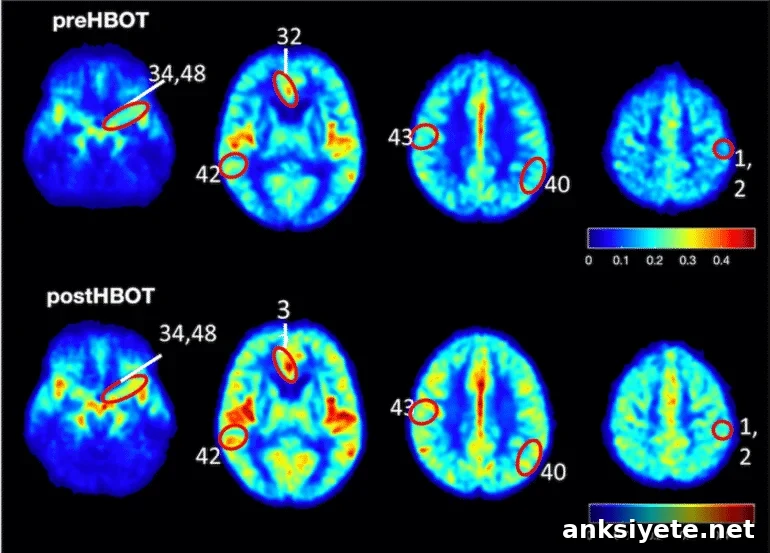
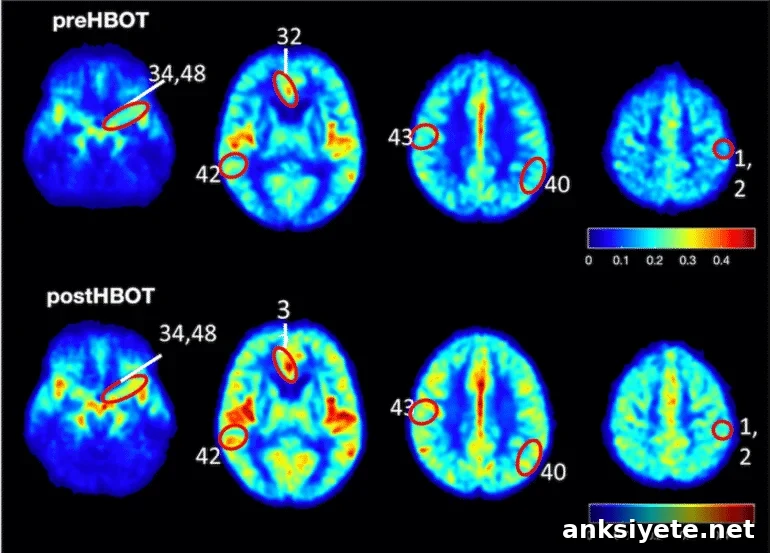
Using a defined HBOT protocol, the researchers observed a 16–23% increase in cerebral blood flow (CBF) in older adults with cognitive decline, along with reductions in vascular dysfunction and amyloid accumulation. These findings suggest a strategic prevention approach that addresses underlying pathology—blood flow and oxygenation—rather than only treating symptoms or individual biomarkers.
The study was led by Prof. Shai Efrati, Prof. Uri Ashery, Dr. Ronit Shapira, Dr. Pablo Blinder and Dr. Amir Hadanny of the Sagol School of Neuroscience, the George S. Wise Faculty of Life Sciences, and the Sackler Faculty of Medicine at Tel Aviv University, in collaboration with Shamir Medical Center. The results were published in the peer-reviewed journal Aging.
Hyperbaric medicine delivers 100% oxygen to patients inside a pressurized chamber at pressures higher than sea level. HBOT is a well-established, clinically used treatment for a variety of medical conditions and is considered safe when delivered under professional supervision. Recent research has shown that specific HBOT regimens can stimulate repair in damaged brain tissue and promote growth of blood vessels and neurons.
The research began with experiments in an Alzheimer’s disease mouse model (5XFAD). Live two-photon imaging and tissue analysis demonstrated that the HBOT protocol increased arteriolar diameter and cerebral blood flow, reduced tissue hypoxia, and promoted structural vascular changes. Importantly, the therapy decreased the volume of existing amyloid plaques and limited the formation of new plaques—amyloids being insoluble protein aggregates tightly associated with neurodegeneration in Alzheimer’s disease.
Building on the animal results, the team tested the protocol in people aged 65 and older who presented significant memory decline—a stage that often precedes clinical Alzheimer’s and dementia. Participants received a course of 60 HBOT sessions administered over 90 days in specialized pressure chambers. High-resolution perfusion MRI was used to quantify changes in blood flow and oxygenation, while cognitive tests evaluated memory, attention and processing speed.
The human cohort experienced a clear physiological and cognitive response: cerebral blood flow increased by 16–23%, memory scores improved by an average of 16.5%, and measures of attention and information processing speed showed statistically significant gains. These outcomes indicate that HBOT may restore oxygen delivery and function to brain regions vulnerable to aging-related hypoxia, with corresponding improvements in cognition.
Prof. Uri Ashery noted that translating observations from the animal model to humans allowed the team to demonstrate improved blood flow and tangible cognitive gains following HBOT. He emphasized the potential to treat neurological conditions that stem from chronic or age-related hypoxia—insufficient oxygen supply to brain cells.
Dr. Pablo Blinder highlighted the role of advanced imaging in the discovery: multi-photon microscopy enabled the researchers to monitor vascular changes and amyloid plaque dynamics in live animals before and after HBOT. Dr. Ronit Shapira emphasized that combining an informative animal model with an available, scalable therapy creates a promising path to address one of the major public health challenges in aging societies. Their findings suggest that early HBOT intervention may prevent or delay the progression of Alzheimer’s disease.
Prof. Shai Efrati summarized the implications: by treating the upstream causes of age-related cognitive decline—reduced blood flow and oxygenation—HBOT may offer a preventive strategy that preserves brain function independent of chronological age. The authors propose starting therapy before the clinical onset of dementia and before extensive neuronal loss occurs, at a stage when blood vessels begin to occlude and cerebral oxygen delivery is already compromised.
About this Alzheimer’s disease research news
Author: Noga Shahar
Source: Tel Aviv University
Contact: Noga Shahar – Tel Aviv University
Image: The image is credited to Tel Aviv University
Original Research: Open access. “Hyperbaric oxygen therapy alleviates vascular dysfunction and amyloid burden in an Alzheimer’s disease mouse model and in elderly patients” by Ronit Shapira et al., Aging
Abstract
Hyperbaric oxygen therapy alleviates vascular dysfunction and amyloid burden in an Alzheimer’s disease mouse model and in elderly patients
Vascular dysfunction is closely linked to aging and to the development of Alzheimer’s disease (AD), contributing to reduced cerebral blood flow (CBF) and subsequent brain hypoxia. Hyperbaric oxygen therapy (HBOT) is already used clinically for multiple conditions. In this study, 5XFAD mice—a well-characterized AD model with cognitive impairment—were treated with HBOT and assessed using two-photon live imaging, behavioral testing, and biochemical and histological analyses.
HBOT expanded arteriolar lumen diameter and increased CBF, thereby reducing tissue hypoxia. The therapy also lowered amyloid burden by shrinking existing plaques and reducing new plaque formation. These changes correlated with altered processing of amyloid precursor protein, enhanced degradation and clearance of Aß protein, and improved behavior in treated mice. Together, the data indicate that HBOT acts in part by inducing durable structural changes in the cerebral microvasculature that mitigate hypoxia.
Encouraged by the animal results, the researchers treated elderly patients with notable memory decline and observed increased CBF and better cognitive performance following HBOT. The study supports HBOT as an effective approach for hypoxia-related neurological conditions, including Alzheimer’s disease and aging-related cognitive decline.