
Summary: Glutamate-producing neurons in the ventral tegmental area (VTA) play a central role in how stress affects behavior. Temporarily silencing these neurons made mice more resilient to the lasting behavioral effects of severe stress.
Source: University of Colorado
More than 70% of adults worldwide will encounter at least one traumatic event—such as a life-threatening illness, a serious accident, violent assault, or a natural disaster—during their lifetime, and nearly a third will experience four or more such events.
While many people recover after trauma, others develop persistent symptoms that interfere with daily life. New research from CU Boulder, published in Molecular Psychiatry, identifies a specific population of brain cells that helps explain why some stress responses are more enduring and difficult to treat.
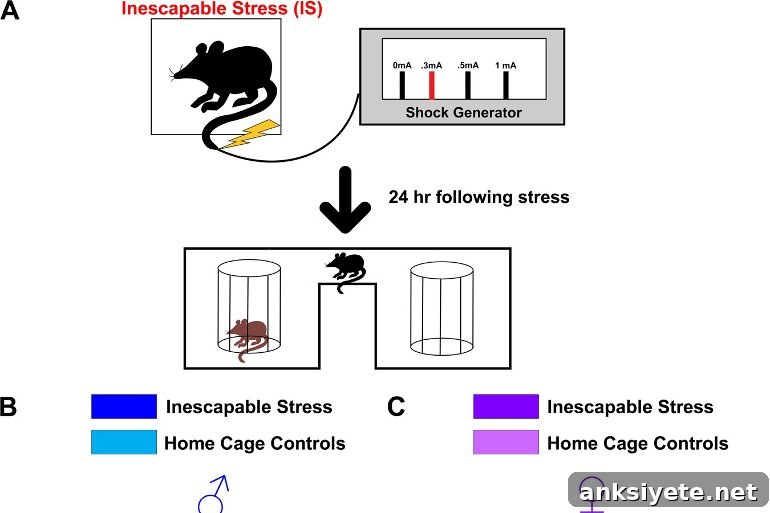
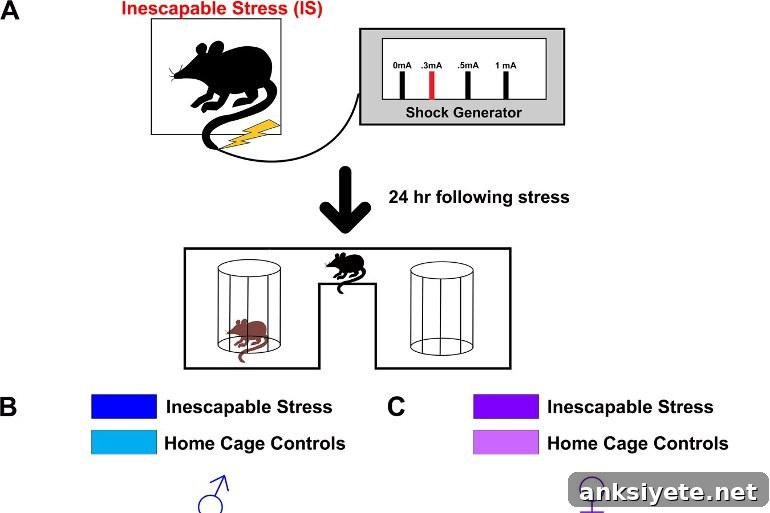
The study shows that stressors people or animals can escape from produce different behavioral and neural outcomes than stressors that are inescapable. In mice, uncontrollable stress triggered broad, long-lasting anxiety-like behaviors, whereas the same stress that could be avoided produced little lasting harm. The researchers traced those persistent effects to glutamate-producing neurons in the VTA, a region often associated with reward and motivation.
“To develop better therapies for trauma-related disorders, we need to know exactly how stressful experiences change the brain,” said Michael Baratta, co-senior author and assistant professor of behavioral neuroscience at CU Boulder. “This work reveals that a relatively understudied group of cells in the brain’s reward circuitry is crucial for producing the negative behavioral consequences of severe stress.”
Traumatic events can produce two broad classes of responses. Associative responses occur when reminders tied to the original trauma—people, places, sounds, or situations—trigger fear or distress. Non-associative responses are more generalized: a heightened aversion or anxiety that extends across many contexts and often resists standard treatments. Current therapies such as exposure therapy and cognitive behavioral therapy mainly target associative reactions, leaving non-associative symptoms harder to address.
Investigating controllability and brain circuits
To investigate how controllability shapes outcomes, co-senior authors Baratta and David Root used an operant mouse paradigm. One group of mice experienced a stressor they could escape; another group received an identical stressor but could not escape. The behavioral differences were clear: male mice exposed to inescapable stress showed reduced social interaction, decreased exploration, and exaggerated fear responses, while female mice developed generalized anxiety-like avoidance of novel, brightly lit environments. Mice that experienced the escapable stressor displayed little or no behavioral change the following day.
The team then focused on the VTA and measured activity in a subset of neurons that express vesicular glutamate transporter 2 (VGluT2)—cells that release glutamate. They found that both controllable and uncontrollable stressors increased activity in VTA VGluT2 neurons. Crucially, however, temporary chemogenetic silencing of these neurons before an inescapable stress exposure prevented the development of the long-lasting, non-associative behavioral consequences in both male and female mice.
“When we silenced these glutamatergic VTA neurons, the mice remained social, continued to explore new environments, and showed resilience to later stressors,” said Root, co-senior author. “It was as if the earlier inescapable stress had not occurred.”
Implications and limits
These findings indicate that activation of VTA glutamate neurons is necessary for the development of hard-to-treat, transsituational consequences of stress. At the same time, the authors emphasize that creating a simple “stress vaccine” is not imminent. Both escapable and inescapable stressors activated these neurons, suggesting they operate within a broader neural network involving multiple cell types and connected brain regions, such as the lateral habenula. Any future therapeutic approach would need to account for that complexity.
Looking ahead, the researchers imagine targeted interventions that could be administered prophylactically to people at high risk—such as soldiers or emergency responders—or used shortly after a traumatic event to reduce the likelihood of persistent symptoms. But more research is needed to map the full circuit and to establish safe, effective ways to modulate specific cell types in humans.
“Identifying the neural circuits and cell populations that drive both associative and non-associative stress outcomes is a vital step toward therapies that can prevent or reduce trauma-related mental health disorders,” said Root.
About this stress and neuroscience research news
Author: Press Office
Source: University of Colorado
Contact: Press Office – University of Colorado
Image: The image is credited to the researchers
Original Research: Closed access. “Ventral tegmental area glutamate neurons mediate nonassociative consequences of stress” by Dillon J. McGovern et al., Molecular Psychiatry
Abstract
Ventral tegmental area glutamate neurons mediate nonassociative consequences of stress
Exposure to trauma increases the risk for mood disorders and can heighten vulnerability to later adverse events. Recent evidence shows that VTA neurons expressing vesicular glutamate transporter 2 (VGluT2) respond to aversive or threatening stimuli and can influence related behaviors. This study examined whether VTA VGluT2 neurons contribute to transsituational, non-associative outcomes of stress and whether their activity depends on stressor controllability.
Using an operant mouse model, researchers compared controllable (escapable) and uncontrollable (inescapable) stressors of identical intensity and duration. Uncontrollable stress produced social avoidance and exaggerated fear in male mice and exploratory avoidance in female mice, while controllable stress did not produce these effects. Both types of stress increased VTA VGluT2 activity, but chemogenetic silencing of these neurons prevented the behavioral sequelae of uncontrollable stress in both sexes. The study also found that stress activates multiple genetically distinct VTA VGluT2 subtypes, particularly VGluT2+VGaT+ cells, and engages downstream targets such as lateral habenula neurons that receive VTA VGluT2 input.
These results provide causal evidence that VTA VGluT2 neurons contribute to transsituational stress outcomes—such as social avoidance, exaggerated fear, and anxiety-like behavior—and support the use of mouse models to map circuits governing stressor controllability. Understanding these circuits may guide the development of targeted treatments for trauma-related disorders.