
A specific region of the hippocampus helps detect subtle differences between stored memories and new experiences
The hippocampus is a critical brain structure for encoding and retrieving spatial and contextual memories. It contains several subfields—each with specialized contributions to memory processing—but the precise role of some areas has remained unclear. Researchers at the Laboratory for Circuit and Behavioral Physiology, RIKEN Brain Science Institute, led by Thomas McHugh, have identified a distinct function for the CA2 subfield: sensing small or subtle mismatches between existing spatial memory and newly encountered environments in mice.
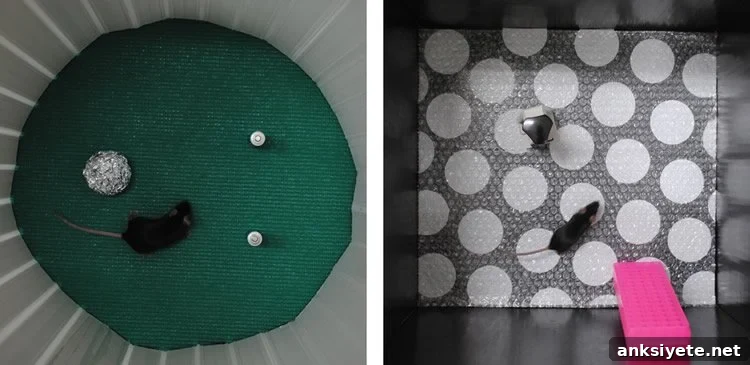
To determine how different hippocampal subfields respond to familiar and novel contexts, McHugh and colleagues designed controlled behavioral experiments in mice that compared neural activity across repeated and changed environments. Mice were first exposed to a familiar testing location and then returned to their home cages. After this break, each animal was either returned to the same familiar environment or placed into a new, previously unvisited location. This design allowed the team to compare how hippocampal circuits signal familiarity versus novelty and to examine sensitivity to both gross and subtle environmental changes.
The investigators used cellular compartment analysis of temporal activity by fluorescence in situ hybridization (catFISH) to map neural activity patterns with temporal precision. CatFISH is a technique that identifies neurons activated at distinct time points by detecting immediate early gene expression in cellular compartments, allowing researchers to infer whether the same or different neural ensembles are engaged during separate exposures. By applying catFISH across hippocampal subfields, the team could assess how populations of neurons in CA1, CA2, CA3 and other areas responded when animals were re-exposed to the same context or introduced to a new one.
Across most hippocampal subfields, neural responses showed greater overlap when mice were returned to the original, familiar location than when placed in a novel environment, consistent with stable ensemble activity representing stored spatial memories. However, the CA2 subfield demonstrated a particularly sensitive response to context changes. When the researchers used a mouse model in which CA3 neurons were genetically altered so that their activity became uncoupled from external sensory cues, the typical change in CA2 activity in response to a novel environment was absent. This observation indicates that input from CA3 to CA2 helps modulate CA2’s ability to detect environmental novelty and suggests an interdependent relationship between these subfields in signaling mismatch between memory and experience.
To probe whether CA2 can detect more subtle differences, the team introduced small, localized changes during the second exposure session—for example, by moving objects between locations rather than changing the entire environment. Under these milder manipulations, CA2 neuronal ensembles still displayed distinct changes in activity, even when broader hippocampal patterns remained similar. This finding highlights CA2 as especially sensitive to nuanced contextual differences that might not trigger large-scale remapping in other hippocampal areas.
Functionally, a CA2 mechanism that signals small mismatches between memory and current input could be important for guiding behavior when animals must discriminate between similar places or detect minor alterations in a familiar setting. Such sensitivity could support flexible decision-making, memory updating, or the initiation of exploratory behaviors when expectations do not match sensory input. While this study focused on mice and circuit-level neural responses, the results contribute to a broader understanding of how hippocampal subregions cooperate to maintain and update memory representations.
Looking ahead, McHugh and colleagues plan to use targeted genetic and circuit-based tools to manipulate CA2 activity directly and assess the resulting effects on behavior. These future experiments aim to clarify how CA2-driven signals influence learning, recognition, and adaptive responses when confronted with subtle versus pronounced environmental change.
Contact: Thomas McHugh – RIKEN
Source: RIKEN press release
Image Source: Image credited to M. E. Wintzer et al., adapted from the RIKEN press release.
Original Research: Abstract for “The hippocampal CA2 ensemble is sensitive to contextual change” by Wintzer, M. E., Boehringer, R., Polygalov, D. and McHugh, T. J., Journal of Neuroscience. Published online February 19, 2014. DOI: 10.1523/JNEUROSCI.2563-13.2014