
Summary: Researchers at the University of Maryland School of Medicine report that skin-associated stem cells called melanocyte stem cells can, under appropriate conditions, generate myelin-producing cells in mice. This discovery suggests a potential, minimally invasive route to restore the myelin sheath lost in disorders such as multiple sclerosis.
Source: University of Maryland School of Medicine
Skin stem cells offer a new approach to repairing myelin
Neurodegenerative disorders like multiple sclerosis (MS) arise when nervous system components progressively lose function. A key factor in many of these diseases is the loss or dysfunction of myelin, the insulating sheath that surrounds nerve fibers and ensures rapid electrical conduction. Investigators at the University of Maryland School of Medicine (UMSOM) have identified a population of skin-related stem cells—melanocyte stem cells—that can be guided to form myelin-producing cells in mouse models, offering a promising alternative to embryonic stem cell approaches.
This research is important because melanocyte stem cells can be obtained from skin through minimally invasive methods, avoiding the ethical and technical challenges of embryonic stem cell harvesting. In controlled experiments, UMSOM researchers demonstrated that these skin-derived stem cells can produce structures resembling healthy myelin sheaths when placed in environments that stimulate glial (myelinating) behavior.
Identifying and isolating melanocyte stem cell subpopulations
Dr. Thomas J. Hornyak and his team developed techniques to distinguish and isolate specific melanocyte stem cell subpopulations from mouse skin. Melanocyte stem cells are precursors to pigment-producing cells found in the skin and hair follicles and are characterized by their capacity for sustained self-renewal. The team used a protein marker that is selectively expressed on a subset of these stem cells to separate this rare population from the broader skin cell mix. Their methods revealed two distinct melanocyte stem cell subtypes with differing regenerative potentials.
Genetic and functional analyses indicated that the two subpopulations display different tendencies: one subset is predisposed to regenerate pigment-producing melanocytes efficiently, while the other shows properties more consistent with neural crest stem cells and can adopt a myelinating glial-like phenotype under the right cues.
From skin cells to myelin: laboratory and in vivo findings
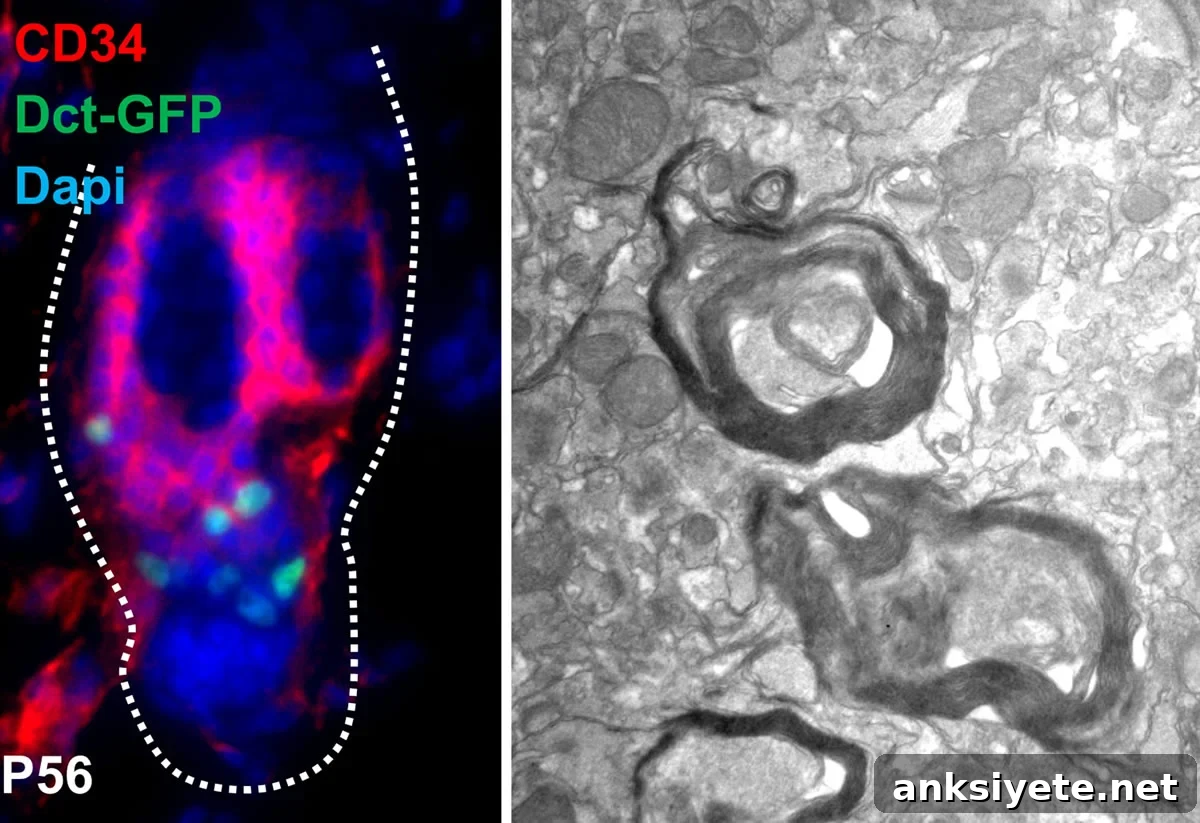
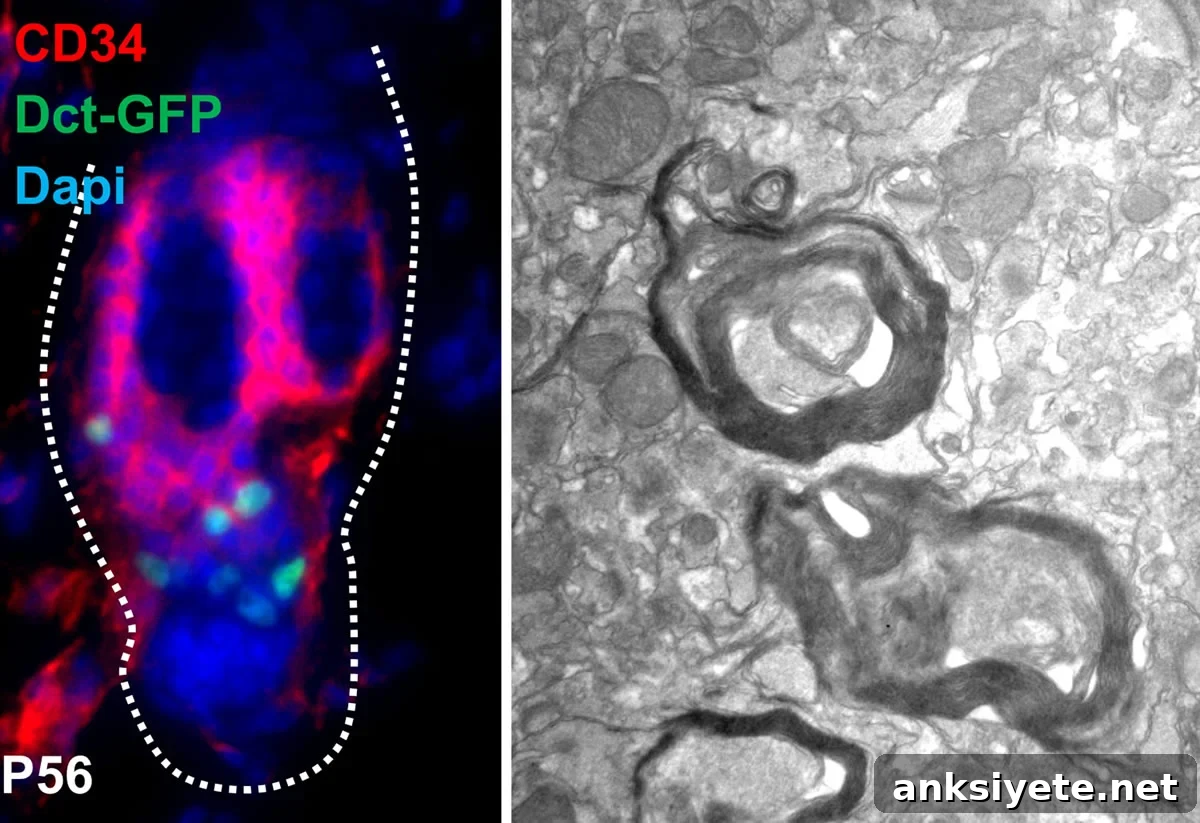
In laboratory co-culture experiments, the team combined melanocyte stem cells with neurons derived from mice that are incapable of producing myelin. Under these conditions, the stem cells adopted glial-like behaviors and formed myelin sheaths around the neurons. The resulting structures resembled the layered, insulating coats seen on healthy nerve fibers.
When researchers scaled the approach to live animals, mice treated with the melanocyte stem cells developed myelin-like structures in brain regions that lacked them in untreated controls. These in vivo results support the idea that a specific melanocyte stem cell population can differentiate into myelin-producing cells and contribute to remyelination in mammalian nervous tissue.
Implications for treating demyelinating conditions
The ability to isolate a skin-derived stem cell population capable of myelinating neurons raises the prospect of new therapeutic strategies for demyelinating diseases and traumatic nerve injury. Because melanocyte stem cells can be harvested from skin with minimal invasiveness, they represent an attractive source for autologous or donor-derived cell therapies that could reduce immune rejection and ethical concerns tied to embryonic stem cells.
UMSOM Dean E. Albert Reece highlighted the potential impact of this approach for the millions affected by neurodegenerative diseases each year, emphasizing that these findings could lead to clinically relevant, less invasive stem cell therapies for restoring nervous system function.
Funding and publication
This research was supported by the National Institute of Arthritis and Musculoskeletal and Skin Diseases (NIAMS) of the NIH, the U.S. Department of Health & Human Services, the Biomedical Laboratory Research & Development Service of the VA Office of Research Development, and the U.S. Department of Veterans Affairs. The study was published in PLOS Genetics under the title “CD34 defines melanocyte stem cell subpopulations with distinct regenerative properties.”
Research summary (abstract)
The study reports that hair follicle melanocyte stem cells (McSCs) reside in distinct niches corresponding to CD34+ bulge/lower permanent portion (LPP) and CD34- secondary hair germ (SHG) regions. Using a Dct-H2BGFP mouse model and fluorescence-activated cell sorting, the authors separated these subsets and found they are functionally and transcriptionally distinct. CD34- McSCs express higher levels of melanocyte differentiation genes and are efficient at regenerating pigmentation, whereas CD34+ McSCs show a transcriptional profile aligned with neural crest stem cells and exhibit the ability to myelinate neurons both in culture and in vivo. The authors propose that CD34+ McSCs—and analogous cells in human skin—may be useful for remyelinating neurons, opening avenues for therapies targeting demyelinating diseases and nerve injury.
Source: University of Maryland School of Medicine
Media contact: Joanne Morrison, University of Maryland School of Medicine