
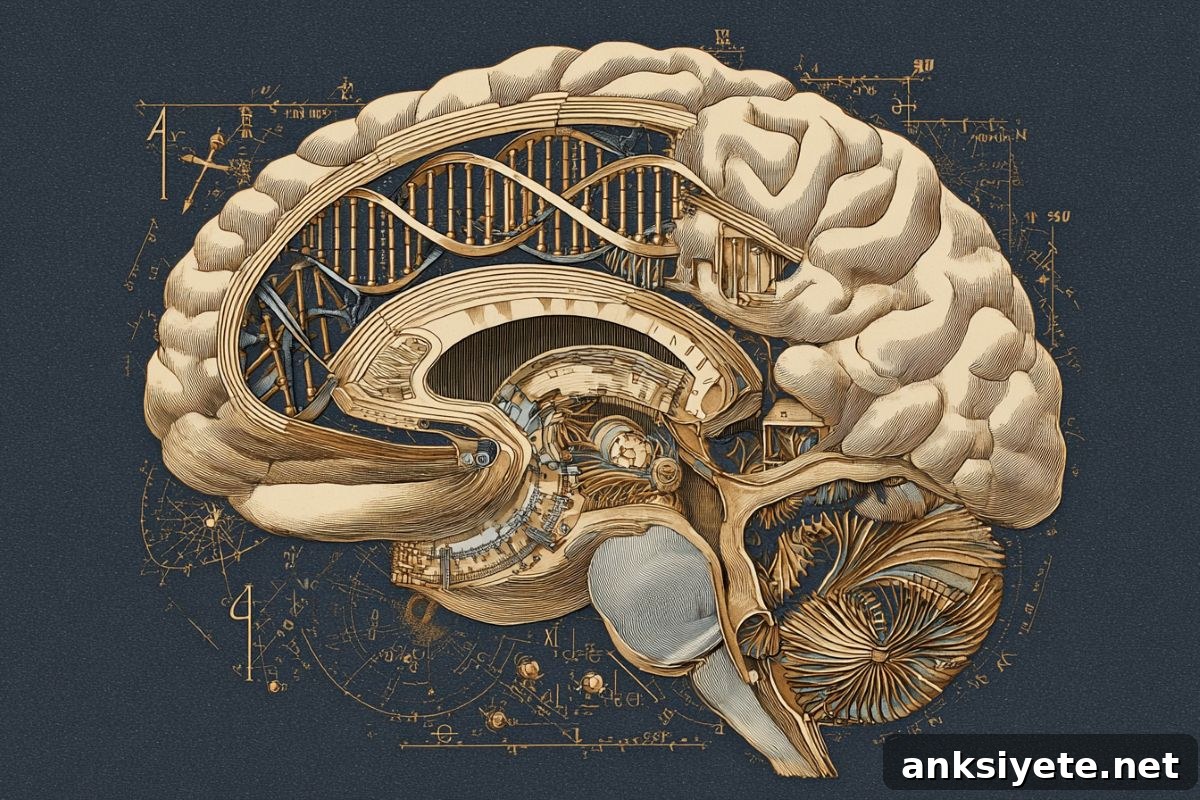
Summary: A comprehensive, peer-reviewed review argues that when the adult brain learns, remembers, and rewires, it does not invent new biological mechanisms. Instead, it reuses a molecular toolkit carried out of the womb. The review centers on HuD (encoded by the ELAVL4 gene), an evolutionarily ancient neuronal RNA-binding protein conserved for more than half a billion years.
By comparing the messenger RNAs (mRNAs) bound by HuD in embryonic and adult mouse brain tissue, the authors show that adult neuroplasticity is fundamentally developmental: the brain runs a single master program across the lifespan, substituting specific molecular actors as needed.
Key Facts
- The Shared Interactome: Researchers mapped HuD-bound mRNAs in two stages: embryonic day 18 mouse brain and adult forebrain. Of roughly 4,000 total targets, 1,926 mRNAs are shared between both ages.
- The Evolutionary Playbook: The shared targets control core neural functions—synapse formation and number, cell proliferation, and nervous-tissue regeneration. They include structural scaffolds such as Bassoon and gephyrin, and receptors like TrkB that support neuronal survival and remodeling.
- Different Cast, Same Play: Canonical pathways such as axon guidance, synaptogenesis, and ephrin signaling are preserved from embryo to adult, but the specific mRNAs operating inside those pathways change with age. Adult learning therefore uses recycled developmental machinery.
- The Functional Divide: Embryo-only targets (about 620 mRNAs) emphasize structural construction—axon growth and guidance. Adult-only targets (about 1,583 mRNAs) shift toward behavior, maintenance, and disease-related adaptation, with Bdnf as a central hub.
- A Crowded Therapeutic Intersection: ELAVL4/HuD is implicated across many neurological conditions: it is a replicated Parkinson’s risk gene, is dysregulated in Alzheimer’s, frontotemporal dementia, and ALS, and its targets overlap genes linked to schizophrenia, major depression, and bipolar disorder.
Source: Genomic Press
Overview
This invited, peer-reviewed review led by Dr. Nora Perrone-Bizzozero (University of New Mexico School of Medicine) synthesizes multiple experimental datasets to assess what a single neuronal RNA-binding protein—HuD, encoded by ELAVL4—does across development and adulthood. The authors draw on RIP-seq pulldowns, sequencing runs, knockout studies, and clinical genetics to form a cohesive picture of HuD’s role across a lifetime.
Members of the ELAV-Hu family are ancient regulators of neuronal identity, originally identified in fruit flies. In mammals, most Hu proteins are neuron-restricted and are among the earliest markers that a cell has committed to a neuronal fate. This review asks: once HuD is present, how does it shape neuronal behavior over time?
A target list, drawn twice
The team compared two HuD interactomes—mRNAs captured in living tissue at embryonic day 18 and in adult forebrain. Roughly half of the targets (1,926 mRNAs) appear at both stages, while about 620 are embryo-specific and about 1,583 are adult-specific.
Pathway analysis of the shared set highlights textbook networks of neural function: synapse quantity and organization, cell proliferation, and nervous-tissue regeneration. These shared mRNAs include scaffold proteins (for example, Bassoon and gephyrin), neurodevelopmental genes such as Cntnap2, and survival/remodeling receptors like TrkB.
“What surprised us was how much of the adult brain’s molecular vocabulary was already present by embryonic day 18,” said Dr. Perrone-Bizzozero. Rather than improvising, neurons appear to consult a conserved phrasebook and substitute components over time to maintain lifelong plasticity.
Different cast, same play
Fifteen canonical pathways are shared across embryonic, adult, and common target sets, including axon guidance, ephrin receptor signaling, netrin signaling, synaptogenesis, and RHO GTPase cascades. Thirty-one disease and function categories overlap as well, covering neuron development, microtubule dynamics, and abnormal brain morphology.
However, the specific mRNAs within these pathways differ with age. For example, ephrin B signaling recruits Cdc42, Gnaq, Kalrn in the embryo, while the same pathway in adulthood engages Efnb1, Efnb2, Mapk1, Rhoa. The pathway architecture is preserved, but the molecular actors change—supporting the authors’ central claim that adult plasticity recapitulates developmental logic.
Where embryos and adults part ways
Embryo-exclusive HuD targets center on axon construction and geometric organization, with prominent roles for genes such as Cdc42, Kif2a, Marcks, Ncam1, and Sema5a, and with pathways like WNT/β-catenin and semaphorin signaling. Adult-exclusive targets emphasize behavior, synaptic maintenance, disease adaptation, and metabolic signaling, with Bdnf emerging as a central hub.
When HuD goes wrong
The review examines disease links carefully. ELAVL4 is a replicated Parkinson’s risk gene and HuD is dysregulated in Alzheimer’s disease, frontotemporal dementia, and ALS. In one mouse Alzheimer’s model, HuD knockout reduced pathology—an observation the authors flag as therapeutically intriguing. HuD activation after nerve injury has been associated with neuropathic pain, and HuD targets are implicated in schizophrenia and mood disorders. The authors note proposals to explore small-molecule HuD inhibitors, while also raising caution about potential trade-offs with its regenerative roles.
“HuD sits at an unusually crowded biological intersection,” said Dr. Jeffery Twiss, co-author. Because its regulatory reach touches thousands of mRNAs, perturbations can ripple across many pathways, making HuD both a potential therapeutic node and a complex target to modulate safely.
Open questions
The authors emphasize important unresolved issues. HuD interacts with circular RNAs (e.g., circHomer1a), long noncoding RNAs (e.g., BACE1 antisense), small noncoding RNAs (e.g., Y3) and competes with microRNAs such as miR-495. It also competes with other RNA-binding proteins like KHSRP, which can have opposing effects on the same mRNAs. The functional outcome depends on stoichiometry, cell type, and competing RNA networks that remain incompletely mapped.
Key translational questions include whether HuD-directed therapies can preserve regenerative functions, whether embryonic versus adult target distinctions can guide selective remodeling in injured adult tissue, and what determines target release order under stress. The authors present these as priorities for future research rather than settled conclusions.
Conclusion
This synthesis does not present new primary experiments but integrates years of experimental work into a coherent argument: adult learning and plasticity largely reuse developmental molecular programs, with substitutions that tailor those programs to mature function. If adult plasticity runs on developmental machinery, the boundary between brain development and brain repair may be narrower than traditionally thought—implications that could shape future approaches to stroke recovery, neurodegeneration, and neuropsychiatric treatment.
Key Questions Answered:
A: No. The adult brain largely reuses molecular programs established during development. When you form memories or adapt to new experiences, neurons draw on conserved pathways and proteins—such as HuD—rather than inventing wholly new systems.
A: The pathways remain, but the specific molecular players shift. Using ephrin signaling as an example, different sets of genes operate in embryos versus adults, allowing the same pathway to build early structures and later maintain or remodel them.
A: HuD regulates thousands of mRNAs, so its dysregulation can produce wide-ranging downstream effects. That expansive regulatory role places HuD at the center of multiple neurodegenerative and neuropsychiatric conditions.
Editorial Notes:
- This article was edited by a Neuroscience News editor.
- The journal paper was reviewed in full by staff.
- Additional context was provided by the editorial team.
About this memory and genetics research news
Author: Ma-Li Wong
Source: Genomic Press
Contact: Ma-Li Wong – Genomic Press
Image: The image is credited to Neuroscience News
Original Research: Findings will appear in Genomic Psychiatry