
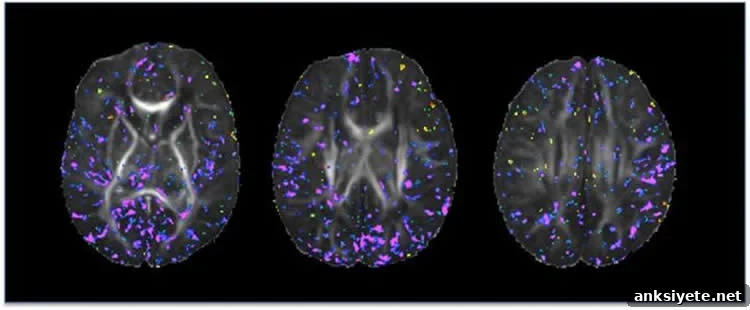
In the first study of its kind, researchers report that even modestly low maternal iron intake during pregnancy produces measurable changes in newborn brain organization. The findings appear in the journal Pediatric Research.
The study was led by Bradley S. Peterson, MD, director of the Institute for the Developing Mind at The Saban Research Institute of Children’s Hospital Los Angeles, and Catherine Monk, PhD, of Columbia University Medical Center. The research highlights how typical variation in maternal nutrition—specifically prenatal iron intake—can influence early infant brain development.
Iron is essential for normal growth and for optimal brain development in utero. Yet many women experience iron shortfalls during pregnancy: estimates indicate that 35–58 percent of healthy women have some degree of iron deficiency, and nearly half of pregnant women worldwide are anemic. Severe maternal iron deficiency has long been linked to adverse fetal outcomes, but the new study examines more subtle effects of less extreme, everyday differences in maternal iron intake.
Animal research has previously shown that prenatal iron deficiency impairs hippocampal function, harms learning and memory, and delays white matter maturation. Human studies also report that newborns with low iron profiles lag in motor and cognitive milestones. To investigate brain tissue organization in human infants in relation to maternal iron, the researchers used Diffusion Tensor Imaging (DTI), an MRI technique sensitive to microstructural tissue organization.
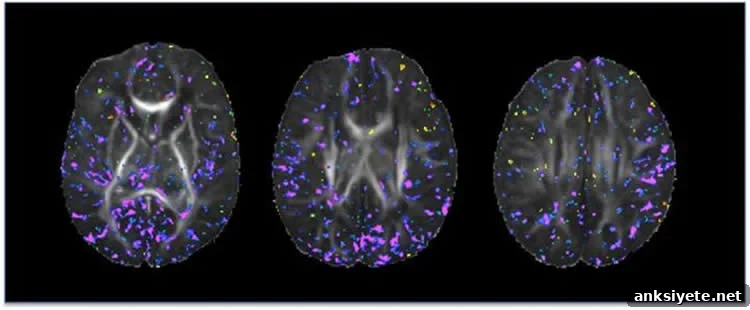
DTI scans were acquired at an average age of 20 days after birth and analyzed with fractional anisotropy (FA), a DTI-derived measure that reflects directional water diffusion and can indicate tissue organization and maturation. The study associated third-trimester maternal iron intake with FA measures across the newborn brain, focusing on cortical gray matter and major white matter pathways.
Across a sample of 40 healthy adolescent mothers and their term newborns, higher maternal iron intake during pregnancy correlated with lower FA values in cortical gray matter regions. In the context of early brain development, a decrease in FA in gray matter is interpreted as greater dendritic branching and synaptic complexity—features of more mature cortical tissue—while higher FA in gray matter can indicate less mature, simpler neuronal architecture. The same associations were observed, in a smaller subsample (n=16), using cord blood ferritin as a biochemical marker of fetal iron status.
Although all mothers in the sample were receiving prenatal care, 14 percent met clinical criteria for mild anemia, underscoring that adolescent pregnancy carries particular nutritional risk for both mother and infant. The technical demands of neonatal MRI limited the sample size, but the imaging findings point to brain-based effects of common prenatal nutritional variation that occur even when clinical screening does not identify severe deficiency.
Peterson summarized the interpretation: neurons extend more complex dendritic arbors and form more synapses as the cortex matures, and lower prenatal iron appears to be associated with cortical tissue that is structurally less complex shortly after birth. These MRI-based observations align with prior animal and behavioral human studies linking prenatal iron status to neurodevelopmental outcomes.
Key contributors to the study include Michael K. Georgieff (University of Minnesota Medical School), Dongrong Xu and Xuejun Hao (New York State Psychiatric Institute), Ravi Bansal (Children’s Hospital Los Angeles and the University of Southern California), and Hanna Gustafsson and Julie Spicer (Columbia University Medical Center).
Funding: This research was supported by the National Institute of Mental Health (grant # MH093677).
Source: Debra Kain, Children’s Hospital of Los Angeles. Image credit: Bradley Peterson, MD, Children’s Hospital Los Angeles.
Abstract
Maternal Prenatal Iron Status and Tissue Organization in the Neonatal Brain
Background: Children prenatally exposed to inadequate iron demonstrate poorer motor and neurocognitive development. Prior to this study, no published research had assessed how maternal prenatal iron intake influences newborn brain tissue organization in full-term infants using advanced neuroimaging.
Methods: Third-trimester daily iron intake was estimated with the Automated Self-Administered 24-hour Dietary Recall in a cohort of n=40 healthy pregnant adolescents (ages 14–19). Cord blood ferritin was obtained in a subsample (n=16). Term newborns (mean gestational age 39 weeks, range 37–41) underwent MRI on a 3.0 Tesla scanner. Diffusion Tensor Imaging (DTI) measured directional water diffusion indexed by fractional anisotropy (FA).
Results: Reported maternal iron intake showed a robust inverse association with newborn FA values (P ≤ .0001), predominantly in cortical gray matter. Similar relationships were observed using cord blood ferritin.
Conclusion: Higher maternal prenatal iron intake appears to accentuate, while lower intake attenuates, the normal age-related decline in gray matter FA—changes that likely reflect increased dendritic growth and synapse formation with higher iron. These DTI findings indicate that typical variations in maternal iron, often undetected by routine clinical surveillance, can have subtle but measurable effects on neonatal brain organization.
Study citation: “Maternal Prenatal Iron Status and Tissue Organization in the Neonatal Brain” by Catherine Monk, Michael K. Georgieff, Dongrong Xu, Xuejun Hao, Ravi Bansal, Hanna Gustafsson, Julie Spicer, and Bradley S. Peterson. Published online in Pediatric Research.