
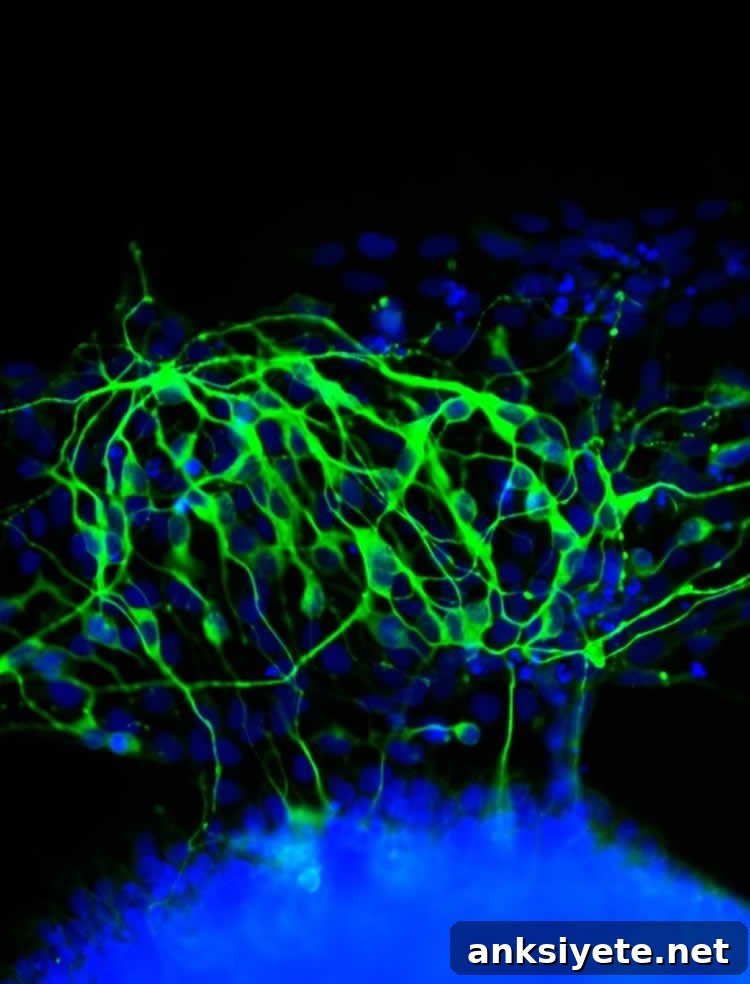
Understanding how blank-slate stem cells choose their adult identities — whether to become muscle, bone, neuron, or another cell type — has been a major challenge for researchers.
Human pluripotent stem cells are undifferentiated cells with the capacity to become any of the roughly 220 specialized cell types in the human body. In laboratory settings, researchers typically use defined cocktails of soluble growth factors and proteins to steer these cells toward particular lineages. Depending on the combination and timing of those cues, stem cells can be coaxed into becoming neurons, muscle cells, liver cells, and more.
In a new study published Sept. 8 in the Proceedings of the National Academy of Sciences, a team at the University of Wisconsin–Madison adds an important new variable to this differentiation equation: the mechanical properties of the surface on which stem cells are grown. Their findings indicate that substrate stiffness alone can strongly influence cell fate decisions, even in the absence of added chemical cues.
“To derive lineages, people use soluble growth factors to get the cells to differentiate,” says Laura Kiessling, a UW–Madison professor of chemistry and biochemistry and a leader in stem cell research. Prior work suggested that the physical properties of a cell’s environment could affect behavior, but the role of surface mechanics in human pluripotent stem cell differentiation had not been fully explored.
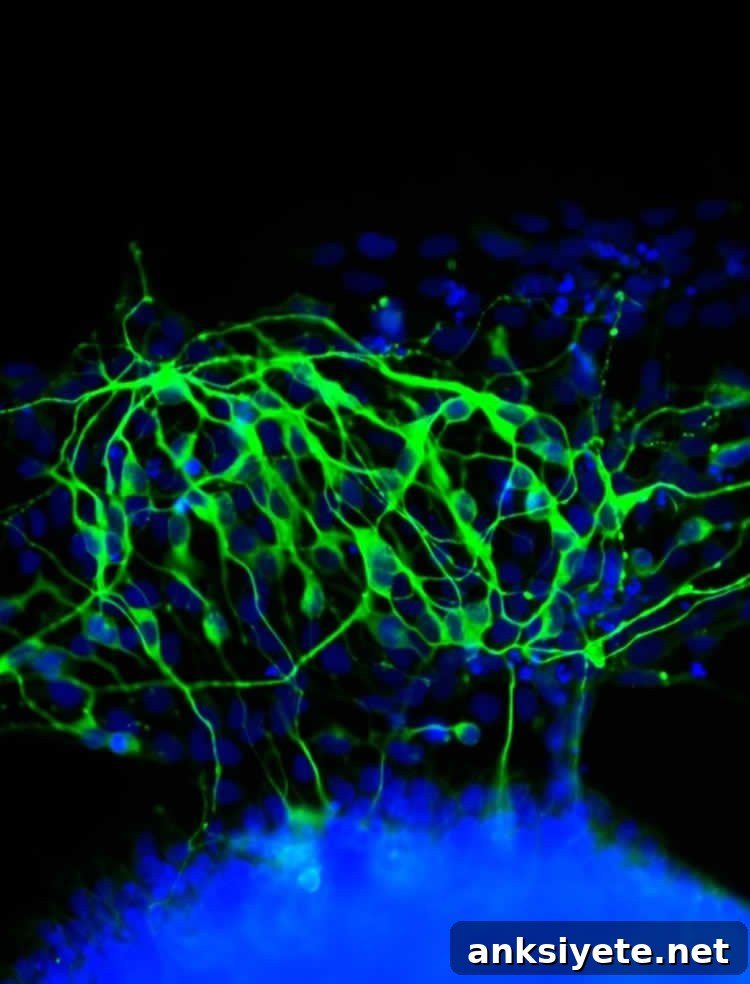
In standard lab practice, stem cells are cultured in plastic dishes coated with a gel that can include hundreds or even thousands of different proteins. Researchers introduce selected soluble factors to promote the formation of specific cell types. Even without those added cues, however, pluripotent cells are continually poised to differentiate, often in seemingly random directions.
Led by graduate student Samira Musah and directed by Kiessling, the Wisconsin team tested whether the rigidity of the culture surface could bias stem cell fate. They created a series of gels with mechanical properties designed to mimic the range of tissues found in the body — from softer, brain-like substrates to stiffer, bone- or muscle-like materials — and then observed how human pluripotent stem cells responded when no additional soluble differentiation factors were supplied.
The results were striking. On soft, brain-like gels, the cells rapidly began to adopt neuronal characteristics. In contrast, stiffer surfaces tended to maintain cells in their undifferentiated, stem-like state rather than pushing them toward specialized lineages. “We didn’t change anything but switch from a hard surface to a soft surface,” Kiessling says. “They all started looking like neurons. It was stunning to me that the surface had such a profound effect.”
Mechanistically, the researchers point to the protein YAP as a probable mediator of the response to substrate stiffness. YAP can shuttle between the cytoplasm and the nucleus; when it is present in the nucleus, YAP influences gene expression programs. On the soft, brain-like gels used in the study, YAP was excluded from the nucleus, and that exclusion appears to contribute to driving the stem cells toward a neuronal developmental pathway.
These findings have practical implications for both basic research and biotechnology. Recognizing that simple mechanical cues such as substrate stiffness can direct cell fate will help scientists design more precise, chemically defined culture surfaces for producing specific cell types. That improved control could accelerate the production of large numbers of cells needed for therapeutic applications, drug discovery, and high-throughput screens for brain toxicity or potential neurotherapeutics.
The work was a collaborative effort within UW–Madison, including contributions from Sean Palecek, Qiang Chang, and William Murphy. By establishing that the physical environment alone can play a decisive role in pluripotent stem cell differentiation, this study expands the toolkit researchers can use to guide cell fate and underscores the importance of considering both chemical and mechanical signals when engineering cell culture systems.
Contact: Laura Kiessling – University of Wisconsin–Madison
Source: University of Wisconsin–Madison press release
Image Source: Image credited to Laura Kiessling/University of Wisconsin–Madison and adapted from the press release
Original Research: The research appears in the Proceedings of the National Academy of Sciences (PNAS).