
Summary: Researchers delivered a PTB-targeting antisense oligonucleotide directly into the midbrain of mice. A subset of astrocytes converted into neurons, increasing neuronal numbers by roughly 30%. Three months after a single treatment, mice recovered from Parkinson’s-like symptoms and remained symptom-free for the rest of their lives.
Source: UCSD
Xiang-Dong Fu, PhD, describes this finding as the most exciting discovery of his career. A long-time investigator of RNA biology and RNA-binding proteins, Fu’s work on the protein PTB has unexpectedly opened a path into neuroscience and regenerative therapy.
For many years, Fu and his laboratory at the University of California San Diego School of Medicine explored the role of the RNA-binding protein PTB (polypyrimidine tract binding protein), which helps control gene expression by interacting with RNA. To understand PTB’s function, researchers typically reduce its levels in cells and observe downstream effects.
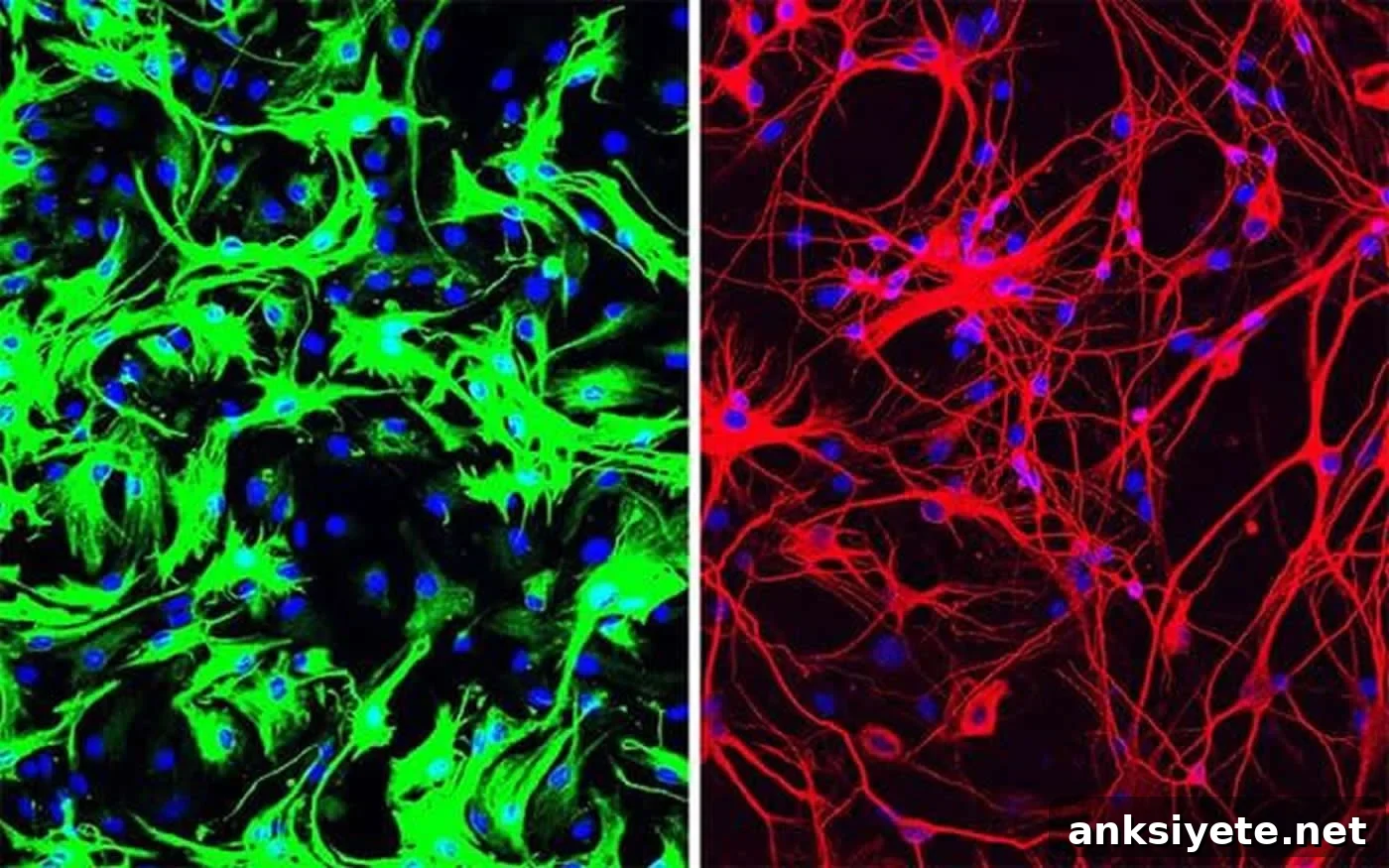
Several years ago a postdoctoral researcher in Fu’s lab used siRNA to silence PTB in fibroblasts. Wishing to avoid repetitive siRNA treatments, the researcher created a stable cell line lacking PTB. Although the cells grew slowly at first, an unexpected transformation took place: most fibroblasts disappeared and the culture became populated with cells that looked and behaved like neurons.
That observation revealed a striking principle: suppressing the single gene that encodes PTB can directly convert several types of mouse cells into neurons. Building on this discovery, Fu and postdoctoral researcher Hao Qian, PhD, advanced the finding toward a potential treatment for neurodegenerative disease.
In their new study, a single inhibition of PTB in the mouse midbrain converted resident astrocytes—star-shaped glial support cells—into neurons that produce dopamine. Those newly generated dopaminergic neurons restored dopamine levels and relieved Parkinson’s-like motor deficits in a mouse model.
The research, published in Nature on June 24, 2020, demonstrates an efficient, in situ reprogramming approach that may provide a foundation for therapies aimed at replacing neurons lost to neurodegenerative conditions.
“Scientists have pursued many strategies to generate neurons—using stem cells and other approaches—to study them and to replace neurons lost in disease,” Fu said. “That we could produce so many neurons in a relatively simple way was a major surprise.”
To model Parkinson’s disease, the team used a chemical that selectively damages dopamine-producing neurons, producing movement defects similar to those seen in Parkinson’s patients. Their treatment strategy used a noninfectious viral vector to deliver an antisense oligonucleotide (ASO) sequence designed to bind PTB messenger RNA. The ASO triggers degradation of PTB mRNA, preventing PTB protein production and initiating the cellular program that converts astrocytes into neurons.
Antisense oligonucleotides—short, synthetic strands of nucleic acid—are an established therapeutic modality for neurologic and neuromuscular disorders. Co-author Don Cleveland, PhD, helped pioneer antisense strategies; these molecules underlie approved and experimental therapies for conditions such as spinal muscular atrophy.
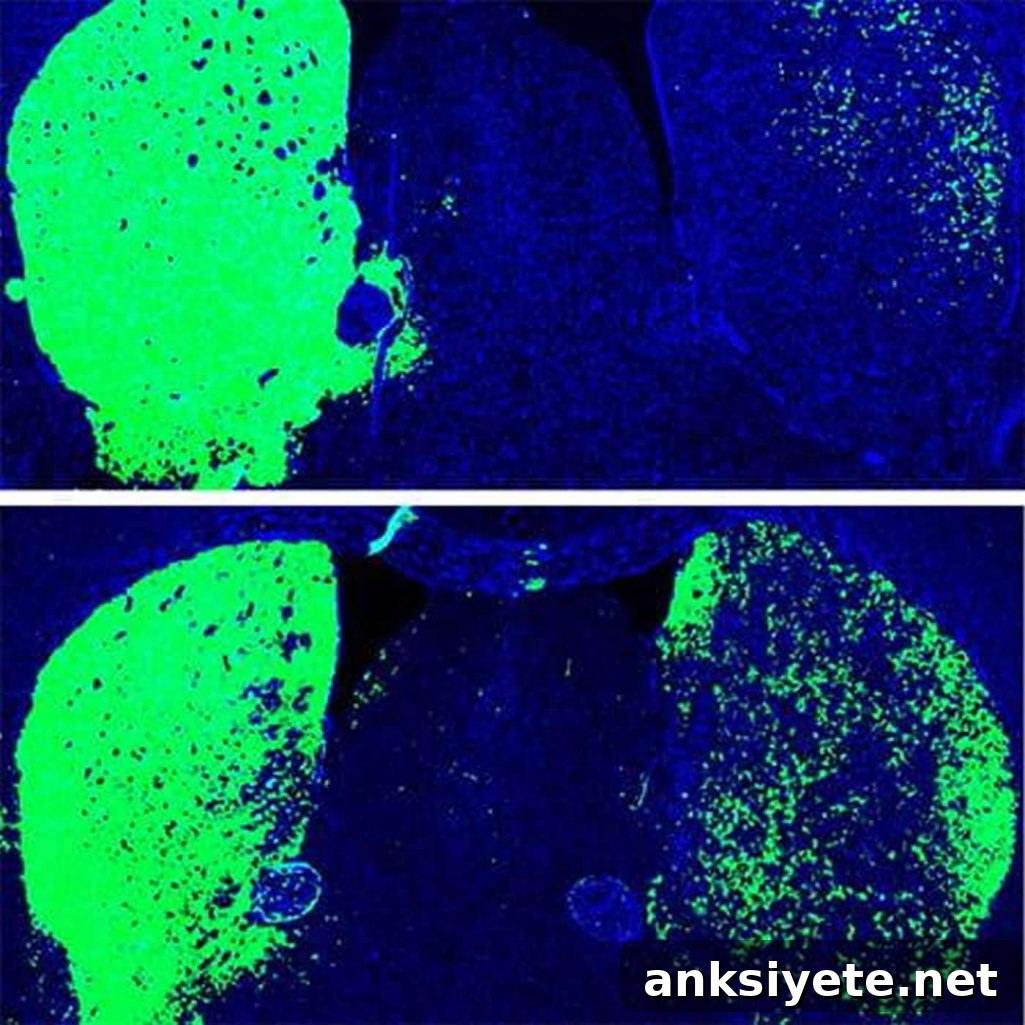
After injecting the PTB-targeting ASO into the midbrain region that regulates movement and commonly loses dopaminergic neurons in Parkinson’s disease, the researchers observed that a small subset of astrocytes was reprogrammed to neurons. Overall neuronal numbers increased by about 30 percent, and dopamine concentrations rose to levels comparable to healthy controls. Newly formed neurons extended processes and connected to other brain regions, re-innervating the circuitry damaged in the Parkinson’s model. Control mice treated with an empty vector or an irrelevant ASO showed no such changes.
By two independent measures of limb movement and behavior, treated mice recovered to normal function within three months after a single administration and stayed free of Parkinson’s-like symptoms for the remainder of their lifespans. Untreated control animals did not improve.
“I was stunned at what I saw,” said William Mobley, MD, PhD. “This approach gives hope that it may be possible to help even patients with advanced neurodegenerative disease.”
Why does PTB suppression prompt this change? PTB is broadly expressed in many cell types, but it naturally disappears as neuronal precursors differentiate into neurons. The researchers found that forcing PTB to decline is a sufficient cue to activate the genetic program that produces functional neurons.
Fu emphasized caution: mice are not humans, and the chemical model used does not capture every aspect of human Parkinson’s disease. Nonetheless, the results provide a compelling proof of concept that local astrocyte-to-neuron conversion can rebuild damaged circuits and restore function.
The team plans to optimize delivery, test genetic models of Parkinson’s disease, and advance the approach toward human testing. The researchers have filed a patent on the PTB antisense oligonucleotide treatment to facilitate clinical development.
“My goal is to carry this into clinical trials—for Parkinson’s disease and other disorders marked by neuron loss, such as Alzheimer’s, Huntington’s disease, and stroke,” Fu said. “And even beyond that, to explore whether targeting PTB could correct defects in other regions of the brain.”
Co-authors on the study include Jing Hu, Dongyang Zhang, Zhengyu Liang, Fan Meng, Xuan Zhang, Yuanchao Xue, Steven F. Dowdy, Neal K. Devaraj, Xinjiang Kang, Roy Maimon, Zhuan Zhou, William C. Mobley, Don W. Cleveland and others from UC San Diego, Peking University, Liaocheng University and the Ludwig Institute for Cancer Research.
About this neuroscience research article
Source: UCSD
Media Contacts: Heather Buschman, PhD – UCSD
Image Source: Images credited to UCSD.
Original Research: “Reversing a model of Parkinson’s disease with in situ converted nigral neurons.” Nature. DOI: 10.1038/s41586-020-2388-4
Abstract (summary)
Parkinson’s disease involves the loss of dopamine-producing neurons in the substantia nigra and currently lacks disease-modifying treatments. Instead of solely protecting vulnerable neurons, replacing lost neurons offers an alternative strategy. This study reports an efficient one-step conversion of isolated mouse and human astrocytes to functional neurons by depleting the RNA-binding protein PTB (PTBP1). In the mouse brain, astrocytes converted progressively into new neurons that integrate into existing circuits. Midbrain astrocytes converted to dopaminergic neurons that reinnervated the nigrostriatal pathway, restored striatal dopamine and rescued motor deficits. Similar disease reversal was achieved using antisense oligonucleotides to transiently suppress PTB, suggesting a potentially feasible approach to treating neurodegenerative disease by in situ neuronal replacement.