
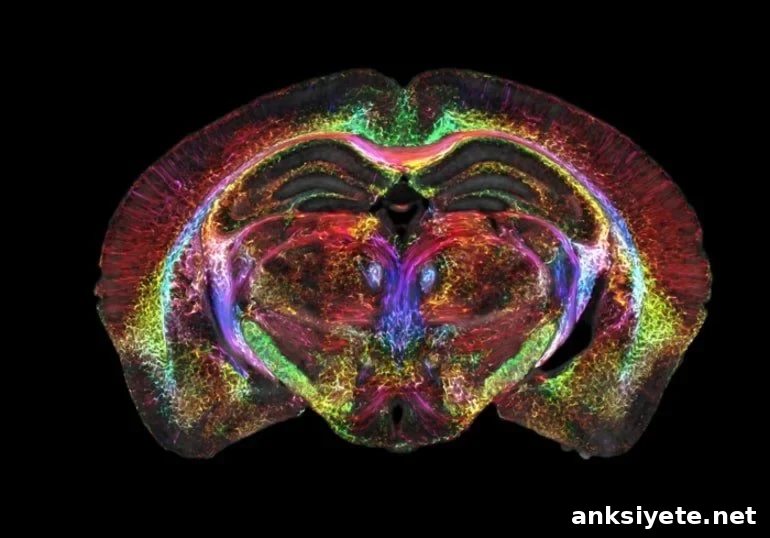
Summary: Researchers have dramatically increased MRI resolution, producing the sharpest whole-brain images ever obtained of a mouse brain.
Source: Duke University
Magnetic resonance imaging (MRI) is the standard tool for visualizing soft, water-rich tissues that X-rays cannot capture well. Clinical MRI gives sufficient resolution to detect tumors and many pathologies, but until now it has not been sharp enough to reveal microscopic brain organization and detailed cellular connectivity across the entire brain.
In a multi-decade technical effort led by Duke’s Center for In Vivo Microscopy, with collaborators at the University of Tennessee Health Science Center, the University of Pennsylvania, the University of Pittsburgh and Indiana University, researchers have pushed MRI resolution to unprecedented levels. Their work produced the clearest whole-brain scans of a mouse yet recorded, enabling new studies in high-resolution neuroanatomy and connectomics.
Coinciding with the 50th anniversary of the first MRI, the team generated scans that are far crisper than a typical clinical human MRI—comparable to moving from a pixelated 8-bit image to the finely detailed realism of hyper-detailed painting. The smallest cubic voxel in these datasets measures just 5 microns, roughly 64 million times smaller than a voxel in a standard clinical MRI.
While these experiments used mice rather than people, the enhanced MRI functions as a powerful, non-destructive microscope for whole-brain imaging. This level of resolution opens a path to map connectivity and cellular architecture across the entire brain, offering critical insights into how the brain changes across the lifespan, under different diets, and during neurodegenerative diseases like Alzheimer’s and Huntington’s.
“It is something that is truly enabling. We can start looking at neurodegenerative diseases in an entirely different way,” said G. Allan Johnson, Ph.D., lead author of the study and the Charles E. Putman University Distinguished Professor of Radiology, Physics and Biomedical Engineering at Duke.
The new paper, published April 17 in the Proceedings of the National Academy of Sciences, represents the culmination of nearly 40 years of method development at the Duke Center for In Vivo Microscopy. Over that time, Johnson and his students refined many hardware and software components that, when combined, produced this leap in MRI performance.
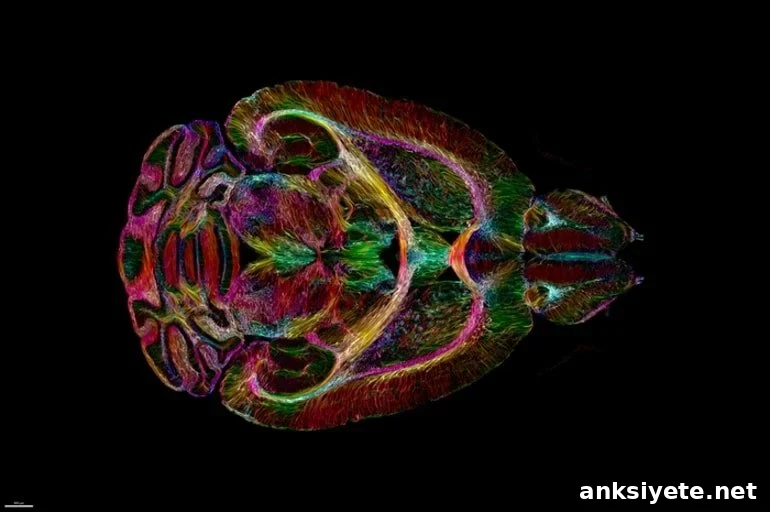
Key innovations include an exceptionally strong magnet—most clinical MRIs operate at 1.5 to 3 Tesla, while this system uses a 9.4 Tesla magnet—combined with specially designed gradient coils that are roughly 100 times stronger than those in clinical instruments. The imaging also requires massive computational resources to reconstruct and analyze the data; the team compares the processing power to nearly 800 laptops working in parallel to produce a single brain image.
After exhaustive MRI acquisition, the tissue is cleared, stained, and imaged again using light-sheet microscopy. Light-sheet imaging lets researchers label and visualize specific cell types or proteins across the whole brain—for example, dopamine-producing neurons relevant to Parkinson’s disease. The light-sheet images provide high cellular specificity, while the ultra-high-resolution MRI supplies a precise anatomical framework that captures whole-brain context and structural detail.
The researchers then register the light-sheet microscopy data into the MRI reference space, aligning cellular-resolution images with anatomically accurate MR images. This merged dataset offers both microscopic cellular detail and global wiring diagrams of the entire brain, enabling integrated studies of cytoarchitecture and connectivity at an unprecedented scale.
Using these combined imaging modalities, the team can now observe brain-wide changes in connectivity that occur with aging, and identify regions that are especially vulnerable. For instance, scans revealed notable alterations in the subiculum, a hippocampal region involved in memory, that change more than surrounding areas as mice age. Other datasets highlight dramatic loss of network integrity in a mouse model of Alzheimer’s disease, visualized as vivid tractography maps of deteriorating neural pathways.
By turning MRI into a higher-powered whole-brain microscope, researchers gain a new tool for studying mouse models of human neurological disorders. These integrated MRI and light-sheet datasets—combining connectomics, cellular labels, and precise anatomy—will help researchers ask whether interventions that extend lifespan also preserve brain structure and function. As Johnson noted, previous studies found that modest dietary or pharmacological interventions can extend life by roughly 25% in some animal models; the new imaging tools allow scientists to ask whether extended lifespan is accompanied by preserved cognitive architecture.
Funding: This research was supported by the National Institutes of Health (R01-AG070913391, R01-NS096729, P41EB015897, S10OD010683).
About this neuroscience research news
Author: Dan Vahaba
Source: Duke University
Contact: Dan Vahaba – Duke University
Image: Images credited to Duke Center for In Vivo Microscopy
Original Research: Closed access. “Merged Magnetic Resonance And Light Sheet Microscopy Of The Whole Mouse Brain” by G. Allan Johnson et al., Proceedings of the National Academy of Sciences (PNAS).
Abstract
Merged Magnetic Resonance And Light Sheet Microscopy Of The Whole Mouse Brain
The team developed workflows to align three-dimensional magnetic resonance histology (MRH) of the mouse brain with light-sheet microscopy (LSM) and three-dimensional delineations of the same specimen. They begin with MRH while the brain remains in the skull, using gradient echo and diffusion tensor imaging (DTI) at 15 μm isotropic resolution—about one thousand times higher than most preclinical MRI systems. Connectomes are generated with superresolution tract density images of approximately 5 μm.
After MRH, brains are cleared, stained for selected proteins, and imaged by light-sheet microscopy at 1.8 μm per pixel. The LSM data are registered into the MRH reference space with labels derived from a common coordinate framework. The integrated dataset, termed HiDiver (high-dimensional integrated volume with registration), achieves alignment precision better than 50 μm.
Throughput is sufficient for HiDiver to be used in quantitative studies that examine the effects of gene variants and aging on mouse brain cytoarchitecture and connectomics, enabling large-scale, high-resolution investigations into the structural basis of brain function and disease.