
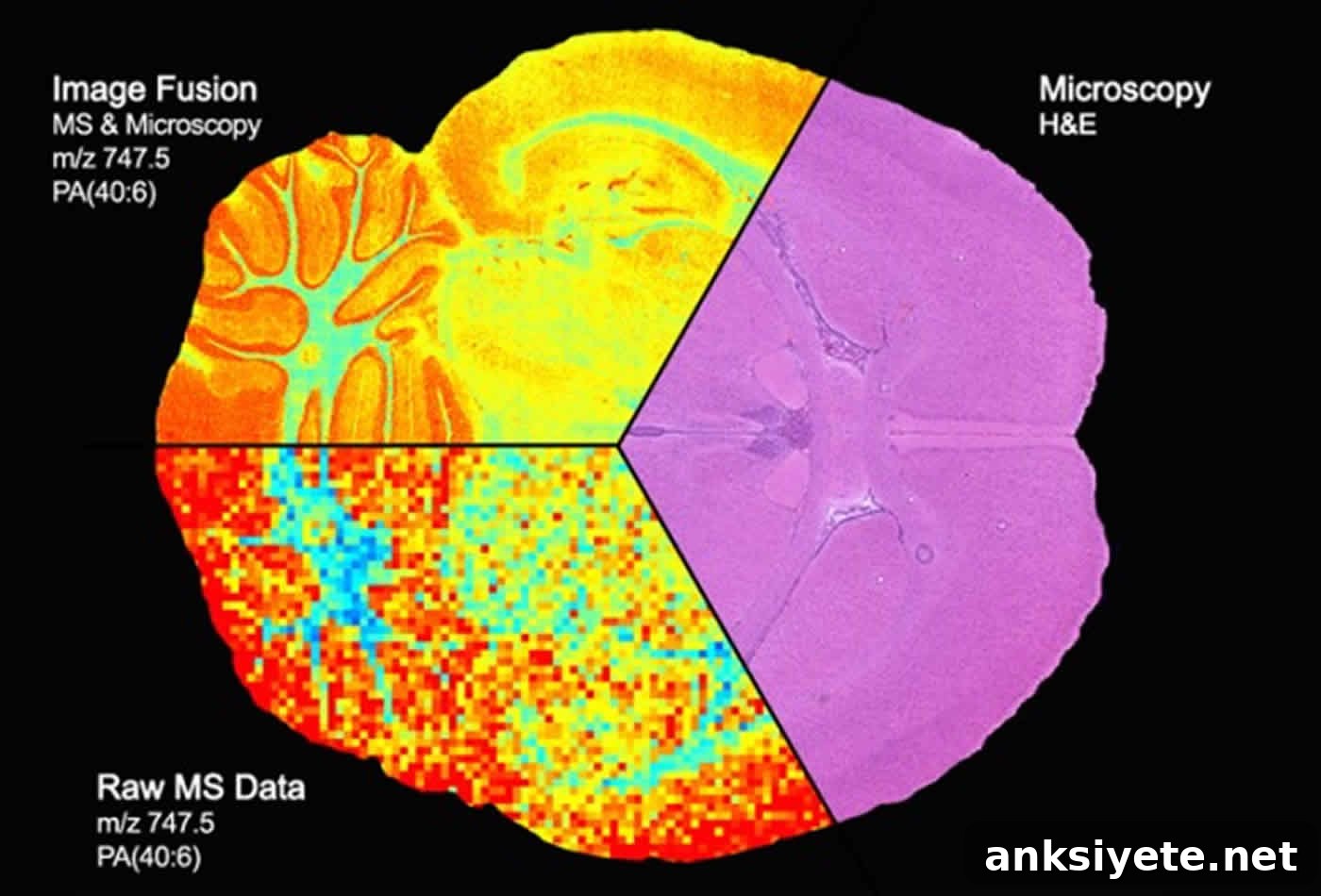
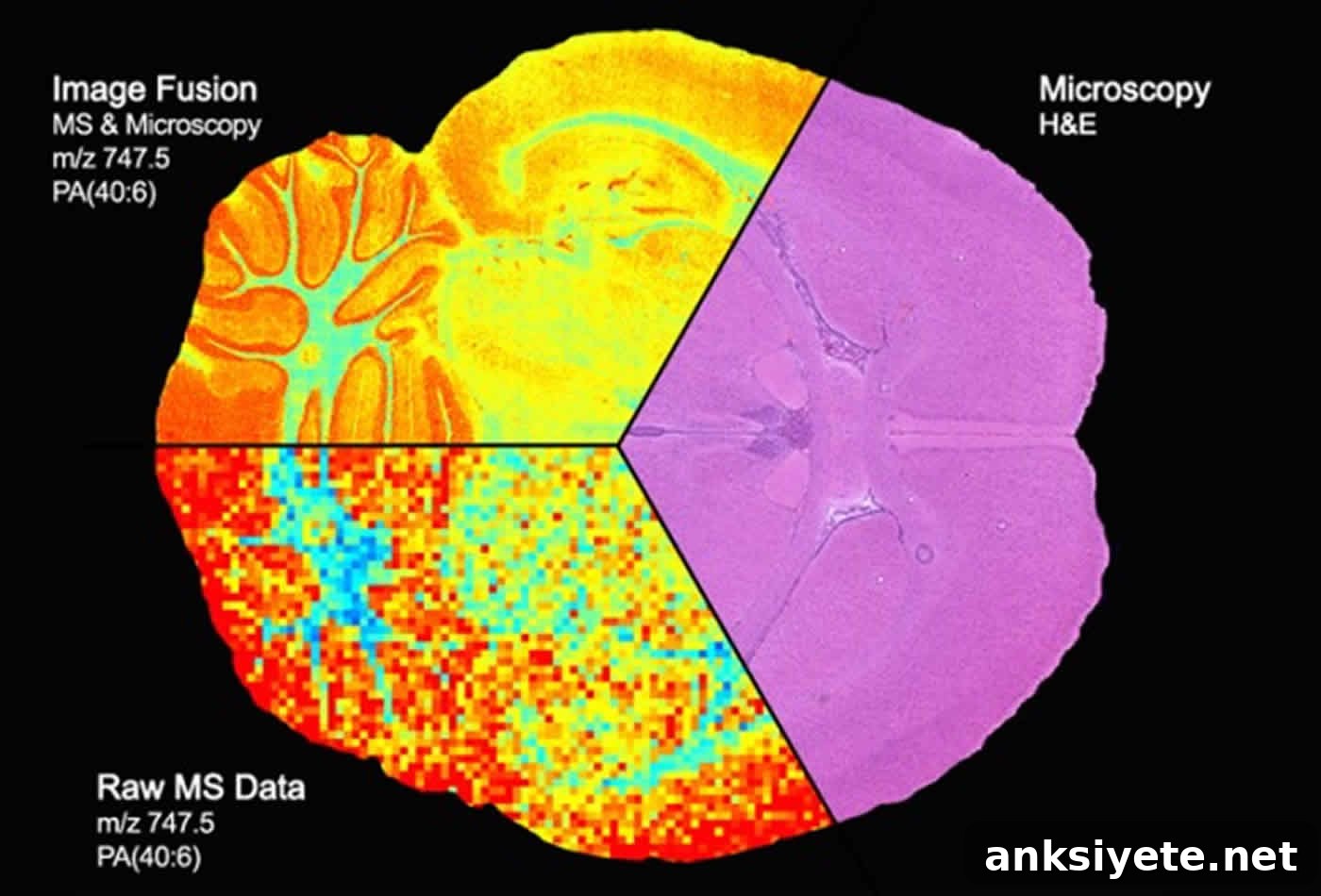
Vanderbilt University researchers have produced the first successful “image fusion” combining mass spectrometry and microscopy, a technical breakthrough that could significantly enhance molecular tissue mapping and improve cancer diagnosis and treatment.
Bringing Molecular Detail to High-Resolution Tissue Imaging
Microscopy delivers high-resolution structural images of tissues, revealing cell shapes and tissue architecture. However, it provides limited direct information about the molecular composition of those cells and structures. Mass spectrometry, by contrast, measures proteins, lipids and many other molecules with high chemical specificity, but its spatial output is typically coarse and pixelated. By merging these two complementary technologies, the Vanderbilt team has created fused images that retain the microscopic spatial detail while revealing the molecular makeup of tissues at much higher effective resolution.
How the Fusion Works
The research team used a mathematical approach based on regression analysis to link the coarse mass spectrometry measurements to the fine-scale microscopy image. Each mass spectrometry pixel is mapped to the corresponding location on the microscopy image, and the statistical model predicts what the molecular distribution would look like at the microscopically resolved scale. This predicted image integrates the strengths of both modalities: the structural clarity of microscopy and the molecular specificity of mass spectrometry.
Richard Caprioli, Ph.D., the Stanford Moore Professor of Biochemistry and director of the Mass Spectrometry Research Center and senior author on the study, described the fusion as a major advance. He compared the method to drawing a curve between measured points in a standard calibration: the values in between are not directly measured but are predicted based on the existing data and the model that links them.
Potential Impact on Cancer Surgery and Diagnosis
One of the most immediate clinical implications of this technology is in defining surgical margins—the boundary surgeons use to remove tumors while sparing healthy tissue. Traditionally, margin decisions rely on histology, the microscopic appearance of cells. Yet cancers can recur when cells that look normal under the microscope already possess molecular alterations that indicate early transformation. By revealing molecular changes that are not visible by morphology alone, image fusion of mass spectrometry and microscopy could help surgeons and pathologists identify regions at risk, potentially reducing recurrence rates and improving patient outcomes.
Caprioli emphasized the potential significance: if areas that appear normal by conventional histology show cancer-associated molecular signatures in the fused images, treatment planning and surgical decisions could be re-evaluated with more precise molecular guidance.
Scientific and Institutional Context
The project was led by Raf Van de Plas, Ph.D., a research assistant professor of Biochemistry at Vanderbilt who also holds a faculty position at Delft University of Technology in the Netherlands. Co-authors included Junhai Yang, Ph.D., a postdoctoral fellow, and Jeffrey Spraggins, Ph.D., a research assistant professor of Biochemistry. The work was published in the journal Nature Methods and demonstrates a reproducible multimodality paradigm for molecular tissue mapping.
Douglas Sheeley, Sc.D., a senior scientific officer at the National Institute of General Medical Sciences (NIGMS), noted that the image fusion approach represents a significant innovation that could change how microscopy and mass spectrometry are used together in research and clinical settings. He highlighted its role in making mass spectrometry data more accessible and useful to clinicians. The NIGMS, part of the National Institutes of Health, provided partial funding for the research through grants GM058008 and GM103391.
Methodological Notes and Availability
The fusion technique relies on robust alignment between the microscopy image and the mass spectrometry dataset, and on statistical models that accurately relate molecular signals to visible tissue features. While the approach predicts molecular distributions in regions not directly measured at high spatial resolution, the predictions are grounded in the observed relationships between measured mass spectrometry pixels and their corresponding microscopy features.
Details about the study, the authors, and the original publication are available from Vanderbilt University and in the Nature Methods article titled “Image fusion of mass spectrometry and microscopy: a multimodality paradigm for molecular tissue mapping” by Raf Van de Plas, Junhai Yang, Jeffrey Spraggins and Richard M. Caprioli, published online February 23, 2015 (doi:10.1038/nmeth.3296).
This research was supported in part by National Institutes of Health grants GM058008 and GM103391.
Contact: Bill Snyder – Vanderbilt University
Source: Vanderbilt University press release
Image Source: Image adapted from the Vanderbilt press release
Original Research: Abstract for “Image fusion of mass spectrometry and microscopy: a multimodality paradigm for molecular tissue mapping” by Raf Van de Plas, Junhai Yang, Jeffrey Spraggins and Richard M. Caprioli in Nature Methods. Published online February 23, 2015. doi:10.1038/nmeth.3296