
Summary: New research strengthens the view that Huntington’s disease (HD) has roots in neurodevelopment. Scientists report that the HTT gene mutation alters brain and body growth during childhood and that increased vulnerability of neurons begins long before clinical symptoms appear.
Source: IOS Press
Evidence supporting a neurodevelopmental contribution to Huntington’s disease is growing: the HTT gene mutation appears to shape brain and body development in childhood, creating increased susceptibility to neuronal dysfunction and degeneration decades later.
Researchers summarize findings from a distinctive study of children at genetic risk for HD, called the Kids-HD study, in a review and in a related research article published in the Journal of Huntington’s Disease. Together, these reports examine how the mutant huntingtin protein (mHTT) influences the maturation of brain circuits and body growth long before typical adult-onset symptoms arise.
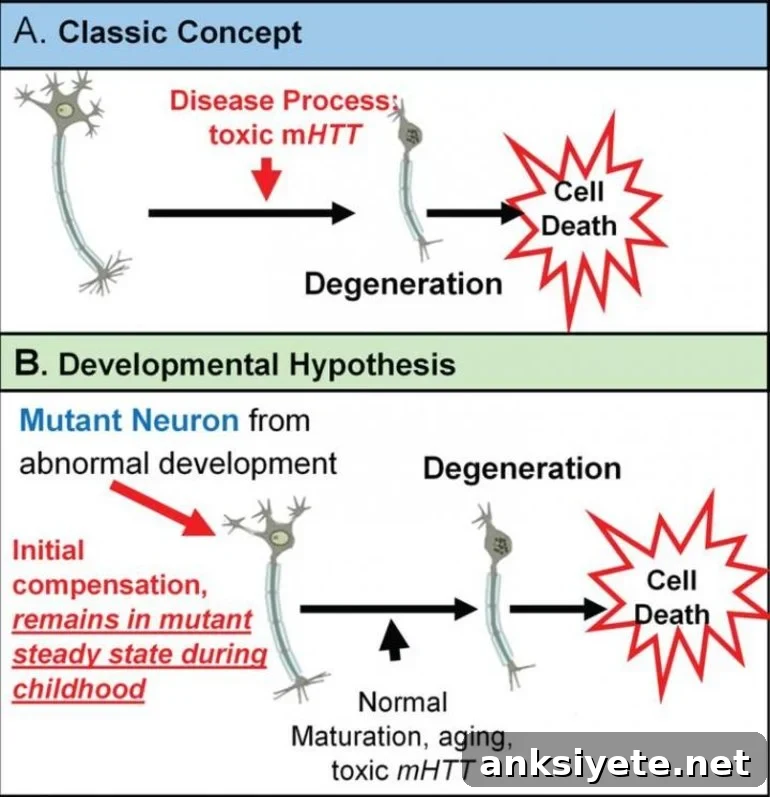
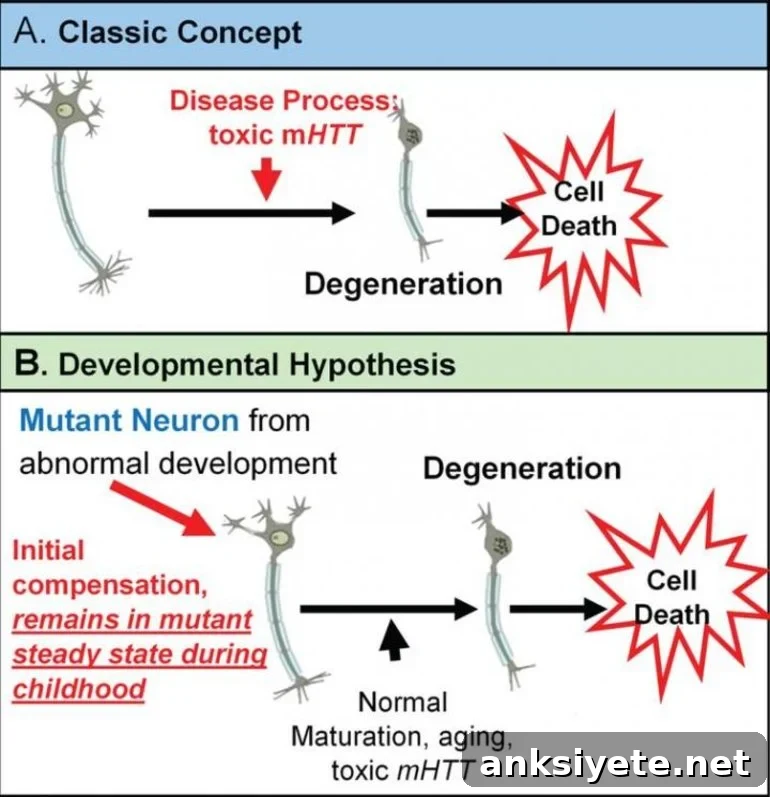
Traditional models of HD emphasize toxic effects of mHTT on mature neurons accumulating over time. The neurodevelopmental perspective adds a complementary view: HTT plays important roles in normal development, and when the gene bears a pathogenic CAG repeat expansion, it can alter how specific brain regions and circuits form. These early developmental alterations may leave certain neuronal populations in a vulnerable state that later predisposes them to degeneration under stressors associated with aging or disease processes.
“Although the HD gene was identified in 1993, the precise sequence of events that leads from mutation to neuronal death is still not fully understood,” said lead investigator Peg C. Nopoulos, MD, Departments of Psychiatry, Pediatrics, and Neurology at the University of Iowa Carver College of Medicine. “The neurodevelopmental hypothesis reframes how we think about timing for interventions and what biological processes we should target in preventive research.”
The neurodevelopmental hypothesis proposes that mHTT disrupts development of particular brain circuits—most notably the striatum and its connected pathways—so affected neurons are atypical in their growth and connectivity. Early in life, compensatory mechanisms in other circuits, including cerebellar networks, may mask dysfunction, producing a “mutant steady state” with no evident clinical symptoms. Over time, when compensation fails or when additional insults occur, these vulnerable cells begin to degenerate, leading to the cognitive, psychiatric, and motor signs characteristic of HD.
The Kids-HD cohort offers a rare window into these early processes. It follows children aged 6–18 who are at risk because a parent or grandparent carries HD. The review outlines neuroimaging evidence that even young children who carry the HTT expansion display altered striatal growth and circuit development. These developmental differences correlate with the length of the CAG repeat and occur long before symptomatic onset, implying a direct influence of the mutation on brain maturation.
The companion research article analyzes body growth in 186 Kids-HD participants by comparing height, weight, and body mass index (BMI) between children who carry the HTT expansion and those who do not. The study used genetic testing for research classification only, separating Gene-Expanded (GE) and Gene Non-Expanded (GNE) participants and modeling age-related trajectories for growth measures.
Results show divergent developmental trajectories emerging around puberty. GE children exhibited a slower rise in BMI through adolescence and reached a later plateau, whereas GNE peers showed a near-linear BMI increase. Sex differences were notable: adolescent GE males tended to be taller than GNE males while weighing less; GE females had similar heights but lower weights than GNE females. These patterns indicate that mHTT affects systemic growth processes as well as brain development, long before clinical HD typically appears in midlife.
These findings carry implications for prevention strategies. Gene-silencing and gene therapy trials are underway to slow progression in symptomatic adults, and future trials aim to prevent onset in presymptomatic mutation carriers. Because HTT is integral to development, interventions applied early in life warrant extra caution; understanding how mHTT influences developmental programs is essential to design safe and effective therapies.
Huntington’s disease is a fatal inherited neurodegenerative disorder characterized by progressive neuronal loss, most prominently in the striatum, and clinically by cognitive decline, mood and behavior changes, and involuntary movements (chorea). Inherited in an autosomal dominant pattern, each child of an affected parent faces a 50% chance of inheriting the expanded HTT gene. Symptom onset commonly occurs in mid-adulthood, and life expectancy after diagnosis is typically 10–20 years.
About this research
Source: IOS Press
Contact: Press Office – IOS Press
Image: Image credit: Journal of Huntington’s Disease.
Original Research: Open access. “Developmental Trajectory of Height, Weight, and BMI in Children and Adolescents at Risk for Huntington’s Disease: Effect of mHTT on Growth” by Nopoulos et al., Journal of Huntington’s Disease.
Abstract
Developmental Trajectory of Height, Weight, and BMI in Children and Adolescents at Risk for Huntington’s Disease: Effect of mHTT on Growth
Background:
The huntingtin gene (HTT) is essential for development and is expressed throughout the brain and body throughout life. The mutant form (mHTT), produced by an expanded CAG repeat, may influence growth and maturation.
Objective:
To assess whether mHTT affects physical growth—height, weight, and BMI—by comparing developmental trajectories in child and adolescent carriers of mHTT with at-risk peers without the expansion.
Methods:
The Kids-HD study enrolled 186 children aged 6–18 years at risk for HD. For research classification, participants were genetically grouped as Gene-Expanded (GE = 78) or Gene Non-Expanded (GNE = 108). Height, weight, and BMI were modeled using mixed-effects approaches to test for nonlinear age trends and group-by-age interactions.
Results:
BMI trajectories diverged: GE participants plateaued in late adolescence while GNE peers continued to increase. A significant sex interaction was observed—GE males were taller than GNE males during adolescence with similar weight, whereas GE females weighed less than GNE females at comparable heights.
Conclusion:
Growth measures are altered in children and adolescents carrying mHTT, decades before typical HD onset. If replicated, these results suggest systemic developmental alterations are part of HD pathology and underscore the need to consider developmental effects when designing preventive treatments.