
Summary: Researchers have identified thousands of previously overlooked immune system signals. This discovery could reshape understanding of immune recognition and has potential implications for immunotherapies, autoimmune disease research and vaccine development.
Source: Imperial College London.
Thousands of previously unknown immune system signals have been identified, revealing a far larger role for spliced epitopes than was previously recognized.
Researchers describe the discovery as comparable to finding a new continent: a substantial expansion in the known landscape of molecules that the immune system uses to monitor health and disease.
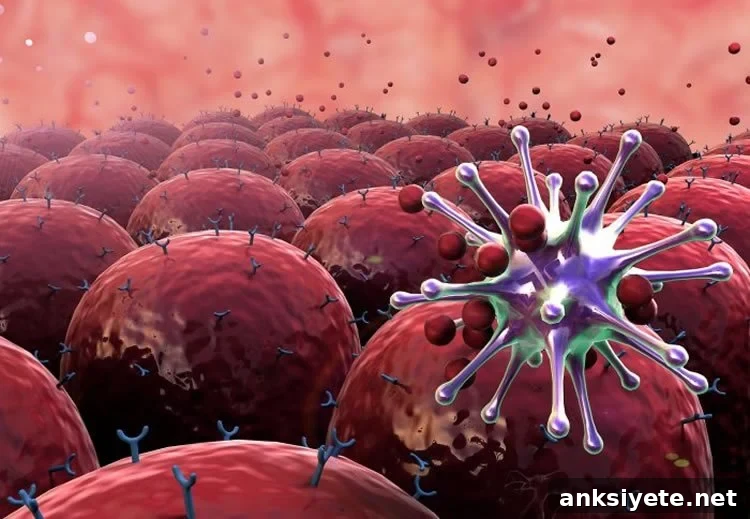
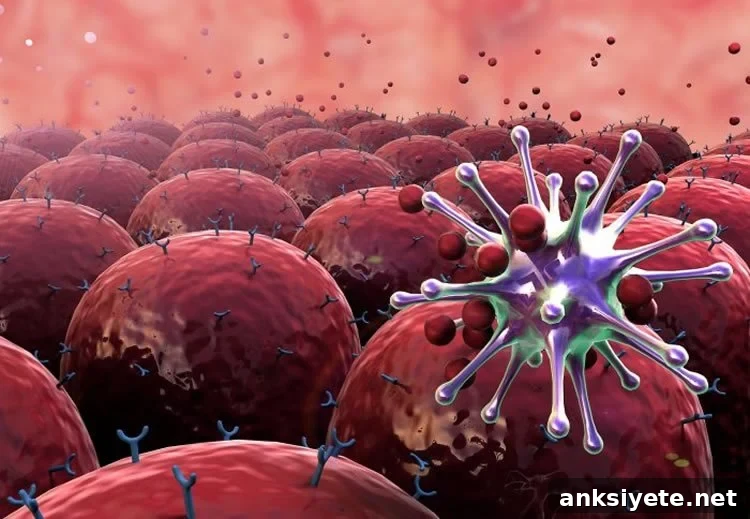
All cells continuously degrade proteins derived from their own machinery and from invading organisms such as viruses and bacteria. Small fragments of these proteins—called epitopes—are presented on the cell surface so immune cells can inspect them. When an epitope is recognised as foreign or dangerous, the immune system can target and destroy the presenting cell to limit infection or abnormal cell growth.
Until now, the prevailing view held that most of these epitopes were produced by linear cleavage of proteins. The new study shows that roughly one third of the epitopes displayed to the immune system are “spliced” epitopes—peptides formed by joining fragments from different parts of a protein, creating novel sequences that were not previously expected to exist on cell surfaces.
Spliced epitopes had been observed before but were considered rare. By developing a new experimental and computational approach to map the surface of cells comprehensively, the team identified thousands of these spliced peptides, revealing they represent a major portion of the immunopeptidome—the repertoire of peptides presented by HLA class I molecules.
The expanded set of epitopes improves our understanding of how the immune system surveys tissues, and it opens new directions for therapy and vaccine design by expanding the set of potential targets for immune recognition.
DEEPER UNDERSTANDING
The research was led by Dr Juliane Liepe at Imperial College London and Dr Michele Mishto at Charité – Universitätsmedizin Berlin, with collaborators from the La Jolla Institute for Allergy and Immunology and Utrecht University. The work is published in the journal Science.
Professor Michael Stumpf from the Department of Life Sciences at Imperial commented: “It’s as if a geographer would tell you they had discovered a new continent, or an astronomer would say they had found a new planet in the solar system. And just as with those discoveries, we have a lot of exploring to do. This could lead to not only a deeper understanding of how the immune system operates, but also suggests new avenues for therapies and drug and vaccine development.”
Previously, scientists believed the intracellular machinery produced signalling peptides by cutting proteins into fragments in sequence and presenting those linear fragments on the cell surface. The new findings show that the proteasome—the protein complex that degrades proteins—can also splice two fragments from different regions of a protein and fuse them together. These splicing events produce novel peptide sequences that are presented on HLA class I molecules for CD8+ T cell surveillance.
The study indicates that spliced epitopes make up roughly a quarter of all epitopes by abundance and account for 30–40% of epitope diversity—the variety of distinct peptide sequences presented. This substantially changes the perceived makeup of the HLA class I immunopeptidome and highlights a previously underappreciated source of antigenic diversity.
PROS AND CONS
The presence of many more spliced epitopes increases the immune system’s surveillance repertoire and may improve its ability to detect infections and abnormal cells. At the same time, because spliced peptides combine segments from different protein regions, they can sometimes resemble fragments of healthy proteins and risk being misidentified as dangerous. This molecular mimicry offers a potential explanation for certain autoimmune responses, where the immune system mistakenly attacks normal tissues, as seen in conditions such as Type 1 diabetes and multiple sclerosis.
Dr Juliane Liepe noted: “The discovery of the importance of spliced peptides could present pros and cons when researching the immune system. For example, the discovery could influence new immunotherapies and vaccines by providing new target epitopes for boosting the immune system, but it also means we need to screen for many more epitopes when designing personalised medicine approaches.”
Funding: The study was funded by the Craig H. Neilsen Foundation, the Ray W. Poppleton Endowment, and the National Institutes of Health.
Source: Hayley Dunning – Imperial College London
Image Source: NeuroscienceNews.com image adapted from the Imperial College London press release.
Original Research: Abstract for “A large fraction of HLA class I ligands are proteasome-generated spliced peptides” by Juliane Liepe, Fabio Marino, John Sidney, Anita Jeko, Daniel E. Bunting, Alessandro Sette, Peter M. Kloetzel, Michael P. H. Stumpf, Albert J. R. Heck, and Michele Mishto in Science. Published online October 21, 2016. doi:10.1126/science.aaf4384
Abstract
A large fraction of HLA class I ligands are proteasome-generated spliced peptides
The proteasome generates the epitopes presented on human leukocyte antigen (HLA) class I molecules that elicit CD8+ T cell responses. Reports of proteasome-generated spliced epitopes exist, but they have been regarded as rare events. Here, however, we show that the proteasome-generated spliced peptide pool accounts for one-third of the entire HLA class I immunopeptidome in terms of diversity and one-fourth in terms of abundance. This pool also represents a unique set of antigens, possessing particular and distinguishing features. We validated this observation using a range of complementary experimental and bioinformatics approaches, as well as multiple cell types. The widespread appearance and abundance of proteasome-catalyzed peptide splicing events has implications for immunobiology and autoimmunity theories and may provide a previously untapped source of epitopes for use in vaccines and cancer immunotherapy.
“A large fraction of HLA class I ligands are proteasome-generated spliced peptides” by Juliane Liepe et al., Science. Published online October 21, 2016. doi:10.1126/science.aaf4384