
Summary: A midday nap following a learning session enabled infants to link correct or incorrect labels to newly shown objects. The study illuminates how sleep contributes to the development of lexical memory in early infancy.
Source: Max Planck Institute for Human Cognitive and Brain Sciences (MPI CBS).
Infants form meaningful word–object associations earlier than previously believed
New research from the Max Planck Institute for Human Cognitive and Brain Sciences (MPI CBS) in Leipzig shows that infants as young as six to eight months can form meaningful associations between words and objects — provided they sleep after learning. While sleeping, infants’ brains reorganize recently acquired information and, in some cases, transform simple perceptual pairings into semantic word meanings that resemble those found in older children and adults.
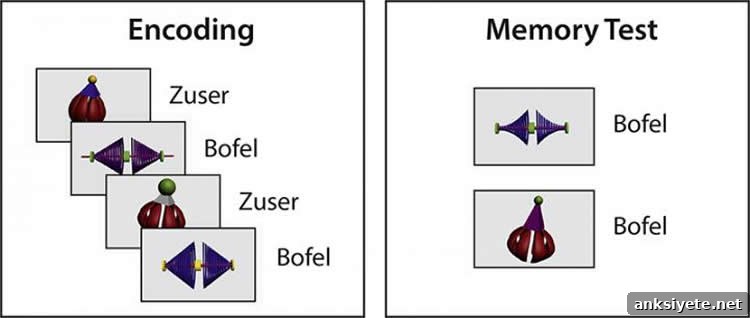
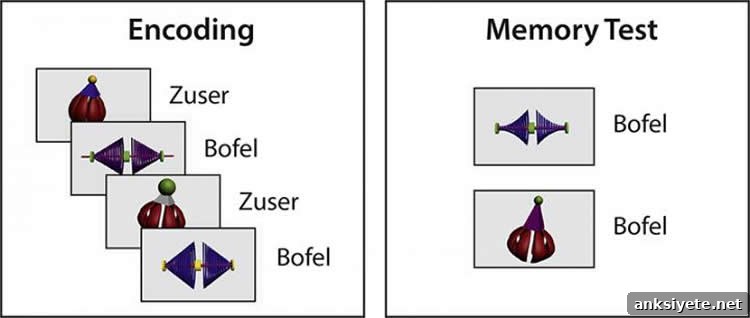
Researchers tested how very young infants learn and consolidate word meanings by introducing them to novel, made-up objects and assigning invented labels such as “Bofel” and “Zuser.” To mimic natural category learning (for example, different-looking cats all being called “cat”), different exemplars that varied in shape or color received the same label. Using entirely novel stimuli ensured that infants could not rely on existing knowledge and that any learning observed was the result of the experimental exposure.
Initial brain responses indicated that immediately after training infants did not generalize a label across new exemplars. In other words, when presented with a new version of a previously labeled object, the infants’ neural activity showed that the object–word pair was treated as novel rather than as a known category member. Each object–label combination appeared unique until sleep intervened.
Crucially, the infants who napped after the learning session showed a different pattern. After a midday nap, their brains were able to distinguish between correct and incorrect labels for novel category exemplars, demonstrating that they had consolidated the learned relationships. Infants who remained awake during the retention interval did not show this consolidation.
The nature of the memory formed during sleep depended on nap duration. Infants who slept for roughly 30 minutes displayed brain responses similar to those previously observed in three-month-old infants. This pattern reflects an early, perceptual-associative form of memory in which visual and auditory features are linked, but the label does not yet carry semantic meaning. For these infants, the label functions more like a consistent sound associated with certain perceptual features rather than as a true word.
In contrast, infants who slept longer — about 50 minutes — exhibited a neural marker known as the N400, a component associated with semantic processing in older children and adults. The presence of an N400 indicates that these infants were processing incongruent label–object pairings as meaningful mismatches, which demonstrates that real word meanings had been formed and stored in long-term memory during sleep.
Angela D. Friederici, director at MPI CBS and senior author of the study, notes: “Our results demonstrate that children hold real word meanings in their long-term memory much earlier than assumed. Although the brain structures relevant for this type of memory are not fully mature, they can already be used to a distinguishable extent.”
The study points to a specific stage of sleep as particularly important: the length of sleep stage 2 (N2) appears to determine whether memory remains in an early perceptual form or transitions into a semantic, lexical form. During this light sleep stage the brain undergoes processes that rapidly shift representations from perceptual associations to semantic long-term memory. Manuela Friedrich, the study leader, explains that while the developmental shift from perceptual to semantic memory typically occurs over months during normal waking development, sleep can compress this transformation into minutes.
Friedrich adds that the experimental procedure delivered a concentrated amount of labeled exemplars in a short time span — information infants would normally acquire over longer periods. “Only during sleep, when the child’s brain is disconnected from the external world, can it filter out irrelevant details and consolidate essential relations. The interaction between awake exploration and sleep-based reorganization supports the emergence of early cognitive and language skills,” she says.
Study source: Max Planck Institute for Human Cognitive and Brain Sciences (MPI CBS), Leipzig. The underlying study, led by Manuela Friedrich and co-authored by Ines Wilhelm, Matthias Mölle, Jan Born, and Angela D. Friederici, was published in Current Biology (published online June 27, 2017).
Key findings (highlights)
- Memory consolidation during infant sleep parallels early stages of lexical development.
- The duration of sleep stage 2 influences whether new memories remain perceptual or become semantic.
- Local sleep spindle activity in N2 is associated with the formation of lexical-semantic long-term memory.
- Sleep-dependent consolidation can accelerate memory development ahead of the typical developmental timeline.
Abstract summary
From around three months, infants can learn associations between objects and co-occurring words, forming early proto-word representations based on specific visual–auditory associations. Genuine semantic word meanings in long-term memory were previously not evidenced before about nine months. This study examined 6- to 8-month-old infants who were exposed to novel category exemplars paired with invented labels. Memory for generalization to novel exemplars was tested after a retention interval that included sleep for some infants. Short naps produced neural responses consistent with early perceptual-associative memory, while longer naps yielded an N400 semantic priming effect, signifying the formation of genuine word meanings. The perceptual-to-semantic shift correlated with sleep stage 2 duration and locally increased sleep spindle activity, indicating that sleep can enable semantic consolidation of word meanings even in very young infants.
Image credit: MPI CBS. Study authors: Manuela Friedrich, Ines Wilhelm, Matthias Mölle, Jan Born, Angela D. Friederici.