Summary: Researchers have identified the doublesex (dsx) gene as a key genetic program that specifies essential worker behaviors in honeybees—including foraging, brood care, and social interactions. By editing dsx and mapping resulting changes in brain wiring and behavior, the team demonstrates how this single gene helps shape neuronal circuits that sustain colony life across generations.
Using CRISPR/Cas9 gene editing, fluorescent markers and automated tracking, the study reveals how dsx directs neural development and behavioral roles in the worker caste. The findings link a defined developmental program to the complex, cooperative behaviors that underpin a eusocial hive.
Key facts:
- The doublesex (dsx) gene specifies key worker behaviors in Apis mellifera, including nursing, foraging and social food-exchange.
- Targeted disruption of dsx alters neuronal wiring—particularly in the mushroom bodies—and changes the rate and duration of group-supporting behaviors.
- These results connect a dedicated developmental genetic program to the neural circuitry and social organization of a eusocial species.
Source: HHU
Researchers at Heinrich Heine University Düsseldorf (HHU), in collaboration with teams from Frankfurt/Main, Oxford and Würzburg, investigated how complex, cooperative honeybee behavior is genetically programmed and transmitted across generations.
Published in Science Advances, the study identifies doublesex (dsx) as a central genetic determinant of worker-specific behavior. The research team combined genetic manipulation, fluorescence imaging and automated behavioral analysis to trace how dsx constructs the neuronal circuitry that underlies colony-supporting tasks.
Social interactions are essential across the animal kingdom. In eusocial species like the honeybee, individual behaviors combine to create a highly integrated superorganism: thousands of worker bees cooperate to defend the colony, forage for food and tend the brood. Many of these behaviors are innate rather than learned, but until now it was unclear how such complex, inherited behavioral repertoires are encoded in the genome.
Professor Dr Martin Beye, head of the Institute of Evolutionary Genetics at HHU and corresponding author on the paper, emphasizes that the roles workers perform are genetically programmed. Together with first author Dr Vivien Sommer and colleagues, the team discovered that dsx controls whether and how long a worker engages in specific tasks, from brood care to foraging and social food exchange.
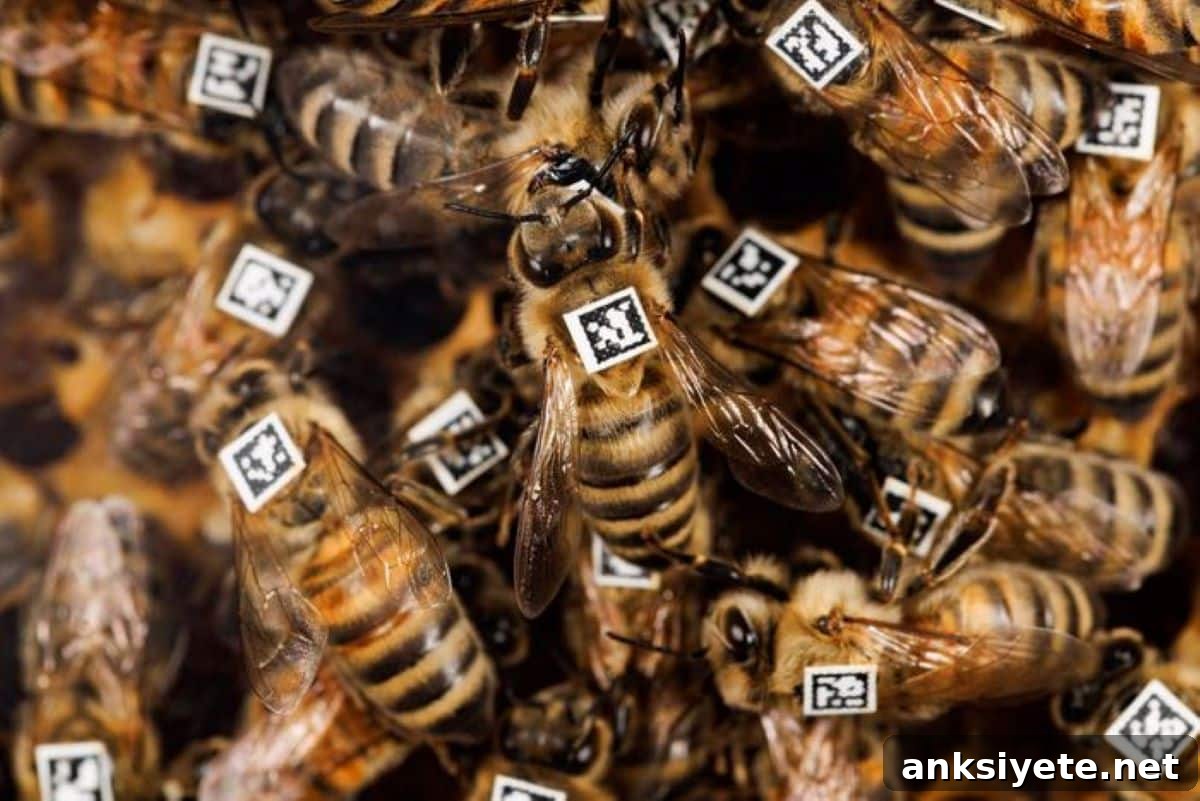
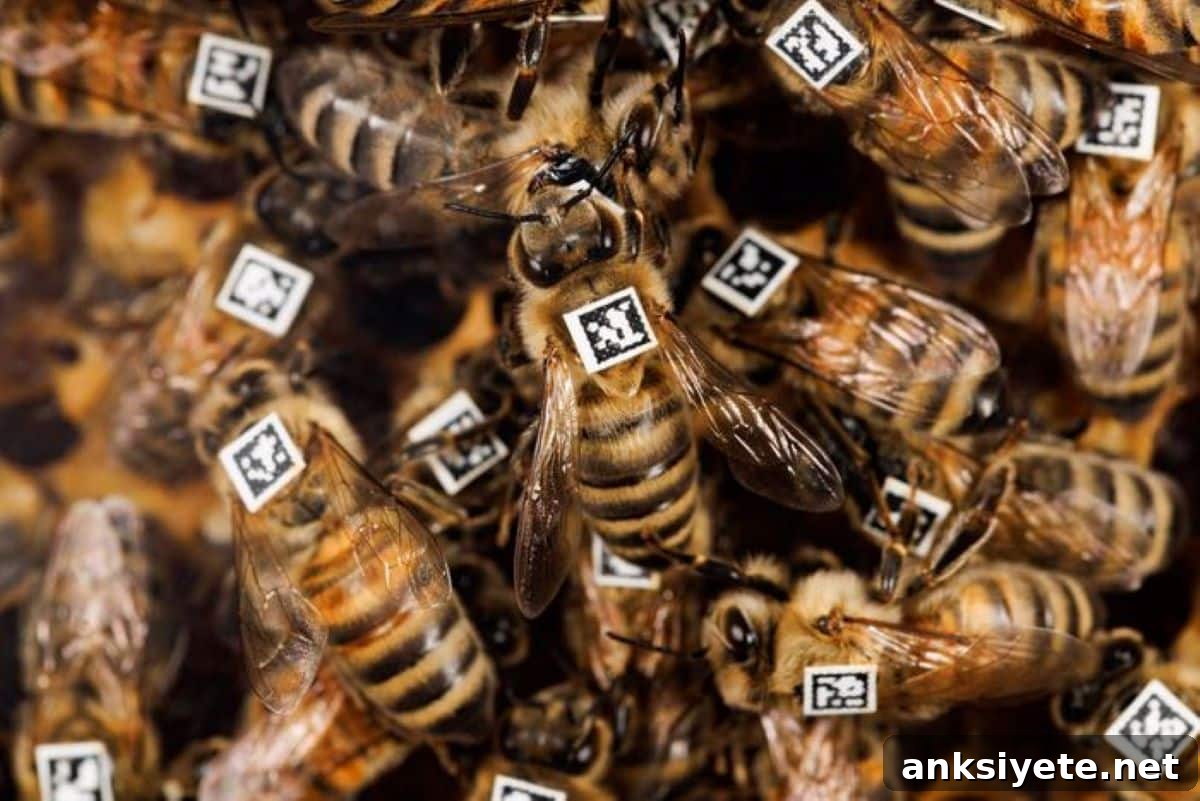
To test dsx function, the researchers used CRISPR/Cas9 to create targeted mutations in the gene in selected worker bees. Manipulated individuals were tagged with QR codes and filmed continuously in observation hives. Video recordings were analyzed with machine-learning tools to extract individual behavioral patterns at scale.
The study also introduced a green fluorescent protein (GFP) tag into the dsx sequence so GFP would be co-expressed with the dsx protein. This allowed researchers to visualize the neurons specified by dsx using fluorescence microscopy, comparing normal and genetically modified bees. The combined approach made it possible to link specific gene expression to the formation of neural circuits and to measurable changes in behavior.
Jana Seiler, a doctoral researcher and co-author, explains that these tools revealed which neural pathways dsx builds in the brain and how those pathways translate into inherited behavioral patterns. Professor Dr Wolfgang Rössler, who led the study at the University of Würzburg, states that their results point to a fundamental genetic program that determines both neuronal circuitry and worker behaviors.
In colonies where workers carried biallelic stop mutations in dsx, computer-based tracking showed altered rates and durations of group-supporting behaviors without affecting general sensorimotor abilities. Unexpectedly, dsx proved necessary for proper neuronal wiring in the mushroom body, a brain center linked to learning and sensory integration, and the gene’s expression is spatially restricted within that structure.
Moving forward, the team plans to scale their analysis from individual bees to entire colonies to understand how individual genetic programming aggregates into coordinated, colony-level behavior. Alina Sturm, a doctoral researcher at HHU and co-author, notes that the next step is to connect individual neural and behavioral programming to the emergent dynamics of the superorganism.
About this genetics and behavioral neuroscience research news
Author: Arne Claussen
Source: HHU
Contact: Arne Claussen – HHU
Image credit: HHU / Christoph Kawan
Original research (open access): “Dedicated developmental programming for group-supporting behaviors in eusocial honeybees” by Martin Beye et al., published in Science Advances.
Abstract
Dedicated developmental programming for group-supporting behaviors in eusocial honeybees
The transition from solitary to eusocial living involves diversification of social interactions and the evolution of queen and worker castes. Although many social behaviors are innate, the mechanisms that produce such sophisticated behavioral phenotypes remain incompletely understood.
This study shows that doublesex (dsx) manifests group-supporting behaviors in the honeybee worker caste. Automated individual tracking of workers with biallelic dsx stop mutations revealed that dsx is required for the rate and duration of group-supporting behaviors while general sensorimotor functions remained intact.
Unexpectedly, unlike in other insects, dsx is essential for proper neuronal wiring of the mushroom body, where dsx expression is spatially restricted. Together, these results establish a dedicated developmental program for group-supporting behaviors and illuminate the link between neuronal circuit development and the social behaviors that enable eusocial society formation.