
Summary: Functional connectivity in the human brain undergoes two distinct patterns of change during adolescence.
Source: University of Cambridge
New neural networks come online during adolescence, enabling teenagers to build more complex social and cognitive skills while also creating windows of increased vulnerability to mental illness, according to new research published in the Proceedings of the National Academy of Sciences (PNAS).
Adolescence is a period of dramatic change in behaviour, social relationships and thinking, but it is also when many mental health disorders first emerge. Although researchers have long assumed these shifts reflect underlying brain development, the exact ways brain function matures between childhood and adulthood have not been fully described.
A multidisciplinary team from the University of Cambridge and University College London has now produced a major study that clarifies how patterns of functional connectivity in the adolescent brain develop. The work helps explain how new cognitive and social abilities appear during the teenage years and why those same processes may increase risk for psychiatric conditions.
The study analysed functional magnetic resonance imaging (fMRI) scans from 298 healthy young people, aged 14 to 25, who were scanned between one and three times with intervals of roughly six to twelve months. During each session participants rested quietly in the scanner, allowing the researchers to map resting-state functional connectivity — the patterns of communication between different brain regions when the brain is not engaged in a specific task.
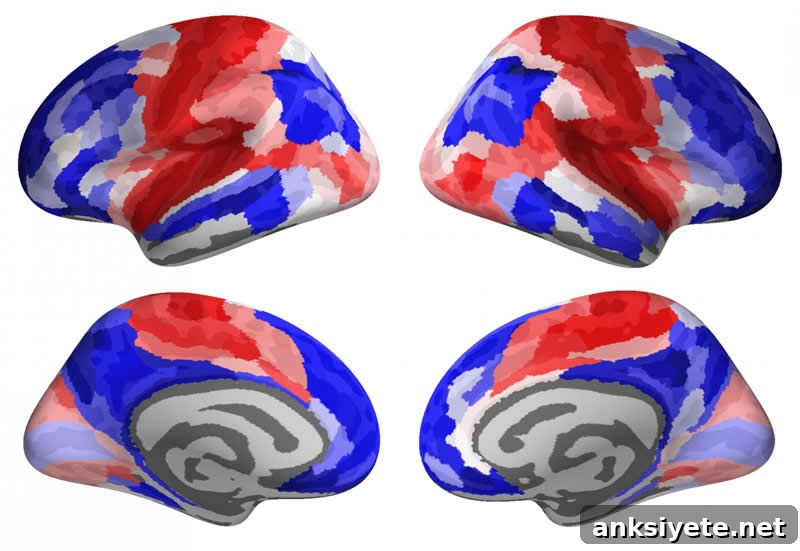
Across these longitudinal data, the researchers identified two principal modes of change in functional connectivity during adolescence. The first they described as a conservative pattern: brain regions that support basic sensory and motor functions, such as primary visual and motor cortices, were already strongly connected by age 14 and became even more tightly connected into the mid-twenties. In other words, early-established connections strengthened further as the individual matured.
The second mode of change, labelled disruptive, was observed in networks that support higher-order social and cognitive abilities. In these association and subcortical regions the pattern was one of reconfiguration: connections that were weak in early adolescence grew stronger, while some initially strong connections weakened. This redistribution of connectivity effectively brings previously separate areas into new functional relationships, enabling more sophisticated skills such as theory of mind, social cognition and autobiographical memory.
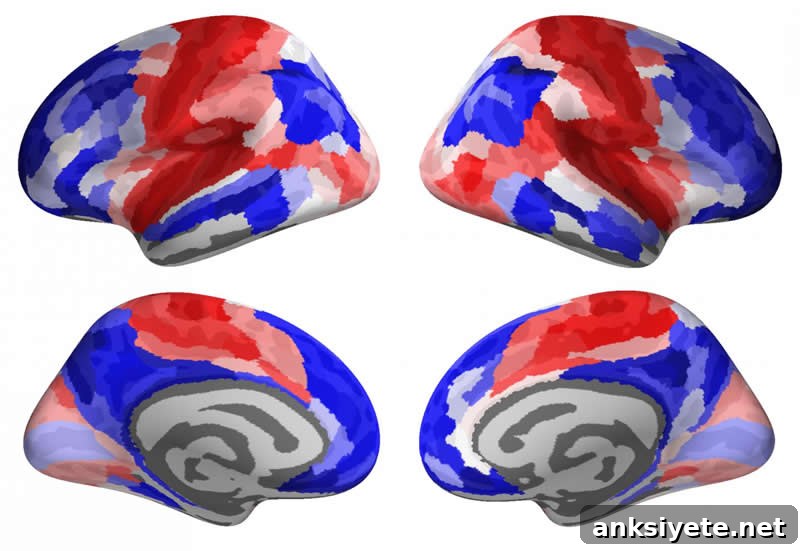
Comparing these developmental patterns with independent brain maps, the team found that regions showing disruptive reconfiguration also display elevated metabolic signatures indicative of active remodeling, such as aerobic glycolysis and related gene expression patterns. These disruptive systems also overlap with brain areas known to activate during tasks involving social reasoning and self-related memory, consistent with the idea that adolescence fosters the emergence of adult-level social cognition by repurposing and reorganizing networks.
Dr Petra Vértes, joint senior author and a Fellow of the mental health research charity MQ, said the findings suggest that acquiring adult social skills depends on the active formation of new connections between brain regions during adolescence. “Our results indicate that adolescence is not only a time of strengthening established circuits but also a period when new functional networks are formed, enabling more advanced social and cognitive abilities,” she commented.
Professor Ed Bullmore, co-senior author and Head of the Department of Psychiatry at Cambridge, highlighted the clinical relevance: “Depression, anxiety and other mental health disorders often begin during adolescence. Observing active remodeling of brain networks in this period suggests potential mechanisms by which vulnerability emerges, and a better understanding of these processes could inform prevention and treatment strategies for young people.”
Measuring functional connectivity with fMRI poses technical challenges, especially in younger participants who may move more in the scanner. Dr František Váša, who led the study while a Gates Cambridge Trust PhD Scholar and is now at King’s College London, noted that the team applied multiple rigorous motion-correction methods and confirmed their findings were robust across these approaches, increasing confidence that the observed developmental changes reflect true neural maturation rather than artefacts of head movement.
Funding: The study was supported by the Wellcome Trust.
Source:
University of Cambridge
Media contacts:
Craig Brierley – University of Cambridge
Image credit:
Frantisek Vasa
Original research: Open access. Article title: “Conservative and disruptive modes of adolescent change in human brain functional connectivity,” Váša, F. et al., published in PNAS. DOI: 10.1073/pnas.1906144117.
Abstract (summary)
This longitudinal fMRI study of nearly 300 healthy adolescents scanned across the teenage years reveals two distinct modes of developmental change in resting-state functional connectivity. Primary sensory and motor regions show a conservative pattern of gradually strengthening connectivity, while association cortex and subcortical areas undergo disruptive remodeling, with weak early connections becoming stronger and some initially strong links weakening. Disruptive systems align with brain regions implicated in social cognition and autobiographical memory and with metabolic markers of active neural reorganization. These findings suggest adolescence is a critical period when new functional networks emerge to support adult-level social and cognitive skills, and when brain remodeling may also contribute to the timing of common mental health disorders.