
Summary: A drug currently under investigation in cancer clinical trials appears to block dysfunction in an immune-cell signaling pathway linked to Alzheimer’s disease. In preclinical models, inhibiting this pathway may prevent the disease from developing and slow symptom progression in those already affected.
Source: Weill Cornell University
Researchers at Weill Cornell Medicine report that a mutation associated with Alzheimer’s disease alters signaling in a subset of brain immune cells, and that pharmacological inhibition of that pathway protects against features of the disease in animal models.
The team discovered that blocking the overactive pathway with a compound already being tested in cancer trials reverses inflammatory changes in microglia—the central nervous system’s resident immune cells—and protects neurons from synaptic damage in preclinical experiments.
These findings point to a potential new approach for slowing or preventing Alzheimer’s by targeting microglial signaling rather than neurons directly.
Published Dec. 1 in Science Translational Medicine, the study focuses on microglia because many Alzheimer’s-associated genetic variants are highly expressed in these cells, suggesting that altered microglial function contributes to disease onset and progression.
“Microglia are guardians of the healthy brain but can become harmful in disease,” said senior author Dr. Li Gan, director of the Helen and Robert Appel Alzheimer’s Disease Research Institute. “Our aim was to define how microglia turn toxic in Alzheimer’s and whether we can identify immune modulators that reverse that toxicity while preserving their protective roles.”
Alzheimer’s disease is the most common neurodegenerative disorder in older adults, affecting tens of millions worldwide. Multiple factors—including aging, genetics, environment and lifestyle—contribute to the accumulation of toxic proteins and immune-system changes that lead to neuron and synapse loss.
To investigate how microglia contribute to Alzheimer’s, the researchers profiled the molecular signatures of individual microglia from the brains of patients carrying a TREM2 gene mutation (R47H) that significantly raises Alzheimer’s risk.
TREM2 is a receptor mainly expressed on microglia that, among other roles, signals through the enzyme AKT to regulate inflammation and cellular metabolism. The team found that microglia from mutation carriers displayed heightened inflammatory signatures and hyperactivated AKT signaling.
Next, the group developed a mouse model combining the human R47H TREM2 variant with a tauopathy strain that forms tau aggregates—one of Alzheimer’s hallmark pathologies. Mice and human samples bearing the R47H mutation shared similar microglial transcriptomic changes, including increased proinflammatory molecules and elevated AKT activity, and the mice showed memory-related deficits.
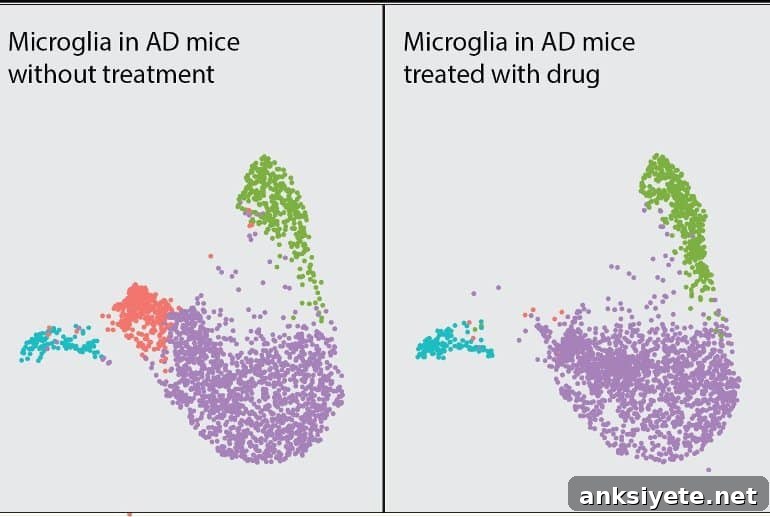
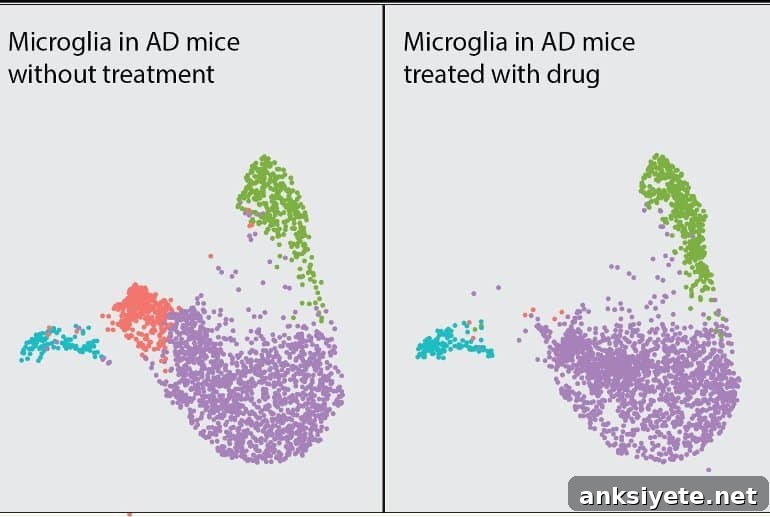
Importantly, treating the mice with MK-2206, an AKT inhibitor currently being evaluated in cancer trials, reversed the microglial inflammatory state and prevented tauopathy-driven synapse loss. In cultured primary microglia carrying the R47H variant, MK-2206 largely normalized the enhanced inflammatory signatures triggered by tau fibrils.
Because AKT signaling is implicated in many cancers, MK-2206 has entered clinical testing for oncology, meaning its safety profile is already under clinical investigation. The authors note this as an advantage for potential repurposing, since a brain-penetrant compound with clinical experience may accelerate development for neurodegenerative indications.
“We identified a brain-penetrant small molecule that has been tested in humans, modulates microglial immune responses potently, and protects against synaptic loss in animal models of Alzheimer’s,” Dr. Gan said. “These results support further investigation of AKT inhibitors as microglial modulators in Alzheimer’s disease.”
About this Alzheimer’s disease research news
Author: Press Office
Source: Weill Cornell University
Contact: Press Office – Weill Cornell University
Image: The image is credited to Dr. Li Gan.
Original Research: Closed access.
“AD-linked R47H-TREM2 mutation induces disease-enhancing microglial states via AKT hyperactivation” by Li Gan et al. Science Translational Medicine
Abstract
AD-linked R47H-TREM2 mutation induces disease-enhancing microglial states via AKT hyperactivation
The R47H variant of the microglia-specific gene TREM2 increases risk for late-onset Alzheimer’s disease. Single-nucleus transcriptomic analysis of brain tissue from Alzheimer’s patients carrying R47H or the common TREM2 variant revealed that R47H-associated microglial subpopulations display amplified inflammatory signatures similar to previously described disease-associated microglia and show hyperactivation of AKT, a key signaling pathway downstream of TREM2.
In a tauopathy mouse model with heterozygous knock-in of human TREM2 carrying R47H or the common variant, R47H worsened TAU-mediated spatial memory deficits in female mice. Single-cell transcriptomics of microglia from these mice paralleled many changes seen in human R47H microglia, including increased proinflammatory cytokines, activated AKT signaling, and elevated disease-associated microglial signatures.
Pharmacological inhibition of AKT with MK-2206 largely reversed the enhanced inflammatory profile in primary R47H microglia exposed to TAU fibrils. In R47H heterozygous tauopathy mice, MK-2206 treatment eliminated a tauopathy-dependent microglial subcluster and rescued synapse loss induced by tau pathology.
By identifying disease-promoting mechanisms of the R47H mutation that are conserved between human and mouse, this study supports AKT pathway inhibitors as a microglial-modulating strategy to treat Alzheimer’s disease.