Summary: A long-term study clarifies how brain insulin sensitivity influences body weight, visceral fat accumulation, and the success of lifestyle interventions.
Source: DZD
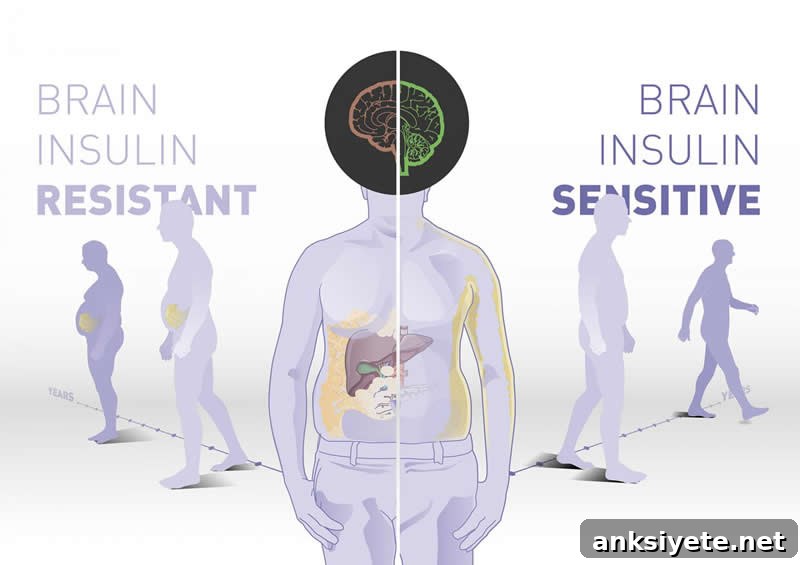
The location and amount of body fat matter more for health than total weight alone. New long-term findings from the German Center for Diabetes Research (DZD), Helmholtz Zentrum München and Tübingen University Hospital show that how sensitively the brain responds to insulin strongly influences both weight loss and where fat is stored. Participants whose brains reacted sensitively to insulin lost significant weight, reduced unhealthy visceral (abdominal) fat, and maintained these benefits over many years. In contrast, people with reduced or absent brain insulin responsiveness experienced only small initial weight loss followed by weight regain and increased visceral fat during follow-up. These results were published in Nature Communications.
Visceral fat—the fat that surrounds internal organs in the abdominal cavity—poses greater health risks than subcutaneous fat stored under the skin of the hips, thighs and buttocks. Visceral fat releases signaling molecules that affect blood pressure, alter insulin secretion and promote inflammation, which raises the risk of type 2 diabetes, cardiovascular disease and certain cancers. Despite these known risks, individual patterns of fat distribution vary and the reasons were not fully understood. Data from the Tübingen Lifestyle Intervention Program (TULIP) suggested that brain insulin responsiveness may be a key factor: people with high brain insulin sensitivity benefitted more from a fiber-rich diet combined with exercise, not only losing more weight but also achieving a healthier fat distribution.
To examine the long-term relationship between brain insulin sensitivity, weight change and fat distribution, researchers followed participants for up to nine years. They analyzed baseline measures of brain insulin responsiveness obtained by magnetoencephalography (MEG) before a 24-month lifestyle intervention, and then tracked weight and fat distribution during and after the intervention. Follow-up data on 15 participants were collected over nine years, and an additional cross-sectional cohort of 112 participants was used to assess hypothalamic insulin sensitivity and fat distribution.
High brain insulin sensitivity linked to sustained weight loss and reduced visceral fat
Researchers found that brain insulin action not only influences total body weight, but also specifically determines the distribution of fat between visceral and subcutaneous compartments. Participants with high insulin sensitivity in the brain experienced substantial reductions in both weight and visceral fat during the lifestyle program, and they regained very little fat during the nine-year follow-up period. By contrast, participants with brain insulin resistance showed only modest weight loss during the first months of the program and then regained weight and visceral fat during the remainder of the intervention.
“Subjects with high insulin sensitivity in the brain benefited from the lifestyle intervention with a pronounced reduction in weight and visceral fat. Even after the lifestyle intervention had ended, they only regained a small amount of fat during the nine-year follow-up,” said Professor Martin Heni of Tübingen University Hospital, lead author of the study. First author PD Dr. Stephanie Kullmann added that participants with brain insulin resistance initially lost some weight but then experienced rebounds in body weight and visceral fat during follow-up.
Because insulin signaling in the hypothalamus plays a central role in regulating peripheral energy metabolism, the team examined hypothalamic insulin responsiveness in a larger cross-sectional sample. These analyses showed that stronger insulin responsiveness in the hypothalamus was associated with lower amounts of visceral fat, while subcutaneous fat mass did not appear to be affected by hypothalamic insulin sensitivity. In short, brain insulin sensitivity predicts a favorable fat distribution—less harmful abdominal fat—without changing protective subcutaneous fat.
The study highlights a novel mechanism that regulates where fat is deposited in the human body: brain insulin sensitivity. Because visceral fat is strongly associated with diabetes, cardiovascular disease and cancer, these findings have implications beyond metabolic disorders. They point toward potential new treatment strategies that target insulin resistance in the brain to improve body fat distribution and reduce disease risk. Researchers in Tübingen are already exploring therapies aimed at reversing brain insulin resistance to achieve beneficial changes in fat distribution.
About this research report
Source: DZD
Media contacts:
Martin Heni – DZD
Image source:
Image credited to IDM.
Original research
Title: “Brain insulin sensitivity is linked to adiposity and body fat distribution” by Stephanie Kullmann, Vera Valenta, Robert Wagner, Otto Tschritter, Jürgen Machann, Hans-Ulrich Häring, Hubert Preissl, Andreas Fritsche & Martin Heni.
Abstract:
Brain insulin action regulates eating behavior and energy fluxes throughout the body, but many people show brain insulin resistance. How brain insulin responsiveness affects long-term weight and body fat composition in humans remained unclear. This study shows that high brain insulin sensitivity measured before a lifestyle intervention predicts a greater reduction in total and visceral fat during the program and less regain of fat mass over a nine-year follow-up. Cross-sectional analyses indicate that strong hypothalamic insulin responsiveness is associated with lower visceral fat, while subcutaneous fat is unaffected. These results demonstrate that high brain insulin sensitivity supports weight loss during lifestyle intervention and is linked to a favorable fat distribution, underscoring the need for strategies to resolve brain insulin resistance.