
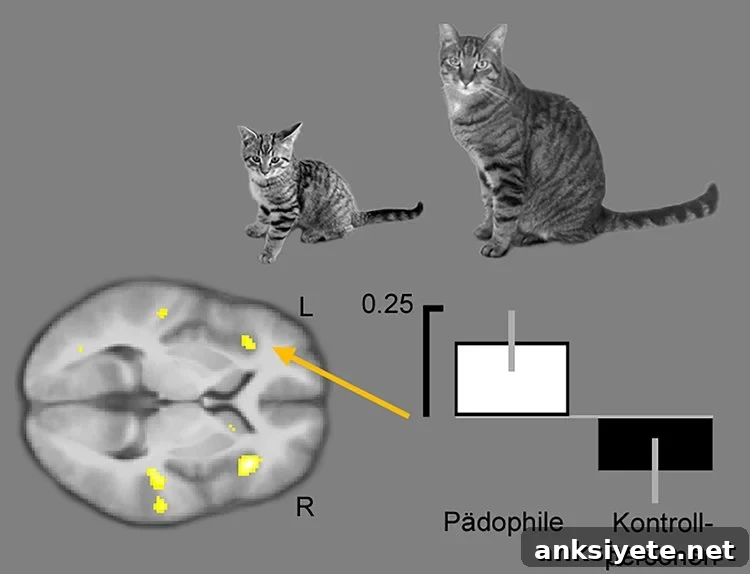
Summary: A new MRI study from Kiel University reports that men with a sexual interest in children show heightened activity in the left anterior insular cortex when viewing images of young animals, pointing to a possible malfunction in the brain’s nurturing system.
Source: Kiel University
Background and objective
Why some adults develop a sexual interest in children is not yet fully understood. A research team from the Institute of Sexual Medicine and Forensic Psychiatry and Psychotherapy at Kiel University and the University Medical Center Schleswig-Holstein (UKSH) Campus Kiel, together with colleagues at other northern German universities, has identified new neurobiological clues related to pedophilia in men. Funded by the Federal Ministry of Education and Research, the team published their findings in the journal Frontiers in Human Neuroscience.
Most prior studies of pedophilic disorder concentrated on the brain’s mating and sexual-response systems, impulse-control mechanisms, and anatomical irregularities. The Kiel researchers took a complementary approach by examining brain systems that govern nurturing behavior. Unlike many male mammals, human males can perform a wide range of caregiving behaviors; these nurturing responses are linked to specific hormonal and neural regulation. Based on earlier work, the researchers hypothesized that pedophilic men might show an overactive nurturing system that could become sexualized.
“In our study we deliberately investigated brain mechanisms that are unrelated to sexuality,” explained Dr. Jorge Ponseti, the lead psychologist on the project. “The causes of pedophilia appear to be more complex than previously assumed, and may in part involve a sexualization of nurturing responses.”
Study design and methods
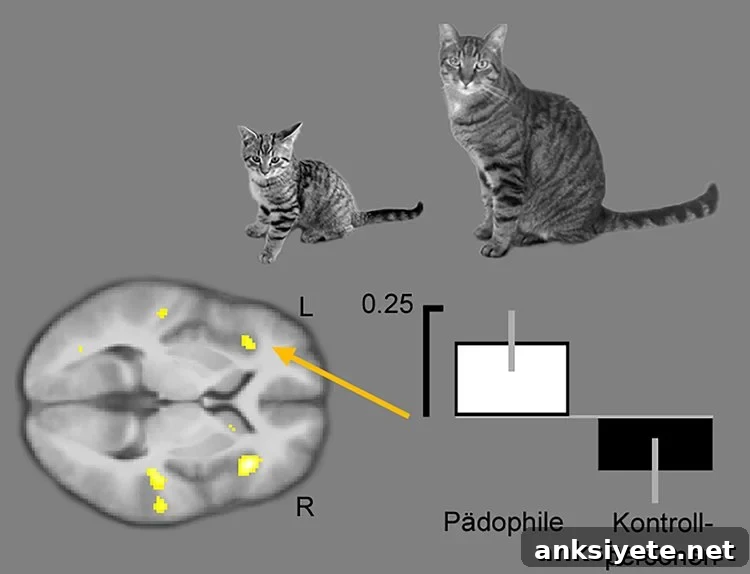
To test this hypothesis, the research team used functional magnetic resonance imaging (fMRI) to compare brain responses in men diagnosed with pedophilic disorder and healthy control subjects while they viewed photographs of infant and adult animals. The choice of animal images allowed investigators to trigger caregiving and “cuteness” responses without directly presenting sexual stimuli or human infants. Participants also provided subjective ratings for the images, confirming that none of the pictures were perceived as sexually arousing by either group.
Key findings
Although subjective perceptions of the pictures did not differ between groups, fMRI results revealed that men with pedophilic disorder showed significantly increased brain activity when viewing infant animals versus adult animals. The increased activation was observed in several regions, most notably the left anterior insular cortex—an area typically associated with caregiving responses and emotional salience when adults view infants. Additional increases were found in supplementary motor and dorsolateral prefrontal regions.
Within-group analysis confirmed that only the pedophilic participants exhibited a stronger left anterior insula response to infant animals. The researchers interpret these results as evidence that pedophilia may involve not only disturbances in sexual or executive brain processing, but also an over-responsive nurturing system that is abnormally engaged by cues of “cuteness.”
Implications and future directions
The findings raise important questions about the role of nonsexual caregiving circuitry in the development and expression of pedophilic interest. The study’s authors plan follow-up research to explore whether hormonal modulation could alter nurturing-system reactivity in affected men. The team notes that changes in certain hormones during female menopause reduce caregiving reactions to infant cues; they intend to test whether similar medical hormone regulation might reduce nurturing-system hyper-reactivity in men with pedophilic disorder.
“If hormone-based interventions can normalize over-reactive nurturing responses, this could offer a more targeted therapeutic option for managing pedophilic tendencies than is currently available,” said Dr. Ponseti. The researchers emphasize that these ideas remain experimental and require further clinical trials and ethical evaluation.
Source: Jorge Ponseti – Kiel University
Publisher: Organized by NeuroscienceNews.com
Image source: Image credited to Dr. Jorge Ponseti.
Original research: Open access research published in Frontiers in Human Neuroscience.
DOI: 10.3389/fnhum.2017.00645
MLA: Kiel University. “Brain Scans Provide Clues For the Development of Pedophilia.” NeuroscienceNews, 23 February 2018.
APA: Kiel University (2018, February 23). Brain Scans Provide Clues For the Development of Pedophilia. NeuroscienceNews.
Chicago: Kiel University. “Brain Scans Provide Clues For the Development of Pedophilia.” (accessed February 23, 2018).
Abstract
Decoding Pedophilia: Increased Anterior Insula Response to Infant Animal Pictures
Previous research reported heightened brain responses in men with sexual interest in children not only to images of naked children but also to child faces. This pattern suggests that pedophilia may be linked, in addition to or instead of an aberrant sexual system, to an over-active nurturing system. To assess this possibility, the study presented pedophilic and control participants with pictures of infant and adult animals during fMRI. Using animal images aimed to provoke nurturing processing without sexual processing. Behavioral ratings confirmed that none of the images were perceived as sexually arousing by participants in either group. Whole-brain and region-of-interest analyses focused on the anterior insula, an area repeatedly associated with adult responses to infants. Only in the pedophilic group did infant animals, relative to adult animals, increase activity in the anterior insula, supplementary motor cortex, and dorsolateral prefrontal areas. Within-group analysis highlighted increased response in the left anterior insular cortex of the pedophilic participants. These findings suggest the possibility of an over-responsive nurturing system in pedophilia and warrant further investigation.